






Ballon d’Or winners list: every winner since 1956, and Harry Kane’s 2026 win
Harry Kane won the 2026 Ballon d’Or in London, with Kylian Mbappé second and Lamine Yamal third. Every men’s winner since 1956 and every women’s winner since 2018, with points, wins by club and country, and how the vote works.
Oct 31, 2023 · Updated Oct 27, 2026
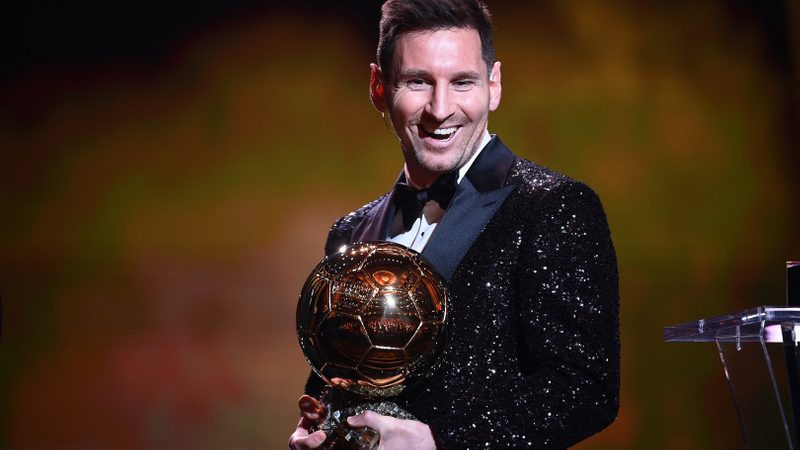
Harry Kane won the 2026 Ballon d’Or, the 70th edition of the award, at the London Palladium on 26 October 2026. Kylian Mbappé was second and Lamine Yamal third. Alexia Putellas won the women’s Ballon d’Or for the third time.
Kane is the first Englishman to win it since Michael Owen in 2001 and the first Bayern Munich player since Karl-Heinz Rummenigge in 1981. His win is the 70th men’s award, and those 70 have gone to 48 different players.
Below is the complete list of every men’s winner since 1956 and every women’s winner since 2018, followed by the full 2026 results, how the vote works, which players, clubs and countries have won it most, and why the list does not work as a straight ranking of the best players in history.
Who won the Ballon d’Or 2026?
Kane, voted on his 2025-26 season with Bayern and England. He also took the Gerd Müller Trophy as the season’s top scorer on the same night. We covered the ceremony and the season behind it in our report on Kane’s win. This is the top ten as announced:
| Rank | Player | Club at the ceremony | Country |
|---|---|---|---|
| 1 | Harry Kane | Bayern Munich | England |
| 2 | Kylian Mbappé | Real Madrid | France |
| 3 | Lamine Yamal | Barcelona | Spain |
| 4 | Rodri | Barcelona | Spain |
| 5 | Lionel Messi | Inter Miami | Argentina |
| 6 | Khvicha Kvaratskhelia | Paris Saint-Germain | Georgia |
| 7 | Ousmane Dembélé | Paris Saint-Germain | France |
| 8 | Erling Haaland | Manchester City | Norway |
| 9 | Michael Olise | Bayern Munich | France |
| 10 | Fabián Ruiz | Paris Saint-Germain | Spain |
Three Paris Saint-Germain players made the top ten, and so did two from Bayern. Dembélé, the 2025 winner, finished seventh. Messi was fifth, playing in Major League Soccer, at 39.
The other awards on the night:
| Award | Men | Women |
|---|---|---|
| Ballon d’Or | Harry Kane | Alexia Putellas |
| Kopa Trophy (best young player) | Lamine Yamal | Vicky López |
| Yashin Trophy (goalkeeper) | Unai Simón | Cata Coll |
| Gerd Müller Trophy (top scorer) | Harry Kane | Charlyn Corral |
| Coach of the year | Luis de la Fuente (Spain) | Pere Romeu (Barcelona) |
| Club of the year | Paris Saint-Germain | Barcelona |
| Sócrates Award | Bukayo Saka | One award, not split |
Yamal’s Kopa was his third in a row, and nobody else has won the young player award more than once. Our Kopa Trophy winners list has every year.
The ceremony went to London to mark 70 years since Stanley Matthews, an Englishman, won the first award. Several reports on the night described it as the first Ballon d’Or held outside France. It was not: while the award was merged with FIFA’s from 2010 to 2015, the gala was held at the Kongresshaus in Zurich. London was the first Ballon d’Or gala held in the city.
Rodri, fourth, is listed at Barcelona because he joined them from Manchester City in August 2026; the vote was on his season at City, which ended with the Golden Ball at the World Cup.
Ballon d’Or winners list
Every men’s winner since 1956. There was no award in 2020, when France Football cancelled it during the Covid-19 pandemic. The points column is the winner’s total in that year’s vote.
| Year | Winner | Team | Points |
|---|---|---|---|
| 1956 | Stanley Matthews | Blackpool | 47 |
| 1957 | Alfredo Di Stéfano | Real Madrid | 72 |
| 1958 | Raymond Kopa | Real Madrid | 71 |
| 1959 | Alfredo Di Stéfano | Real Madrid | 80 |
| 1960 | Luis Suárez | Barcelona | 54 |
| 1961 | Omar Sívori | Juventus | 46 |
| 1962 | Josef Masopust | Dukla Prague | 65 |
| 1963 | Lev Yashin | Dynamo Moscow | 73 |
| 1964 | Denis Law | Manchester United | 61 |
| 1965 | Eusébio | Benfica | 67 |
| 1966 | Bobby Charlton | Manchester United | 81 |
| 1967 | Flórián Albert | Ferencváros | 68 |
| 1968 | George Best | Manchester United | 61 |
| 1969 | Gianni Rivera | Milan | 83 |
| 1970 | Gerd Müller | Bayern Munich | 77 |
| 1971 | Johan Cruyff | Ajax | 116 |
| 1972 | Franz Beckenbauer | Bayern Munich | 81 |
| 1973 | Johan Cruyff | Barcelona | 96 |
| 1974 | Johan Cruyff | Barcelona | 116 |
| 1975 | Oleg Blokhin | Dynamo Kyiv | 122 |
| 1976 | Franz Beckenbauer | Bayern Munich | 91 |
| 1977 | Allan Simonsen | Borussia Mönchengladbach | 74 |
| 1978 | Kevin Keegan | Hamburger SV | 87 |
| 1979 | Kevin Keegan | Hamburger SV | 118 |
| 1980 | Karl-Heinz Rummenigge | Bayern Munich | 122 |
| 1981 | Karl-Heinz Rummenigge | Bayern Munich | 106 |
| 1982 | Paolo Rossi | Juventus | 115 |
| 1983 | Michel Platini | Juventus | 110 |
| 1984 | Michel Platini | Juventus | 110 |
| 1985 | Michel Platini | Juventus | 127 |
| 1986 | Igor Belanov | Dynamo Kyiv | 84 |
| 1987 | Ruud Gullit | Milan | 106 |
| 1988 | Marco van Basten | Milan | 129 |
| 1989 | Marco van Basten | Milan | 129 |
| 1990 | Lothar Matthäus | Inter Milan | 137 |
| 1991 | Jean-Pierre Papin | Marseille | 141 |
| 1992 | Marco van Basten | Milan | 98 |
| 1993 | Roberto Baggio | Juventus | 142 |
| 1994 | Hristo Stoichkov | Barcelona | 210 |
| 1995 | George Weah | Milan | 144 |
| 1996 | Matthias Sammer | Borussia Dortmund | 144 |
| 1997 | Ronaldo (Brazil) | Inter Milan | 222 |
| 1998 | Zinedine Zidane | Juventus | 244 |
| 1999 | Rivaldo | Barcelona | 219 |
| 2000 | Luís Figo | Real Madrid | 197 |
| 2001 | Michael Owen | Liverpool | 176 |
| 2002 | Ronaldo (Brazil) | Real Madrid | 169 |
| 2003 | Pavel Nedvěd | Juventus | 190 |
| 2004 | Andriy Shevchenko | Milan | 175 |
| 2005 | Ronaldinho | Barcelona | 225 |
| 2006 | Fabio Cannavaro | Real Madrid | 173 |
| 2007 | Kaká | Milan | 444 |
| 2008 | Cristiano Ronaldo | Manchester United | 446 |
| 2009 | Lionel Messi | Barcelona | 473 |
| 2010 | Lionel Messi | Barcelona | 22.65% |
| 2011 | Lionel Messi | Barcelona | 47.88% |
| 2012 | Lionel Messi | Barcelona | 41.60% |
| 2013 | Cristiano Ronaldo | Real Madrid | 27.99% |
| 2014 | Cristiano Ronaldo | Real Madrid | 37.66% |
| 2015 | Lionel Messi | Barcelona | 41.33% |
| 2016 | Cristiano Ronaldo | Real Madrid | 745 |
| 2017 | Cristiano Ronaldo | Real Madrid | 946 |
| 2018 | Luka Modrić | Real Madrid | 753 |
| 2019 | Lionel Messi | Barcelona | 686 |
| 2021 | Lionel Messi | Paris Saint-Germain | 613 |
| 2022 | Karim Benzema | Real Madrid | 549 |
| 2023 | Lionel Messi | Inter Miami | 462 |
| 2024 | Rodri | Manchester City | 1,170 |
| 2025 | Ousmane Dembélé | Paris Saint-Germain | 1,380 |
| 2026 | Harry Kane | Bayern Munich | – |
Three things about the points column. From 2010 to 2015 the award was the FIFA Ballon d’Or, and the result was published as a share of the vote rather than a points total. The ballot itself has changed: in 2023 each voter named five players, worth six, four, three, two and one points, which is why Messi won with 462, while the current ballot ranks ten players on a scale that starts at 15. Rodri’s 1,170 in 2024 and Dembélé’s 1,380 in 2025 are on that bigger scale, so totals from different eras cannot be compared. And no points had been published for 2026 when this page was updated.
One row looks odd. Messi’s 2023 award is credited to Inter Miami, the club he had joined that July, although the season it rewarded was his last at Paris Saint-Germain. That is how the main record tables count it, and it is why PSG appear here with two winners (Messi in 2021 and Dembélé in 2025) rather than three.
Women’s Ballon d’Or winners list
| Year | Winner | Team | Points |
|---|---|---|---|
| 2018 | Ada Hegerberg | Lyon | 136 |
| 2019 | Megan Rapinoe | Reign FC | 230 |
| 2021 | Alexia Putellas | Barcelona | 186 |
| 2022 | Alexia Putellas | Barcelona | 178 |
| 2023 | Aitana Bonmatí | Barcelona | – |
| 2024 | Aitana Bonmatí | Barcelona | – |
| 2025 | Aitana Bonmatí | Barcelona | – |
| 2026 | Alexia Putellas | Barcelona | – |
Barcelona players have now won six women’s awards in a row: Putellas in 2021 and 2022, Aitana Bonmatí from 2023 to 2025, and Putellas again in 2026. Putellas is the second player to win it three times, after Bonmatí. The 2026 award rewarded her 2025-26 season at Barcelona; she has since joined London City Lionesses, who signed her in July 2026. Ewa Pajor was second this year and Khadija Shaw third.
Who has won the most Ballon d’Or awards?
Lionel Messi, with eight. Cristiano Ronaldo has five. Johan Cruyff, Michel Platini and Marco van Basten have three each, and Platini won his three in a row, from 1983 to 1985. These are all the players who have won it more than once:
| Player | Wins | Years |
|---|---|---|
| Lionel Messi | 8 | 2009, 2010, 2011, 2012, 2015, 2019, 2021, 2023 |
| Cristiano Ronaldo | 5 | 2008, 2013, 2014, 2016, 2017 |
| Johan Cruyff | 3 | 1971, 1973, 1974 |
| Michel Platini | 3 | 1983, 1984, 1985 |
| Marco van Basten | 3 | 1988, 1989, 1992 |
| Alfredo Di Stéfano | 2 | 1957, 1959 |
| Franz Beckenbauer | 2 | 1972, 1976 |
| Kevin Keegan | 2 | 1978, 1979 |
| Karl-Heinz Rummenigge | 2 | 1980, 1981 |
| Ronaldo (Brazil) | 2 | 1997, 2002 |
Those 10 players hold 32 of the 70 awards between them. The other 38 winners won it once each, which is where the total of 48 different winners comes from. Kane joins that second group, and so do Rodri and Dembélé.
Ballon d’Or winners by club and country
Real Madrid and Barcelona are level on 12 awards each. Madrid’s are spread across eight players; Barcelona’s six winners include Messi, who won six of his eight there. Kane’s award is Bayern’s sixth, after Gerd Müller in 1970, Franz Beckenbauer in 1972 and 1976, and Rummenigge in 1980 and 1981.
| Club | Players | Awards |
|---|---|---|
| Real Madrid | 8 | 12 |
| Barcelona | 6 | 12 |
| Juventus | 6 | 8 |
| Milan | 6 | 8 |
| Bayern Munich | 4 | 6 |
| Manchester United | 4 | 4 |
| Dynamo Kyiv | 2 | 2 |
| Hamburger SV | 1 | 2 |
| Inter Milan | 2 | 2 |
| Paris Saint-Germain | 2 | 2 |
Another 12 clubs have one award each, which takes the column to 70.
| Country | Players | Awards |
|---|---|---|
| France | 6 | 8 |
| Argentina | 1 | 8 |
| Portugal | 3 | 7 |
| Germany (incl. West Germany) | 5 | 7 |
| Netherlands | 3 | 7 |
| England | 5 | 6 |
| Italy | 5 | 5 |
| Brazil | 4 | 5 |
| Spain | 3 | 4 |
| Soviet Union | 3 | 3 |
Another 10 countries have one award each. England’s six now come from five players: Matthews in 1956, Bobby Charlton in 1966, Kevin Keegan in 1978 and 1979, Owen in 2001 and Kane. Germany’s seven include the West German winners before 1990, and the Soviet Union’s three were won by Lev Yashin, Oleg Blokhin and Igor Belanov. Argentina’s eight all belong to Messi.
How is the winner of the Ballon d’Or decided?
By a jury of journalists. The men’s award is voted on by one journalist from each of the top 100 nations in the FIFA world ranking; the women’s award by one from each of the top 50 in the women’s ranking. Each juror picks from a 30-player shortlist and ranks ten players, with places worth 15, 12, 10, 8, 7, 5, 4, 3, 2 and 1 point.
Three criteria are published, in this order:
| Order | Criterion |
|---|---|
| 1 | Individual performance, and how decisive and impressive the player was |
| 2 | Team performance and the trophies won across the season |
| 3 | Class, and the player’s sense of fair play |
What is missing matters as much. Until 2022 a fourth criterion covered the player’s career as a whole, and it was dropped on purpose after Messi’s contested seventh win over Robert Lewandowski in 2021. At the same time the award moved from a calendar year to a football season and the jury was cut to the top 100 countries. Since 2024 the ceremony has been run with UEFA, although France Football keeps the name.
The margins can be tiny. In 2024 Rodri beat Vinícius Júnior by 1,170 points to 1,129, and Real Madrid boycotted the ceremony.
The Ballon d’Or has not always been the same award
Before reading the list as a ranking of the best players in history, it helps to know that the pool of people allowed to win it has changed several times.
| Years | Who could win |
|---|---|
| 1956-1994 | European players at European clubs only |
| 1995-2006 | Any player at a European club. George Weah won first in 1995; Ronaldo became the first South American winner in 1997 |
| 2007 onwards | Players anywhere in the world |
| 2010-2015 | Merged with the FIFA World Player of the Year award as the FIFA Ballon d’Or |
So Diego Maradona and Pelé never won one, and not because the voters passed them over. Neither was eligible. Until 1995 the award was restricted by nationality as well as by club, so Maradona’s seven years at Napoli and two at Barcelona did not count. Pelé never played in Europe at all. For the award’s 60th anniversary in 2016, France Football re-ran the pre-1995 years as if every nationality had been eligible, and named Pelé the winner seven times and Maradona twice. The original winners were left unchanged, so none of those appear in the list above.
Who was the first Ballon d’Or winner?
Stanley Matthews of Blackpool, in 1956, aged 41. He is still the oldest winner. Three years earlier he had inspired Blackpool’s 4-3 win over Bolton Wanderers in the 1953 FA Cup final, the game still known as the Matthews final.
Who was the first women’s Ballon d’Or winner?
Ada Hegerberg of Norway and Lyon, in 2018, the first year the women’s award was given.
For the wider argument about where these awards sit in the all-time debate, we have pages on the GOAT of football, on who is the King of Football and on the one-off Super Ballon d’Or. If you follow the outright markets on next year’s award, our guide to football betting sites covers the operators that price them.
Featured photo: FRANCK FIFE / AFP