








Who is the God of football? Why the title belongs to Maradona
Maradona is the God of football, and there is a church in Rosario that means it literally. Where the nickname came from, and where Pele and Messi actually sit.
Dec 14, 2022 · Updated Aug 12, 2026

“God of football” is not a ranking. Like “King of Football” it is a nickname, and it belongs to Diego Maradona — more literally than any other nickname in the sport, because there is a church with a six-figure membership that treats him as exactly that.
Pele and Lionel Messi both get called the God of football too, and both have a case. But the three men are usually being given three different titles, and it is worth knowing which is which. This page covers where Maradona’s version came from, the four minutes in 1986 that created it, the church that took it at its word, and where Pele and Messi actually sit.
Why is Maradona called the God of football?
Because of one match, and really because of four minutes inside it.
On 22 June 1986, at the Estadio Azteca in Mexico City, Argentina beat England 2-1 in a World Cup quarter-final. Maradona scored both goals, four minutes apart, and football has been arguing about them ever since.
| Minute | Goal | What happened |
| 51 | Hand of God | Maradona punched the ball past Peter Shilton. The referee gave it. Maradona later described it as scored “a little with the head of Maradona and a little with the hand of God”. |
| 55 | Goal of the Century | Collected the ball in his own half, ran roughly 60 metres in under 11 seconds with 11 touches, beat five England players and then Shilton. |
The second goal was voted FIFA’s Goal of the Century in a fan poll in 2002. The first is the reason the phrase “hand of God” entered the language at all. One is cheating and one is genius, they came four minutes apart from the same player, and the nickname grew out of the pair of them rather than either one alone.
Maradona went on to score twice more in the semi-final against Belgium and took the Golden Ball as the tournament’s best player. Argentina beat West Germany 3-2 in the final.
The church that took the nickname literally
This is the part that separates Maradona from the other candidates, and it is not a figure of speech.
The Iglesia Maradoniana — the Maradonian Church — was founded on 30 October 1998, Maradona’s 38th birthday, in Rosario, Argentina, by three fans: Hector Campomar, Alejandro Veron and Hernan Amez. It began as a joke among friends and did not stay one. It now claims a membership in the range of 120,000 to 200,000 people across more than 130 countries, holds weddings, and runs its own calendar: years are counted from Maradona’s birth in 1960, so 2026 is year 66.
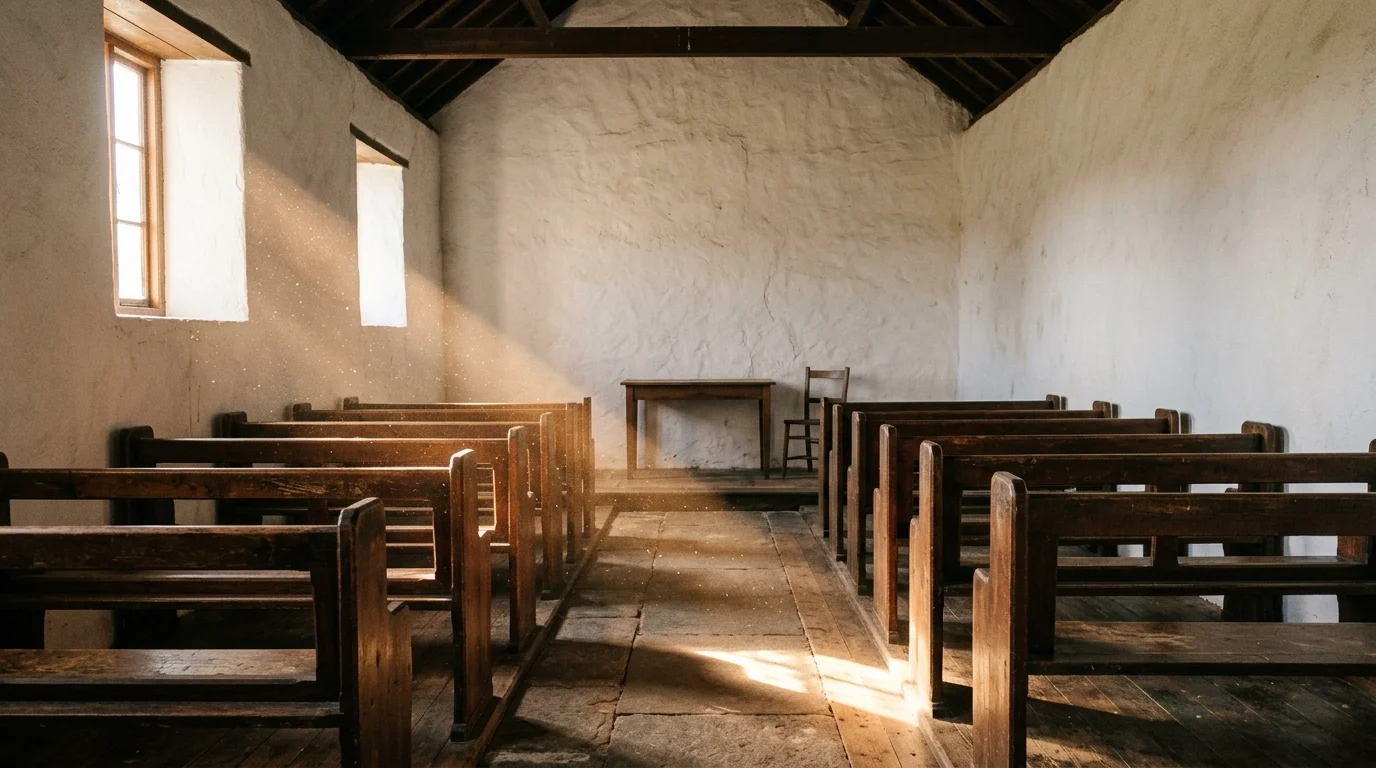
Nobody founded a church for Pele. Nobody has founded one for Messi. Whatever you think of the football argument, only one of the three has a congregation, and that is the most concrete reason the “God” tag attaches to him rather than to the others.
Naples went a similar way without the theology. Napoli retired the number 10 shirt in 2000, and after Maradona died in November 2020 the club renamed its ground the Stadio Diego Armando Maradona within weeks.
Maradona’s career in numbers
Career totals for Maradona are quoted anywhere between about 310 and 350, depending on whether friendlies and unofficial matches are counted. The version below counts senior club and international goals only, and it adds up, so you can check it.
| Club or country | Goals |
| Argentinos Juniors | 116 |
| Napoli | 115 |
| Barcelona | 38 |
| Boca Juniors (first spell) | 28 |
| Boca Juniors (second spell) | 7 |
| Sevilla | 7 |
| Newell’s Old Boys | 0 |
| All clubs | 311 |
| Argentina (91 caps) | 34 |
| Total | 345 |
He left Napoli as the club’s all-time leading scorer on 115. Marek Hamsik and Dries Mertens have both since passed him, which is the sort of thing that gets forgotten: the numbers were never the argument for Maradona.
Napoli, and the 33-year wait that followed him
Maradona could not win a league title at Barcelona. At Napoli he won two, in 1986-87 and 1989-90, and they were the first in the club’s history — a southern club beating the industrial north of Juventus and Milan at a time when that did not happen.
For a long time that was the whole story, and until recently this page said those were the only league titles Napoli had ever won. That is no longer true. Napoli won the Scudetto again in 2022-23, 33 years after Maradona’s second, and again in 2024-25 under Antonio Conte. Four in total, and he is responsible for half of them.
Pele is the King, not the God
Pele is called the God of football often enough, particularly in Brazil and India, but the nickname that actually stuck to him in 1958 was O Rei — the King. It is a different title with a different origin, and we have a full page on where “King of Football” came from and why it has never moved.
The case for him is the one record in this argument nobody can attack: he is the only player to have won three World Cups, in 1958, 1962 and 1970. Messi has one. Maradona had one. Cristiano Ronaldo has none.
Two figures on this page used to be wrong and are worth correcting explicitly. Pele scored 12 World Cup goals, not 15 — the 15 belonged to Brazil’s other Ronaldo, and that was the record Miroslav Klose broke in 2014 on his way to 16. And Pele’s 77 goals in 92 games for Brazil are no longer a national record: Neymar passed him in September 2023, scoring his 78th and 79th against Bolivia.
His club record is not in dispute at the same level, but his overall career total very much is, because it depends on how many friendlies you count. That argument is set out in full on the King of Football page rather than repeated here.
Messi, and everything that has happened since
When this page was first written in December 2022, it closed by saying Messi was still waiting for a World Cup. That was true for four more days. A great deal has happened since, and it is worth reading in order.
| 2022 | Won the World Cup, beating France on penalties in the final, and took the Golden Ball |
| 2023 | Won a record eighth Ballon d’Or (2009, 2010, 2011, 2012, 2015, 2019, 2021, 2023) |
| 2026 | Played a record-equalling sixth World Cup at 39, and became the tournament’s all-time leading scorer during the group stage |
| 2026 | Lost the final to Spain, and lost the all-time scoring record to Kylian Mbappe in the same week |
The scoring record is the part worth spelling out, because it changed hands twice in a fortnight. Messi went past Klose’s 16 with a brace against Austria in Dallas that took him to 18. He finished the tournament on eight goals and his career on 21. Mbappe also finished on eight with two matches left, then scored twice in the third-place play-off to take the Golden Boot on 10 — and his career World Cup total to 22. Messi held the record for about a month, from 22 June to the third-place play-off.
The 2026 final itself went to extra time at MetLife Stadium, with Argentina down to ten men after Enzo Fernandez was sent off in stoppage time and Emiliano Martinez making a record ten saves in a World Cup final before Ferran Torres settled it in the 106th minute.
On goals, our own count has him on 921 against Cristiano Ronaldo’s 976 — the numbers behind that comparison, including why the gap is smaller than it looks, are in our Ronaldo total goals page. At Barcelona alone he scored 672 and won 10 La Liga titles, four Champions Leagues, three Club World Cups and three UEFA Super Cups.
So who is the God of football?
Maradona, on the nickname. It is his in the way O Rei is Pele’s, and the church settles the question of whose name the phrase is actually attached to.
Whether he was the best player is a separate argument, and it is not the one this nickname decides — the era-by-era case for Pele, Maradona, Messi and Ronaldo is set out on our GOAT of football page. Three titles, three different questions:
| Title | Belongs to | Why |
| God of football | Maradona | The 1986 quarter-final, and a church founded in his name in 1998 |
| King of Football | Pele | O Rei, given by Brazilian crowds after the 1958 World Cup |
| GOAT | Disputed | A modern statistical argument, mostly between Messi and Ronaldo |
Ahead of the 2026-27 European season, our guide to the best football betting sites in India compares the operators covering the major leagues and the Champions League.
Frequently asked
Who is the God of football? Diego Maradona. The nickname comes from the 1986 World Cup quarter-final against England, where he scored the Hand of God and the Goal of the Century four minutes apart, and it was taken literally by the Iglesia Maradoniana, founded in Rosario in 1998.
Is Messi the God of football? He is called it, and after 2022 the case is stronger than it was — a World Cup, a record eighth Ballon d’Or, and briefly the World Cup’s all-time scoring record. But the nickname was Maradona’s long before Messi’s career peaked, and in Argentina it still is.
Why is Pele called the King of Football and not the God? Because the Brazilian press and crowds settled on O Rei after the 1958 World Cup, when he was 17. The two nicknames arose in different countries, decades apart, for different players.
How many goals did Maradona score? 345 in senior football — 311 for clubs and 34 in 91 games for Argentina. Higher totals in circulation include friendlies and unofficial matches.
How many World Cup goals did Pele score? Twelve, across four tournaments. The all-time record is now held by Kylian Mbappe on 22, ahead of Messi on 21 and Miroslav Klose on 16.
What is the Iglesia Maradoniana? A church founded in Rosario, Argentina on Maradona’s 38th birthday in 1998 that venerates him as the god of football. It counts its calendar from his birth in 1960 and claims well over 100,000 members worldwide.
Cover Image: AFP