






Types of out in cricket: all 10 ways to be dismissed, and how often each one happens
Nine of the ten have their own Law and the tenth hides in a sub-clause of Law 25. Four of them account for 97 per cent of the wickets in four million deliveries.
Jun 9, 2023 · Updated Aug 30, 2026
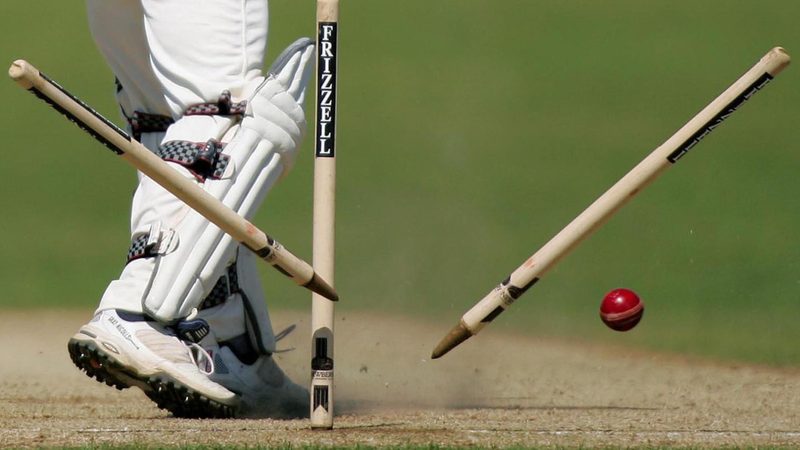
There are ten ways to get out in cricket. Nine of them have their own numbered Law, running from Law 32 to Law 40, and the tenth, retired out, sits in a sub-clause of Law 25. The count used to be eleven. It will still be ten in October, but three of the ten will be worded differently by then.
What almost no list of these tells you is how wildly unequal they are. Four of the ten account for 97 per cent of every wicket taken in men’s international and IPL cricket. Three of them have happened once each in more than four million deliveries.
The ten types of out in cricket
| Way out | Law | What has to happen |
|---|---|---|
| Bowled | 32 | The delivery puts the wicket down, off the bat or not |
| Caught | 33 | A fielder holds the ball off the bat before it lands |
| Hit the ball twice | 34 | A second deliberate strike, unless it is to stop the ball hitting the stumps |
| Hit wicket | 35 | The striker breaks his own wicket receiving the ball or setting off |
| Leg before wicket | 36 | The ball would have hit the stumps and struck the batter first |
| Obstructing the field | 37 | A wilful act that obstructs or distracts the fielding side |
| Run out | 38 | The wicket is put down while a batter is out of his ground |
| Stumped | 39 | The keeper breaks the wicket with the striker out of his ground and not running |
| Timed out | 40 | The incoming batter is not ready in time |
| Retired out | 25.4.3 | A batter leaves without injury and the opposing captain does not consent to a return |
Caught and bowled is not a separate way out. Neither is caught behind. Both are Law 33, recorded differently on a scorecard because of who took the catch.
How often each one actually happens
To get real numbers rather than an impression, I counted every wicket entry in the Cricsheet ball-by-ball archive across men’s Tests, ODIs, T20Is and the IPL. That is 4,171,403 deliveries and 126,161 wickets.
| Way out | Wickets | One every |
|---|---|---|
| Caught | 73,361 | 56 balls |
| Bowled | 24,205 | 172 balls |
| LBW | 13,292 | 313 balls |
| Run out | 8,292 | 503 balls |
| Caught and bowled | 3,510 | 1,188 balls |
| Stumped | 3,147 | 1,325 balls |
| Retired hurt | 184 | 22,670 balls |
| Hit wicket | 119 | 35,053 balls |
| Retired out | 26 | 160,438 balls |
| Obstructing the field | 15 | 278,093 balls |
| Retired not out | 7 | 595,914 balls |
| Handled the ball | 1 | 4,171,403 balls |
| Timed out | 1 | 4,171,403 balls |
| Hit the ball twice | 1 | 4,171,403 balls |
The wickets column adds up to 126,161 exactly, which is the check worth running on any table like this one. Retired hurt and retired not out are in there because the scorers record them the same way, even though nobody has been dismissed.
Four ways out do almost all of the work
Fold caught and bowled back into caught, where the Law puts it, and the top four look like this: caught 76,871, bowled 24,205, LBW 13,292, run out 8,292. That is 122,660 of 126,161, or 97.2 per cent. Add stumped and you are at 99.7 per cent.
The five remaining modes are the ones everybody writes about, because they are strange, and between them they account for 162 wickets: hit wicket 119, retired out 26, obstructing the field 15, timed out one, hit the ball twice one. Put another way, you would sit through about 35,000 balls between hit wickets and 278,000 between one obstructing the field and the next.
Run out is ten times likelier in a T20 than in a Test
Split the same archive by format and the mix changes shape completely. These are balls per dismissal, so a smaller number means it happens more often.
| Way out | Test | T20I | Swing |
|---|---|---|---|
| Run out | 2,265 | 219 | 10.3x |
| Stumped | 3,381 | 583 | 5.8x |
| Hit wicket | 95,421 | 17,290 | 5.5x |
| Caught and bowled | 2,788 | 583 | 4.8x |
| Bowled | 342 | 81 | 4.2x |
| Caught | 101 | 30 | 3.4x |
| LBW | 361 | 225 | 1.6x |
Run out and stumped are the two that move most, and they move for the same reason. Both are dismissals a batter walks into by choice: taking a second that is not there, or coming down the pitch to a spinner. In a Test there is no clock making him do either. In a T20 there is one on every ball.
LBW is the one that barely notices the format
At 1.6 times, LBW is the mode the format changes least, and it is not close to the next one. That is worth sitting with, because it cuts against how the shortest format is usually described. A batter swinging harder still gets bowled four times as often and caught three times as often. He does not get trapped in front much more often at all, because being hit on the pad in line is a function of where the ball pitches and how far forward he is, and neither of those is really a function of how many overs are left.
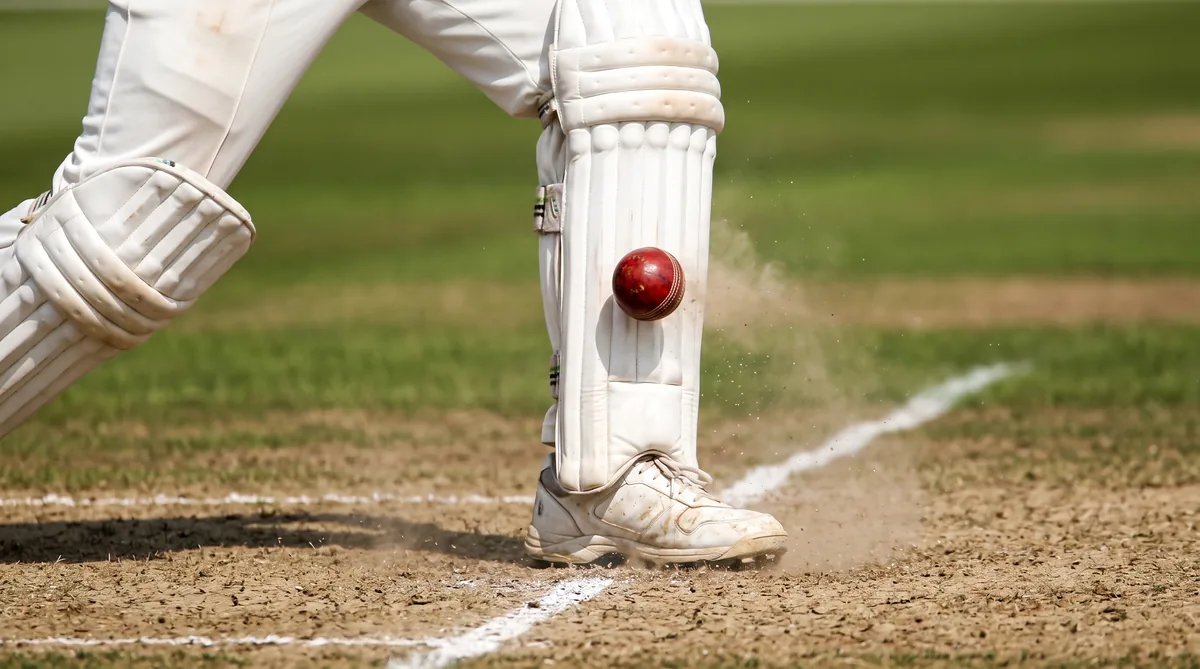
The LBW Law itself has one detail that trips up a lot of readers, and our own version of this page had it wrong until today. The ball cannot have touched the bat first, and a glove holding the bat counts as part of the bat. So a ball off the glove onto the pad is never LBW, however plumb the rest of it looks.
Three of them have happened once each
The archive holds exactly one of each of the three rarest, and all three are worth knowing.
Handled the ball. Michael Vaughan, England against India at Bangalore in December 2001, batting on 64. He missed a sweep at Sarandeep Singh, the ball lodged between his glove and his left leg and dropped towards the pitch, and he picked it up and rolled it away. Sarandeep appealed and the umpire gave it. Vaughan said afterwards that handing the ball back was the right thing to do. It was the last handled the ball ever given in a Test, because the mode no longer exists.
Timed out. Angelo Mathews, Sri Lanka against Bangladesh at the Arun Jaitley Stadium on 6 November 2023, in the World Cup. He walked out, found the strap on his helmet was broken and signalled for a replacement rather than taking guard. Shakib Al Hasan appealed. He remains the only batter ever given timed out in international cricket.
Hit the ball twice. Fanyan Mughal, Malta against Romania at Moara Vlasiei on 20 August 2023, in the Continental Cup. He swung at a leg-stump ball from Shantanu Vashisht, the ball looped off the bat and dropped at his feet, and the Romania keeper Satvik Nadigotla came charging in for it with the non-striker stranded. Mughal patted it away, almost certainly on reflex, and Romania appealed. It is the only hit the ball twice ever given in an international, and it came three months before Mathews walked off in Delhi.
One caveat, because it matters: the archive covers men’s Tests, ODIs, T20Is and the IPL, so first-class and domestic cricket sit outside it. Mathews and Mughal really are the only cases in international cricket. Handled the ball is different, because seven batters were given out that way in Tests before the mode was scrapped, and Vaughan was simply the last of them.
Why the number keeps changing
Anyone who learned the game before 2017 was taught eleven ways out. The 2017 Code deleted handled the ball as a separate mode and folded it into Law 37, so a batter who now shoves the ball off his stumps with a glove is given obstructing the field instead. That is exactly what happened to Mushfiqur Rahim in 2023, and it is why some lists still say eleven.
Retired out is the other reason the count wobbles. It has no Law of its own in the 32 to 40 block, it lives in Law 25.4.3, and plenty of lists leave it out for that reason and print nine.
The next change lands in October, when a new edition of the Laws comes into force, the first since 2022, with 73 meaningful changes in it. None of them adds or removes a way of getting out. Several reword one: hit wicket is altered twice, and the non-striker run out is rewritten to say in terms that a bowler may throw the ball at the stumps.
Timed out is three minutes, except when it is two
One more thing this page used to get wrong. Law 40 gives the incoming batter three minutes to be ready. The ICC’s playing conditions cut that to two, and two minutes is what Mathews was held to. If you are reading the Law and the scorecard at the same time and they disagree, the playing conditions win.
The rest of the rulebook, explained
The modes above are only half of what decides whether a wicket stands. The other half is what the bowler did. A batter cannot be bowled, caught, stumped or given LBW off a no ball, and the free hit that follows one leaves run out as effectively the only way to lose a wicket. A wide is more permissive and allows four. And nothing at all counts once the umpire has called dead ball.
Two of the ten have their own pages here as well, because the arguments about them never end: obstructing the field and the difference between retired hurt and retired out, which is a distinction about consent rather than about injury.
Photo credit: Alamy