






Hit wicket in cricket: what the rule says and why T20 produces six times as many
Hit wicket has happened 119 times in 4.17 million deliveries, and a batter is six times likelier to go this way in a T20 league than in a Test. What Law 35 says, why a no ball protects you and a wide does not, and what changes on 1 October 2026.
Aug 29, 2026
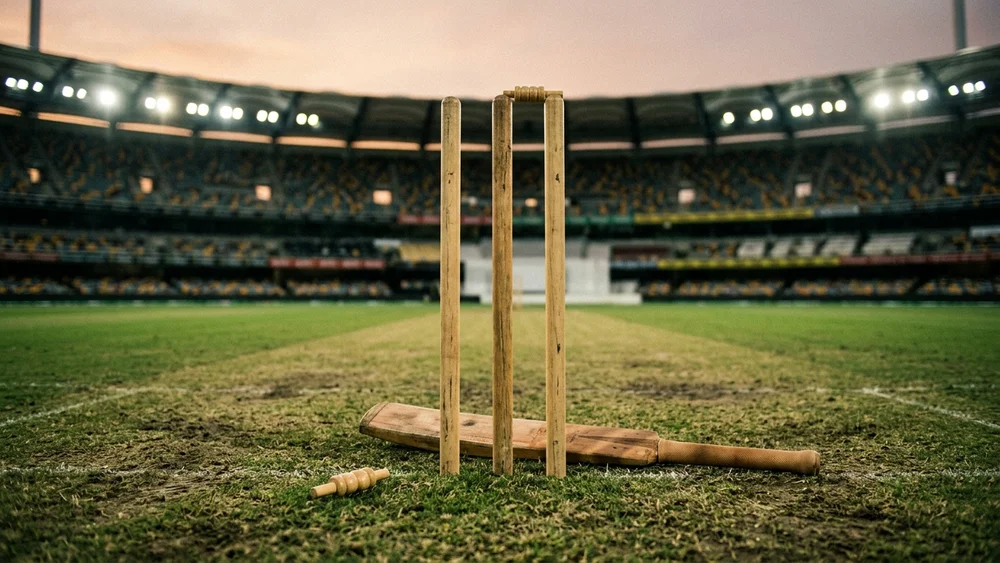
Hit wicket is the dismissal where the batter beats himself. Under Law 35, the striker is out if he breaks his own wicket with his bat or his body while preparing to receive a delivery, while receiving it, or while setting off for the first run straight after playing at it. The bowler gets the wicket. Nobody had to do anything except bowl.
It is uncommon but not exotic: 119 times in 4.17 million deliveries of men’s Test, ODI, T20I and Indian T20 League cricket in the ball-by-ball archive, or once every 35,000 balls. Where it gets interesting is that the rate is nothing like even across formats. A batter is roughly six and a half times more likely to go this way in the Indian T20 League than in a Test.
What Law 35 says
The Law has a narrow window, and almost every argument about a hit wicket is an argument about whether the moment fell inside it.
| Clause | What it says |
| 35.1.1 | Out if the striker breaks the wicket with bat or person in any action taken in preparing to receive or in receiving a delivery, or in setting off for the first run immediately after playing at the ball |
| 35.1.2 | If the wicket is broken before the bowler enters the delivery stride, the umpire calls dead ball |
| 35.2 | Not out once the actions of receiving the delivery are complete, not out while running other than that first stride, not out while avoiding a run out or a throw, and not out if the delivery is a no ball |
| 35.3 | No runs are scored off a hit wicket, other than wide penalties and any five-run award |
The word doing the work in 35.1.1 is “receiving”. A batter who treads on his stumps walking back to the crease after the ball is dead has not received anything, and is not out. A batter who plays a hook, staggers, and falls into the stumps two seconds later is still inside the action he took to receive the ball.
Is hit wicket out on a no ball?
No. Law 35.2 says so directly, and the archive agrees without a single exception. Of the 119 hit wickets, 116 came on a legal delivery and three came on a wide. Not one came on a no ball.
That is the whole difference between the two illegal deliveries, and it catches people out constantly. A no ball protects the striker from every dismissal except hit the ball twice, obstructing the field and run out, so hit wicket is off the table. A wide protects him from fewer: Law 22.9 leaves hit wicket, stumped, run out and obstructing the field all available. So you cannot be out hit wicket off a no ball and you can off a wide, and the same logic explains why a free hit carries the same immunity as the no ball that produced it.
Three men have managed it off a wide in this sample, across all four archives: Misbah-ul-Haq in an ODI against West Indies in 2009, Aaron Finch against Zimbabwe in 2018 and M Akayezu of Rwanda against Kenya in 2024. Finch’s is the one worth knowing. He was on 172 from 76 balls at Harare on 3 July 2018, then the highest score in T20I history, when he chased a Blessing Muzarabani wide on the second-last ball of the innings, lost his balance and knocked the bail off with his own bat.
How often does hit wicket happen?
Counting every men’s ball-by-ball record in the four archives gives a clean gradient, and it points one way with no exception.
| Format | Hit wickets | One every |
| Test | 18 | 95,421 balls |
| ODI | 35 | 38,934 balls |
| T20I | 46 | 17,290 balls |
| T20 League | 20 | 14,786 balls |
Shorter format, higher rate, every step of the way. The mechanism is not mysterious. A batter defending in a Test keeps his weight still and his feet planted. A batter in the last five overs is moving across his stumps before the ball is bowled, swinging through the line and finishing with his back foot somewhere he did not plan to put it.
The Test number is also falling. Eighteen hit wickets across the archive’s Tests break down as seven in the 2000s, eight in the 2010s and three so far in the 2020s, while the T20I count has gone the other way: two, then eleven, then thirty-three.
The death overs are where it happens
Splitting the 66 T20 hit wickets by phase of the innings sharpens the point considerably.
| Overs | Hit wickets | One every |
| 1 to 6 | 15 | 23,828 balls |
| 7 to 15 | 23 | 21,843 balls |
| 16 to 20 | 28 | 8,260 balls |
The powerplay and the middle overs are indistinguishable from each other. The death is nearly three times either. That is the swing, the crease movement and the reverse-sweep all arriving at once, and it is the reason a hit wicket so often comes with the batter already looking annoyed before he sees the bails.
Sai Sudharsan and the bat that would not stay put
B Sai Sudharsan has been dismissed hit wicket three times, all for Gujarat, and two of them came three days apart in the 2026 playoffs. In Qualifier 1 against Bengaluru on 26 May, in the third over, he cut Jacob Duffy towards the boundary and the bat left his hands, ricocheted off his leg and broke the stumps before the ball reached the rope. In Qualifier 2 against Rajasthan on 29 May he was 58 off 32 in a chase of 215, 167 into an opening stand with Shubman Gill, when he drove a low Brijesh Sharma full toss through the off side and the bat flew out of his hands in the follow-through and went straight into the stumps. Gill dropped to his knees at the other end.
Afterwards Sudharsan was as baffled as everyone watching, and funnier about it. “I’m going to try some grip tech now and just bat a few balls and see how it is,” he told broadcasters. “But honestly, I don’t have a lot of answers on how it happened.” Then: “Seriously, last game it just bounced a few times and hit the stumps. But this game, I just wanted it to hit straight away, I think.” Gill was no help. “I saw some video on social media that he was taping his hands,” he said. “I’m going to have to do that in the next match.”
His first, in 2022 at the Brabourne Stadium against Mumbai off Kieron Pollard, was the ordinary kind. Nobody else has three in the Indian T20 League, though Andre Russell and Shoaib Malik have also reached three in T20 cricket as a whole, spread across other leagues. Misbah-ul-Haq’s four are the outright record in this sample, and they are spread across four different competitions and seven years, which is a different sort of achievement.
| Batter | Times | Where |
| Misbah-ul-Haq | 4 | T20 League, ODI, T20I, ODI |
| Jonny Bairstow | 3 | ODI, T20I, T20 League |
| Kusal Mendis | 3 | T20I, ODI, T20 League |
| B Sai Sudharsan | 3 | T20 League, all three |
Bairstow and Mendis have one in each of three competitions, which is close to a full set. Sudharsan got all three in the same one.
What changes on 1 October 2026
The MCC’s new edition of the Laws, the fourth of the 2017 Code, carries 73 changes and comes into force on 1 October 2026. Two of them are in Law 35, and both are about the boundaries of the moment.
| Clause | Change |
| 35.1.1 | Writes down a long-held interpretation: “receiving the ball” lasts until the batter has regained control of his balance after playing the shot |
| 35.2 | Contact by a detached piece of equipment, or significant contact of the person, with any other person or object, prevents a hit wicket that follows it |
The first ends the argument about the batter who hops around for a few steps and then topples into the stumps with the ball long gone. He is out, because he is still inside the action he took to play the shot.
The second reads like a footnote and is not. The MCC spells out that a batter who accidentally lets go of the bat and sees it hit the wicket is out hit wicket, but that a bat which strikes the wicketkeeper first and the stumps second leaves him not out. Sudharsan’s two dismissals fall on the out side of that line by a couple of feet in each case. There is a mirror of it in Law 37, where the same edition adds a clause making a batter who deliberately throws the bat to stop the ball liable to be given out obstructing the field. Same object, same broken stumps, and the only thing separating the two dismissals is intent.
Hit wicket in the Indian T20 League
Twenty in the competition’s history, and the first season set the tone. S Sreesanth took two of them inside it, both at Mohali, 17 days apart: Musavir Khote on 25 April 2008 and Misbah-ul-Haq on 12 May.
Thirteen of the twenty fell in overs 11 to 20. Andre Russell has two as a bowler and both came in the 19th, off successive seasons. The pattern is dull in the best way, because it is exactly what the phase table predicts.
The famous ones
Shane Warne trod on his stumps against Andrew Flintoff at Edgbaston in August 2005, on 42 from 59 balls, in an Australia chase of 282 that finished two runs short. Steve Waugh went the same way against Zaheer Khan at Brisbane in 2003.
Virat Kohli has done it twice, in an ODI at Cardiff off Graeme Swann in 2011 and in a Test at Rajkot off Adil Rashid in 2016. Sachin Tendulkar was out hit wicket off Brett Lee at Brisbane in February 2008. Sunil Ambris of West Indies managed the rarest version of all, in consecutive Tests against New Zealand in December 2017, off Neil Wagner and then Trent Boult.
Boult has three across three formats, and so does Lockie Ferguson. Two New Zealand quicks with the same freakish return is a coincidence, but it is the sort of coincidence a bowler will happily claim as a skill.
Where hit wicket sits among the dismissals
Nine ways of getting out exist in the Laws, and they are used nothing like evenly. On the ball-by-ball record a catch arrives every 54 deliveries and a hit wicket every 35,053, which makes it about 650 times rarer. Only obstructing the field, and three dismissals that have happened once each in the whole sample, sit below it.
What it shares with obstructing the field is the awkwardness of being self-inflicted. Three men have been given out both ways: Inzamam-ul-Haq, Mohammad Hafeez and Ravindra Jadeja. Jadeja’s hit wicket came off Dale Steyn in 2012 and his obstruction twelve years later at Chepauk. Getting out twice to your own body, in two different ways, in two different decades, is a career achievement of a sort nobody puts on a highlights reel.