






Free hit in cricket: the rules, and what a free hit is actually worth
Only three dismissals survive a free hit, and in eleven years of limited-overs cricket only one of them has ever actually happened. Here is what the rule says, and what a free hit is worth in runs.
Oct 24, 2022 · Updated Aug 27, 2026
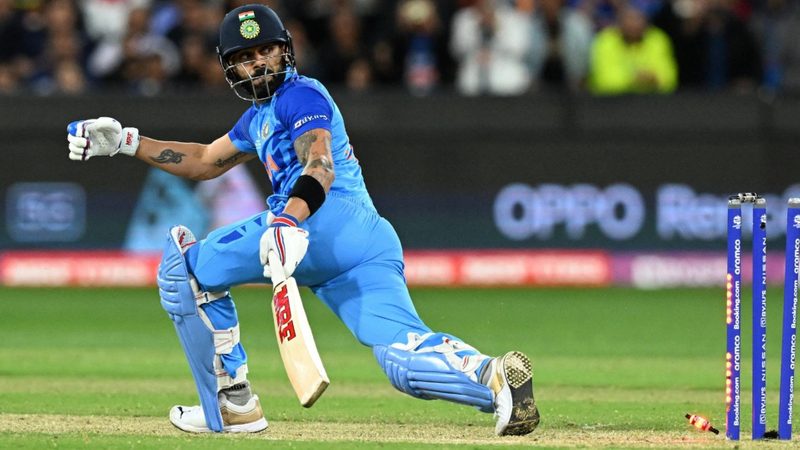
A free hit is the delivery bowled immediately after a no ball in limited-overs cricket, and on it the batter cannot be bowled, caught, stumped or given out lbw. Only three dismissals survive: run out, obstructing the field, and hitting the ball twice. The bowling side has already conceded a run for the no ball, and now has to bowl a ball on which almost nothing it does can take a wicket.
That is the rule. What it is worth is a separate question, and it has a number attached to it. Every men’s Twenty20 international, one-day international and Indian T20 League match with ball-by-ball data since 1 October 2015 contains 5,560 free-hit deliveries. They have produced 27 run outs, one retirement, and not a single dismissal of any other kind.
Free hit rules: what actually happens
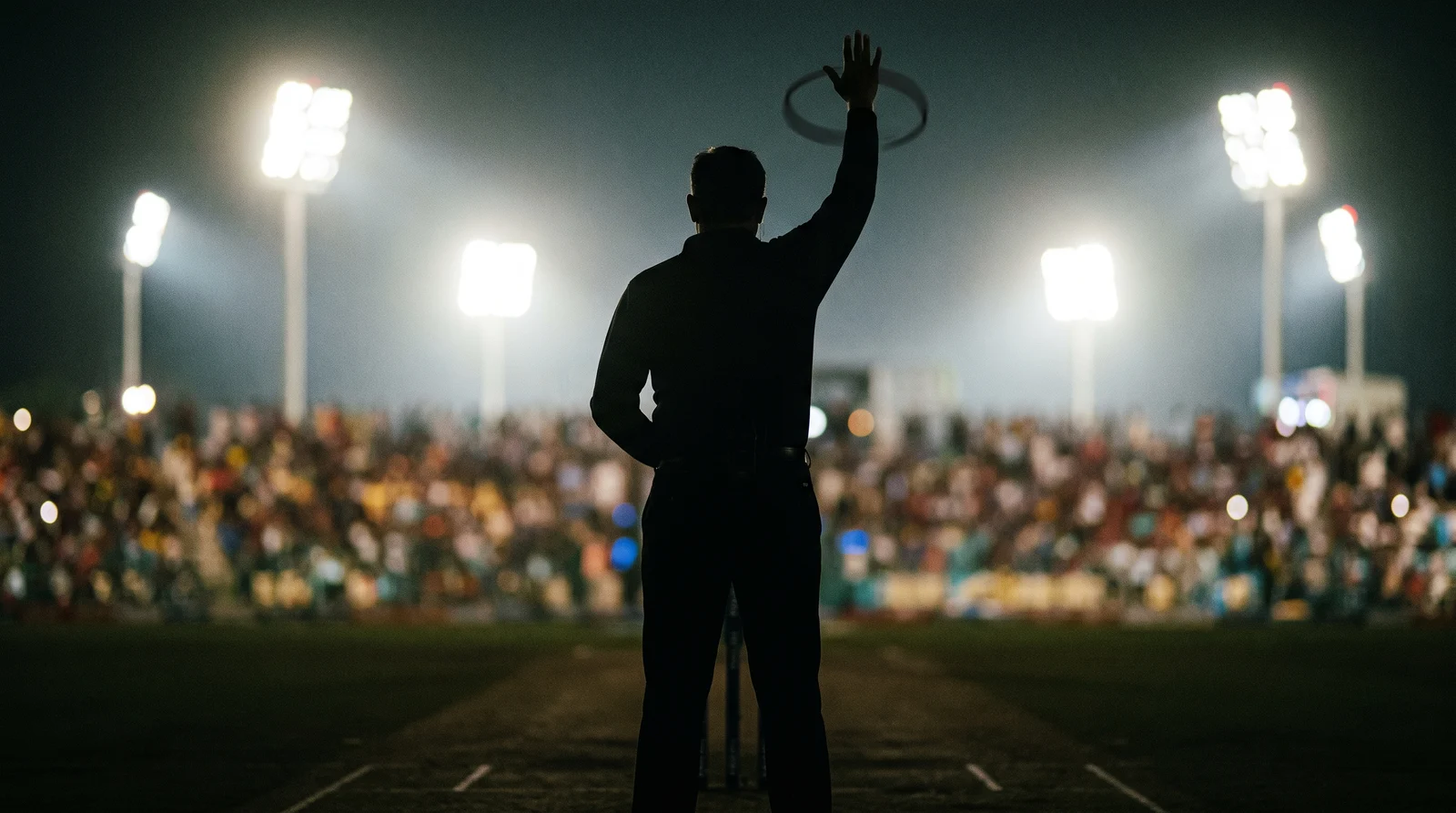
The free hit follows any no ball in a limited-overs match, whether the bowler overstepped, sent down a waist-high full toss, bounced the ball twice or had too many fielders outside the circle. The umpire signals it by rotating one arm in a circle above his head. Six situations cover almost everything a viewer will see.
| Situation | What happens |
|---|---|
| Any no ball | Next delivery is a free hit |
| Free hit ball is a wide or no ball | Free hit carries to the next ball |
| Same batter on strike | Field cannot be changed |
| Odd number run off the no ball | Field may be adjusted for the new striker |
| No ball was for a fielding breach | Field may be corrected regardless |
| Batter is bowled on the free hit | Not out, ball still live, runs can be taken |
The carry-over clause is the one most viewers miss, and it decides more balls than it should. A free hit is owed on the next legitimate delivery, so if the bowler follows his no ball with a wide, the free hit is still owed on the ball after that. Across the three competitions, 358 of the 5,560 free hits were themselves wides and 160 were no balls, so roughly one free hit in ten does not count and has to be bowled again.
Can a batter be out on a free hit?
Yes, but only three ways, and in practice only one. The MCC’s Law 21.18 says that when a no ball has been called, neither batter shall be out under any Law except 34 (hit the ball twice), 37 (obstructing the field) or 38 (run out). The limited-overs playing conditions extend that same protection to the free hit that follows.
So a batter cannot be stumped on a free hit, wide ball or not. He cannot be caught, bowled, or given lbw. The ball-by-ball record over eleven seasons puts a floor under that.
| Competition | Free hits | Run outs | Other |
|---|---|---|---|
| T20I | 3,388 | 22 | 0 |
| ODI | 1,432 | 1 | 0 |
| T20 League | 740 | 4 | 1 retired hurt |
| All three | 5,560 | 27 | 1 |
Twenty-seven run outs in 5,560 deliveries is one every 206 balls, and the single non-run-out entry is not a dismissal at all. Sanju Samson hurt his side playing at a Vipraj Nigam no ball on 16 April 2025, played the free hit that followed, and walked off, which the scorecard records as retired hurt.
The cleanest illustration of what the free hit does and does not protect came at Eden Gardens on 24 May 2022, in the last over of Rajasthan’s innings in a playoff against Gujarat. Yash Dayal’s final delivery was a no ball, and Jos Buttler was run out on it going for a second, for 89. The free hit that followed was a wide, and Riyan Parag was run out on that too, stranded after Ravichandran Ashwin declined the bye. Two balls, two Rajasthan batters gone, both by the one method a no ball cannot save you from.
Parag is the only batter the sample has caught twice. He was run out on a free hit again on 16 April 2025, in the Super Over against Delhi, off a Mitchell Starc no ball. That was the same match Samson had left earlier in the evening.
What a free hit is actually worth
A free hit is not a guaranteed boundary. It is worth roughly two runs, and the gap to an ordinary delivery is wider in the format where scoring is slowest.
| Format | Free hit | Normal ball | Ratio | Boundary |
|---|---|---|---|---|
| T20I | 1.97 | 1.20 | 1.65 | 26.6% |
| ODI | 2.13 | 0.86 | 2.48 | 31.7% |
| T20 League | 2.37 | 1.42 | 1.67 | 35.5% |
Runs per delivery, free hits against all legal deliveries in the same matches. The one-day column is the interesting one. A free hit adds more in ODIs than it does in T20 cricket, not because ODI batters do more with it, but because they are starting from a much lower base. An ODI batter is scoring at 0.86 a ball and a free hit lifts him to 2.13. A T20 League batter is already at 1.42.
The dot-ball rate says the same thing from the other side. On a free hit, T20 League batters fail to score 17.6% of the time against 34.3% on a normal ball, and ODI batters 24.2% against 52.6%. Removing the risk of dismissal roughly halves the chance of a dot in every format, and it does not get close to eliminating it.
The bowler is far more likely to bowl another no ball
The two columns below are the ones worth sitting with, and the pattern in them holds across all three competitions. A bowler delivering a free hit bowls a second no ball between six and eleven times more often than he does on an ordinary delivery.
| Format | NB on FH | NB normal | Wd on FH | Wd normal |
|---|---|---|---|---|
| T20I | 2.98% | 0.45% | 6.85% | 4.00% |
| ODI | 2.37% | 0.22% | 5.52% | 2.29% |
| T20 League | 3.38% | 0.40% | 6.35% | 3.55% |
Some of that is selection rather than pressure. The man bowling a free hit is by definition the man who has just bowled a no ball, so the sample is weighted towards bowlers having a bad day and towards bowlers who overstep more than average. It cannot all be that, though, because the wide rate rises at the same time and by a similar proportion. A bowler on a free hit is aiming further from the bat, at a batter who is entitled to chase it, and both errors go up together.
Read the wide column as strategy rather than accident. Bowling a wide costs one run and cannot be hit for six, so a bowler protecting a total will happily spear a free hit down the leg side and pay the single. The cost of that choice is that the free hit is owed again on the next ball.
A free hit is worth most in the powerplay
The intuition is that a free hit at the death, with the field spread and a batter swinging, must be the most damaging one. It is the least damaging one, in both T20 competitions.
| Phase | T20I balls | T20I runs | League balls | League runs |
|---|---|---|---|---|
| Overs 1 to 6 | 1,171 | 2.06 | 211 | 2.55 |
| Overs 7 to 15 | 1,225 | 1.99 | 245 | 2.45 |
| Overs 16 to 20 | 992 | 1.85 | 284 | 2.16 |
Two things push in the same direction. In the first six overs the powerplay restrictions are already in force, so a free hit lands on a field that is short of protection, and the fielding captain is barred from moving anyone. At the death the captain has his boundary riders out anyway, and the specialist death bowler has a legal escape route in the wide yorker that a new-ball bowler does not.
The most famous free hit in cricket was the second one
Melbourne, 23 October 2022, last over of a T20 World Cup match between India and Pakistan. Mohammad Nawaz sent down a full toss that Virat Kohli hit for six, and the umpires called it above waist height. That is a no ball, seven runs, and a free hit.
What happened next is usually told as a single ball. It was three. Nawaz’s next delivery was a wide, which carried the free hit over. The one after that was the yorker that hit Kohli’s stumps, and because it was still a free hit he was not out, the ball was live, and India ran three byes off it. Only then did the free hit expire, and on the very next delivery Dinesh Karthik was stumped.
One over contains the whole rule set. A batter survived being bowled, and two balls later a batter at the same end was out stumped, because one delivery carried the free hit protection and the other did not.
Is there a free hit in Test cricket?
No. A no ball in a Test match costs one run and has to be re-bowled, and that is the entire penalty. The free hit is not part of the Laws of Cricket at all, which is worth stating plainly because so many explainers attribute it to the MCC rule book. Law 21 runs to eighteen clauses covering every kind of no ball and mentions no free hit anywhere. The free hit exists only where a competition writes it into its playing conditions, and Test cricket never has.
Where the free hit came from
The ICC brought it into international cricket in 2007, and for its first eight years it applied to foot-fault no balls only. A bowler could bounce the ball twice, or bowl a beamer, and concede one run for it. That ended at the ICC’s 2015 annual conference in Barbados, where the board adopted a package of limited-overs changes for series starting on or after 5 July 2015. From that date every type of no ball in an ODI or a T20 international brought a free hit with it, which is why the numbers in this article start from later that year.
Featured image: WILLIAM WEST / AFP