






LBW full form in cricket: what leg before wicket means, and the five conditions that decide it
Leg before wicket is Law 36, and it is rarer than it feels: about one wicket in ten. The five conditions in full, and why the arrival of DRS did not change how often batters are given out this way.
May 1, 2024 · Updated Aug 23, 2026
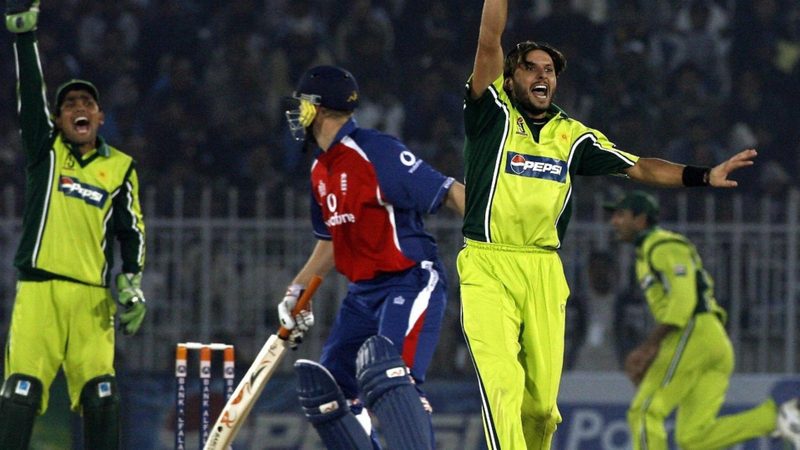
The LBW full form in cricket is leg before wicket. It is the dismissal given when a bowler’s delivery strikes the batter’s body, usually the pads, and would have gone on to hit the stumps. It sits at Law 36 of the MCC Laws of Cricket, and it is the only way of getting out that depends on what a ball would have done rather than on what it did.
That is why it produces more argument than the other nine dismissals put together. It is also rarer than most people assume: across 126,074 wickets in men’s Tests, ODIs, T20Is and the IPL, only 13,277 were LBW, about one in ten.
What does LBW stand for?
LBW stands for leg before wicket.
The name is slightly misleading. The leg is not special. A ball striking the shoulder, the chest, the glove not holding the bat or the helmet can all be given LBW, provided the other conditions are met. What matters is that some part of the batter, other than the bat or the hand holding it, stopped a ball that was going on to hit the wicket.
The five conditions for an LBW
Law 36.1 says the striker is out LBW only if all five of the following apply. Miss one and the appeal fails, which is why so many confident shouts are turned down.
| # | Condition |
| 1 | The delivery is legal, not a no-ball. |
| 2 | The ball pitches in line with the stumps or outside off stump. A ball pitching outside leg stump can never be out LBW, however plumb it looks. |
| 3 | The ball has not touched the bat first. Under Law 5.6, a glove on the hand holding the bat counts as part of the bat, so an inside edge onto the pad is not out. |
| 4 | The ball strikes the batter in line between wicket and wicket. The one exception: if the batter made no genuine attempt to play a shot, an impact outside the line of off stump still counts. |
| 5 | The ball would have gone on to hit the wicket. |
Two clauses in the same Law settle most of the arguments that follow. Only the first interception counts, so a ball hitting pad then bat is judged on the pad. And if the ball hits bat and body at the same instant, the Law treats that as having touched the bat first, which means not out.
Condition 4 is the one that decides Test matches. A batter who props forward and offers no stroke is inviting an LBW he would otherwise be safe from, because padding up removes the protection of the off-stump line. That is precisely how the first player ever dismissed by the Decision Review System, Virender Sehwag in 2008, came to be given out.
A detail that catches out the reverse sweep
Law 36.3 fixes which side of the wicket counts as the off side by where the striker was standing at the moment the ball came into play, not where they end up. Switch-hit and reverse-sweep, and the off side does not move with you. A right-hander who turns himself into a left-hander mid-delivery is still judged on his original off side, so a ball he now thinks is outside off may in law have pitched outside leg, and he cannot be out.
How often is anyone actually out LBW?
The figures below are derived from Cricsheet’s ball-by-ball archives. Coverage is men’s cricket only and is not complete: 890 Tests from December 2001, 2,569 ODIs from June 2002, 3,526 T20Is from 2005 and 1,244 IPL matches from 2008.
| Format | Dismissals | LBWs | Share |
| Tests | 28,657 | 4,734 | 16.5% |
| ODIs | 37,279 | 4,132 | 11.1% |
| T20Is | 45,433 | 3,528 | 7.8% |
| IPL | 14,705 | 883 | 6.0% |
The gradient is clean and it runs one way. A wicket in a Test is nearly three times more likely to be an LBW than a wicket in the IPL. Nothing about the Law changes between formats, so the explanation is entirely about how batters play. In a Test they defend, leave and play off the front foot with the pad in line. In a T20 they hit across the line and get caught, or miss and get bowled.
Every way an IPL batter has been dismissed
The full breakdown of all 14,705 IPL dismissals shows where LBW actually sits. The rows sum to the total, which is the check to run on any version of this table.
| Dismissal | Number | Share |
| Caught | 9,321 | 63.4% |
| Bowled | 2,460 | 16.7% |
| Run out | 1,194 | 8.1% |
| LBW | 883 | 6.0% |
| Caught and bowled | 410 | 2.8% |
| Stumped | 388 | 2.6% |
| Hit wicket | 20 | 0.1% |
| Retired hurt | 19 | 0.1% |
| Retired out | 6 | 0.0% |
| Obstructing the field | 4 | 0.0% |
Counting caught and caught-and-bowled together, 66.2 per cent of IPL wickets are catches. Retired hurt is in the list because the data records it, but it is not a dismissal and no bowler is credited with it.
DRS did not produce more LBWs, which is not what anyone expected
The standard assumption is that ball-tracking emboldened umpires, ended the old convention of giving the batter the benefit of any doubt, and pushed LBW numbers up. The Test record does not show it.
| Period | Test dismissals | LBWs | Share |
| 2001 to 2008, before DRS | 5,546 | 949 | 17.1% |
| 2009 to 2016 | 10,730 | 1,831 | 17.1% |
| 2017 to 2026 | 12,381 | 1,954 | 15.8% |
Identical across the first two periods to the decimal place, and slightly lower in the most recent one. Whatever DRS changed, and it plainly changed which individual decisions are correct, it did not change how often batters are out this way.
There is a plausible reason the two effects cancel. Ball-tracking does overturn not-outs that would once have stood, but it also overturns outs, and it has retired a generation of LBW appeals that used to succeed against balls pitching marginally outside leg or missing leg stump. Umpire’s call, which returns marginal decisions to whatever was given on the field, absorbs much of the rest. Our piece on how umpire’s call works covers that mechanism.
Who wins and loses this decision most
Within the 890 Tests covered by the data, and these are dataset totals rather than all-time records, the bowlers who have taken most of their wickets LBW are spinners and swing bowlers, which is what the Law would predict.
| Bowler | Test LBWs |
| Ravichandran Ashwin | 116 |
| Rangana Herath | 102 |
| Stuart Broad | 101 |
| James Anderson | 96 |
| Nathan Lyon | 85 |
At the other end, Joe Root has been given out LBW 57 times in this period, more than anyone, with Alastair Cook on 54 and Virat Kohli on 41. That is a list of men who bat a lot rather than a list of technical flaws, and it is a reminder that the dismissal follows volume as much as method.
Where the LBW law came from
The 1744 Laws, the first written code, contained no LBW at all. Bats were curved, batters were not thought likely to stand in front of their stumps, and the only protection was a clause letting umpires act if a batter was “standing unfair to strike”.
Straighter bats changed the incentives. Batters started deliberately blocking the ball with their legs, and the 1774 revision introduced the dismissal, ruling the striker out if he “puts his leg before the wicket with a design to stop the ball, and actually prevent the ball from hitting his wicket by it”.
The word design is the problem in that sentence. For its first century the Law asked umpires to judge intent, which is unknowable. The condition that governs the modern game, allowing an LBW when the ball pitches outside off stump, was tried as an experiment in 1935 and written into the Laws permanently in 1937.
LBW questions people actually ask
What is the LBW full form? Leg before wicket.
Can you be out LBW if the ball pitches outside leg stump? No, never, whatever the impact looks like. This is the single most common misunderstanding of the Law.
Can you be out LBW if you are hit outside off stump? Yes, but only if you made no genuine attempt to play a shot.
Can you be out LBW off a no-ball? No. Condition one fails.
Does the ball have to hit the leg? No. Any part of the person other than the bat or the hand holding it will do, including the glove of the bottom hand if it has come off the handle.
Can you be out LBW without the ball bouncing? Yes. A full toss can be given, and only condition two, about where the ball pitched, drops away.
For the rest of the rulebook, our explainers on the rules of Test cricket and obstructing the field cover the laws that decide matches and the ones that almost never do.
Read more of our cricket explainers
Photo credit: Alamy