








DRS full form in cricket: what the Decision Review System is, and how often reviews actually work
Three out of every four DRS reviews fail. A derivation of 11,818 reviews across Tests, ODIs, T20Is and the IPL shows who gets them right, and why the Dhoni Review System does not show up in the data.
Apr 12, 2024 · Updated Aug 23, 2026
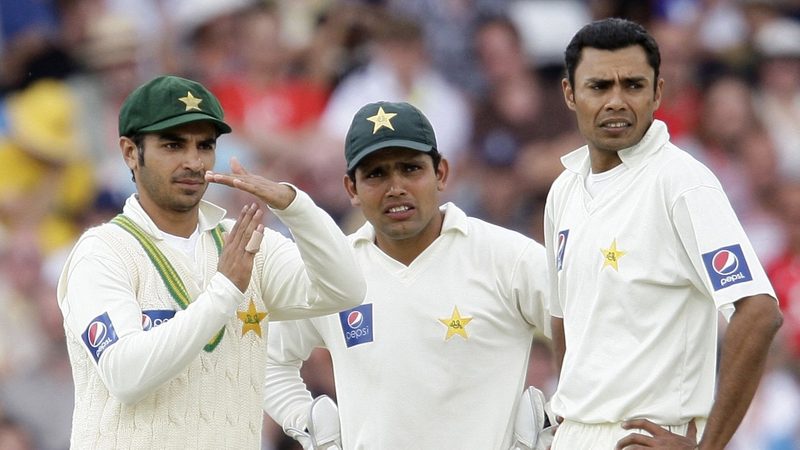
DRS stands for Decision Review System, the technology-assisted process that lets a batting or fielding side challenge an on-field umpire’s decision. It has been part of international cricket since 2008 and part of the IPL since 2018. What most viewers do not realise is how rarely it works: across 11,818 reviews in men’s Tests, ODIs, T20Is and the IPL for which ball-by-ball data exists, only 3,228 were upheld. That is 27.3 per cent, or roughly one in four.
DRS full form in cricket, and what the system actually does
The full form of DRS is Decision Review System. It was known as the Umpire Decision Review System, or UDRS, when it was first trialled.
A review is not an appeal. The fielding side appeals first, the on-field umpire gives a decision, and only then can that decision be challenged. The side that disagrees signals a T with both hands, the television umpire works through the available technology, and the on-field call is either overturned or left standing.
The tools the third umpire has are slow-motion replays for the front-foot no-ball, edge detection through sound and heat, and ball-tracking for leg before wicket. The ball-tracking element is why so many reviews turn on the leg before wicket law, which is the one dismissal where a prediction rather than a photograph decides the outcome.
How a review works, step by step
Who may ask is fixed. Only the dismissed batter can review an out decision, and only the fielding captain can review a not out. Either has 15 seconds from the ball becoming dead to make the request, and asking later than that lets the umpire refuse it. Signals or information from anyone off the field, the dressing room included, also invalidate a request.
The third umpire then checks in order. Was the delivery legal, or did the bowler overstep? Did the ball hit the bat, and does the sound or heat evidence show it? For an LBW, where did the ball pitch, where did it strike the batter, and would it have gone on to hit the stumps? Only if every gate is passed does the decision change.
How many reviews does a team get?
This is the single most commonly wrong number in DRS explainers, because the allowance has changed repeatedly and several reference pages still carry pre-2020 figures. Rather than take one, the table below is derived from the ball-by-ball data: the most failed reviews any one team has actually burnt in a single innings tells you what the ceiling was that year.
| Competition | Unsuccessful reviews per innings | Since |
| Tests | 3 | 2020 |
| ODIs | 2 | 2020 |
| T20Is | 2 | 2020 |
| IPL | 2 | 2022 |
The IPL row is the control that shows the method works. The observed ceiling there is exactly one per innings for 2018, 2019, 2020 and 2021, and exactly two from 2022 onwards, which is precisely when the BCCI raised the allowance from one to two. The data was never told that; it simply shows it.
The three extra reviews in Tests arrived in June 2020 as a temporary measure, when travel restrictions meant home umpires were standing in Tests instead of neutral ones. No team has burnt a fourth in any Test innings since, so the interim figure is still the operative one six years later.
One quirk sits in the middle of the Test record, and it doubles as a way of checking a rule most explainers still get wrong. Between 2013 and 2017, and in no other period, teams occasionally used four failed reviews in a single innings. That looks impossible against a limit of two. It was not, because reviews were topped back up after 80 overs in that era, so a long innings carried two separate allowances. The top-up came in for 2013 and was scrapped in the 2017 playing conditions, in the same package that stopped umpire’s call costing a review.
Plenty of DRS pages still tell readers that reviews reset after 80 overs. The data says otherwise: since 2020 no team has burnt a fourth review in any Test innings, across roughly a thousand innings. If the top-up still existed, a side using its three and being topped up would have produced a fourth long ago.
What umpire’s call means
Umpire’s call is the outcome that causes the most argument, and it applies only to LBW. If ball-tracking shows the delivery clipping the stumps rather than clearly hitting them, the on-field decision stands, whichever way it was given. The same delivery can therefore be out for one batter and not out for another, depending on what the umpire said in the first place.
The important practical detail is that umpire’s call does not cost the reviewing side anything. The review is returned. In the data, 1,371 of the 11,818 reviews finished as umpire’s call, 11.6 per cent of the total, and every one of them left the team’s allowance intact.
The margins were changed in April 2021, when the ICC lifted the height of the wicket zone to the top of the stumps so that the umpire’s call margin was the same for height as it already was for width. Before that a ball predicted to clip the top of the bails stayed with the on-field decision more often than one clipping the side of leg stump. We have a fuller explanation of how umpire’s call is applied in a separate piece.
How often does DRS actually work?
Every figure below is derived from Cricsheet’s ball-by-ball archives, which record the reviewing side and the outcome. Coverage is men’s cricket only and it is not complete: 890 Tests from December 2001, 2,569 ODIs from June 2002, 3,526 T20Is from 2005 and 1,244 IPL matches from 2008. Review data begins in 2008 for Tests, 2011 for ODIs and 2017 for T20Is, which independently confirms the format-by-format introduction dates.
| Competition | Reviews | Upheld | Success rate | Umpire’s call |
| Tests | 6,557 | 1,728 | 26.4% | 11.1% |
| ODIs | 2,876 | 849 | 29.5% | 10.1% |
| T20Is | 1,395 | 358 | 25.7% | 15.2% |
| IPL | 990 | 293 | 29.6% | 14.1% |
| All four | 11,818 | 3,228 | 27.3% | 11.6% |
The four competitions land within four percentage points of each other despite covering red ball and white, 20 overs and five days. Roughly three out of every four challenges fail.
Batters review better than fielding sides, and it is not close
Splitting those same reviews by who asked for them produces the clearest finding in the dataset, and it holds in all four competitions.
| Competition | Batting reviews | Success | Fielding reviews | Success |
| Tests | 2,807 | 35.0% | 3,750 | 19.9% |
| ODIs | 1,237 | 37.0% | 1,639 | 23.9% |
| T20Is | 542 | 32.7% | 853 | 21.2% |
| IPL | 372 | 39.2% | 618 | 23.8% |
| All four | 4,958 | 35.6% | 6,860 | 21.4% |
A batter challenging his own dismissal is successful about 36 per cent of the time. A fielding side challenging a not out is successful about 21 per cent. The gap is fourteen points and it never reverses.
The explanation is not that batters are better judges of ball-tracking. It is that they have better information and worse alternatives. A batter knows whether he hit it, feels where the ball struck him and is reviewing to save his own wicket. A fielding side is reacting to an appeal that has already been turned down, often on nothing more than a bowler’s conviction, and a wasted review costs it far less than a wasted review costs a batter already walking off.
Two checks a reader can run on the tables above. The batting and fielding review columns must sum to the totals in the previous table, and they do: 4,958 plus 6,860 is 11,818, and 1,763 plus 1,465 successful reviews is 3,228. Second, a successful fielding review must produce a wicket on that delivery and a successful batting review must not, since one overturns a not out and the other overturns an out. That identity holds on 11,817 of the 11,818 reviews.
The one review that breaks the rule
The single exception is real cricket rather than a data error, and it is a famous one. At the MCG on the opening day of the 2015 World Cup, 14 February, England’s James Taylor was given out LBW to Josh Hazlewood by Aleem Dar and reviewed. Ball-tracking missed the stumps and Taylor was reprieved. In the chaos, Anderson had set off for a single and Glenn Maxwell threw down the stumps at the other end, so the same delivery that saved Taylor ran out his last partner.
The ICC admitted afterwards that the run out should never have been given: under the playing conditions the ball was dead the moment Dar’s finger went up, so no further dismissal was possible. Taylor was left stranded on 98 not out, England were all out for 231 chasing 342 for 9, and the tournament’s opening day cost him a World Cup hundred.
So the one row in 11,818 that breaks the arithmetic is a row that, by the governing body’s own admission, should not exist.
Is the Dhoni Review System real?
MS Dhoni’s reputation for reading reviews correctly is strong enough that commentators renamed the system after him. The IPL data is the only place that reputation can be tested at scale, because it is the competition where he has spent the DRS era behind the stumps.
It does not support the legend. Chennai Super Kings have taken 91 reviews since DRS arrived in the IPL in 2018 and had 27 upheld, a success rate of 29.7 per cent against a league average of 29.6. That is fifth of the ten franchises, and it is average to the first decimal place.
| Team | Reviews | Upheld | Success rate |
| Royal Challengers Bengaluru | 106 | 41 | 38.7% |
| Rajasthan Royals | 107 | 36 | 33.6% |
| Mumbai Indians | 109 | 36 | 33.0% |
| Sunrisers Hyderabad | 104 | 34 | 32.7% |
| Chennai Super Kings | 91 | 27 | 29.7% |
| Kolkata Knight Riders | 119 | 33 | 27.7% |
| Punjab Kings | 102 | 28 | 27.5% |
| Lucknow Super Giants | 62 | 16 | 25.8% |
| Gujarat Titans | 87 | 22 | 25.3% |
| Delhi Capitals | 103 | 20 | 19.4% |
The ten rows sum to exactly 990 reviews and 293 upheld, which is every review in the IPL dataset, because DRS arrived after the last of the defunct franchises had gone.
Two honest caveats, and they matter. A review is credited to a team, not to a player, so not every Chennai review is Dhoni’s call, particularly in the seasons Ruturaj Gaikwad led the side. And his reputation was built largely on India duty rather than in the IPL, which this data does not cover. What can be said is narrower than the nickname: in the one competition where his DRS-era record can be counted, his team’s reviews have been ordinary.
Reviews are being wasted more often than they used to be
The IPL success rate has fallen in a fairly straight line, from 35.7 per cent in 2018 to 16.9 per cent in 2026, the lowest of any season. Over the same period the number of reviews per match has risen from 1.40 to a peak of 2.08 in 2024.
The timing is consistent with the 2022 change that doubled the allowance, on the reasoning that a team holding two reviews will gamble one it would previously have kept. The data cannot prove that, since bowling attacks, ball-tracking and umpiring all moved over the same period, and 2026 is a single season. What it does establish is that teams are now getting three quarters of their IPL reviews wrong.
What changed in the DRS in 2025
Two adjustments took effect with the 2025-27 World Test Championship cycle and, for white-ball cricket, from 2 July 2025.
The first concerns what happens when one review turns up a second possible dismissal. If a batter given out caught behind reviews it and the replays show no edge, the third umpire now goes on to check LBW even though nobody appealed for it, and the original decision carried into that check is out. So a ball-tracking result of umpire’s call leaves the batter dismissed. Under the previous reading the benefit of the doubt went the other way.
The second orders combined reviews chronologically. If an incident produces both an LBW shout and a run out, the third umpire adjudicates the LBW first because it happened first, and if the batter is out the ball is dead from that moment and the run out never needs examining.
DRS in the IPL
The IPL adopted DRS in 2018, a decade after Test cricket. It has since gone further than the international game in one respect: teams can review wide and high no-ball calls, which ICC playing conditions still do not permit. The Women’s Premier League used it first in 2023 and the IPL followed the same year. Crucially it is not an extra review, it comes out of the same two.
That is a bigger change than it sounds in a competition decided by margins as fine as those in the Impact Player era, where a wide called or not called in a final over can settle a match.
DRS questions people actually ask
What is the full form of DRS in cricket? Decision Review System. It was originally called the Umpire Decision Review System, or UDRS.
When was DRS introduced? It was first used in a Test between India and Sri Lanka in July 2008. Virender Sehwag was the first batter given out by a review, after Muttiah Muralitharan’s side challenged a not out. DRS reached ODIs in 2011 and T20Is in 2017.
Does an umpire’s call cost you a review? No. The review is returned to the team.
How many reviews does each team get? Three unsuccessful reviews per innings in Tests, two in ODIs and T20Is, and two in the IPL.
Can DRS be used for every dismissal? Effectively yes, but most of the time nobody needs to. Run outs, stumpings and disputed catches are normally sent upstairs by the on-field umpires themselves, and those umpire reviews are unlimited and cost a team nothing. A player review only comes into play once it is clear the umpires are not going to refer it.
For the rest of the laws that decide matches, our explainers on the DLS method and the rules of Test cricket cover the two most commonly misread parts of the rulebook.
More cricket explainers and features
Featured photo: AFP / Ian Kington