








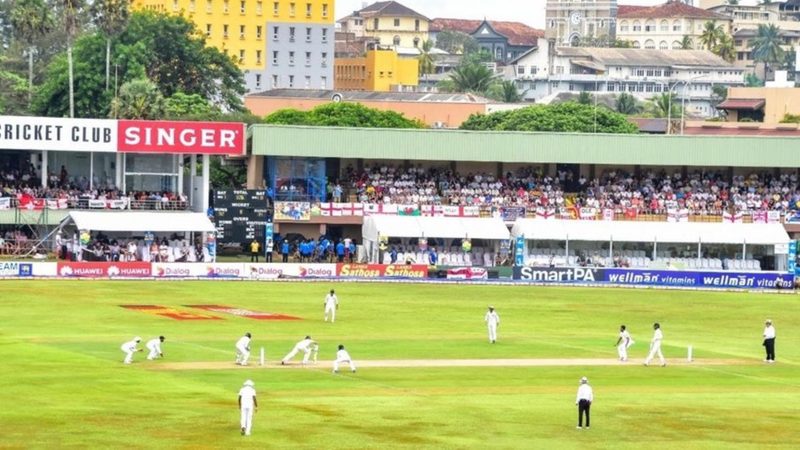
A Test match is two innings a side over five days, with a minimum of 90 overs bowled a day and no limit on how long an innings lasts. To win, a side has to bowl the opposition out twice and finish ahead on runs. Fail to take all 20 wickets in the time available and the match is drawn, however far ahead you are.
That last point is what separates Test cricket from every other format: running out of time is a real result, not an anticlimax. Everything below follows from it. The rules here are the ICC Men’s Test Match Playing Conditions in force since June 2025, which the World Test Championship conditions match clause for clause.
How a Test match is won, lost, drawn or tied
- Win. A side wins by scoring more runs in total across its two innings and dismissing the opposition twice. A team batting last wins the moment it passes the target, and the margin is given in wickets. A team that wins while bowling last has the margin given in runs.
- Draw. If the match reaches its scheduled end without both sides being dismissed twice, it is drawn — no matter how far ahead either team is. A side eight wickets down and 300 behind can bat out the last day and draw.
- Tie. Both sides are dismissed and the scores finish level. It has happened exactly twice: Australia v West Indies at Brisbane in December 1960, and India v Australia at Chennai in September 1986. A tie is not a draw — a draw is an unfinished match, a tie is a finished one that ended level.
- An innings win. If a side’s single innings beats the opposition’s two combined, it wins “by an innings and x runs”.
A completed innings is one where the side is all out, has no further batter available, or the captain has declared or forfeited it. Declaring lets a captain close an innings with wickets in hand to leave enough time to bowl the other side out — the trade every Test captain has to price.
The shape of a day
Six hours of scheduled play, in three two-hour sessions, with a 40-minute lunch interval and a 20-minute tea interval. A minimum of 90 overs must be bowled on days one to four; on the last day it is 75 overs before the last hour plus a minimum of 15 in the last hour. Full detail on that in our guide to how many overs there are in Test cricket.
The toss is made on the field under the match referee’s supervision, no earlier than 30 minutes and no later than 15 minutes before the scheduled start. The winning captain chooses to bat or bowl.
The stop clock
Test cricket now runs on a clock between overs. The fielding side must be ready to start each over within 60 seconds of the last one ending, counted up on an electronic clock at the ground. The first two breaches in an innings bring warnings; the third and every one after it costs the fielding side 5 penalty runs. The warning count resets after each block of 80 overs. The clock is not started if a new batter is coming in, at a drinks break, during approved on-field treatment, or for anything outside the fielding side’s control.
The ball
Tests are played with a red ball in daylight and a pink ball under lights — the ICC approved day-night Tests in 2012. Both teams use the same make of ball, chosen by the home board.
The fielding captain may demand a new ball once 80 overs have been bowled with the old one. He does not have to: a captain with reverse swing working will often leave it. There is no second new ball before another 80 overs have passed.
Saliva may not be applied to the ball. If the umpires believe it has been, the batting side is awarded 5 penalty runs.
The Decision Review System
Each team gets three unsuccessful Player Reviews per innings in Test cricket. This is the rule most often reported wrongly — the allowance is three, not two, and it is three unsuccessful reviews, so a side that keeps getting them right never runs out.
A review does not count against the allowance when:
- the on-field decision is overturned — a successful review is free;
- an LBW decision stands solely on umpire’s call;
- a not-out stands because the delivery was a no ball, so nothing further needed deciding;
- the third umpire’s own review from the same delivery made the player review unnecessary.
A review is still lost if the decision stands for a different mode of dismissal than the one given. The match referee may reinstate a review lost to a technology failure, but not where the technology worked and the evidence was simply inconclusive. The third umpire counts the reviews and the scoreboard must show how many each side has left.
The follow-on
A side batting first that leads by at least 200 runs on first innings may make the opposition bat again immediately. It is an option, never a requirement, and captains increasingly decline it to protect tired bowlers.
| Match length | Minimum first-innings lead |
|---|---|
| 5 days (a Test) | 200 runs |
| 3 or 4 days | 150 runs |
| 2 days | 100 runs |
| 1 day | 75 runs |
Replacements
Test cricket has no substitutes who can bat or bowl, with one exception. A concussion replacement may be permitted when a player suffers a concussion or suspected concussion from a head or neck injury sustained in play. The team doctor applies to the match referee, and the replacement must be a like-for-like player. Ordinary substitute fielders may field but cannot bat, bowl or keep wicket.
The boundary catch rule
The rule for a fielder taking a catch at the rope is stricter than most fans assume. A fielder who is in the air is treated as being outside the boundary if their last contact with the ground before first touching the ball was not entirely inside it.
If that first contact is legal, the fielder may then jump from outside the rope to play the ball while airborne — but every subsequent contact with the ground until the ball is dead must be inside the field of play. Touch down outside even once, with or without the ball, and a boundary is scored. The same applies to a fielder who parries the ball back in: they must land and stay inside.
Who plays Test cricket
Twelve ICC Full Members hold Test status: Afghanistan, Australia, Bangladesh, England, India, Ireland, New Zealand, Pakistan, South Africa, Sri Lanka, the West Indies and Zimbabwe.
The ICC’s regional membership totals — 22 in Africa, 17 in the Americas, 24 in Asia, 11 in East Asia-Pacific and 34 in Europe — come to 108 members in all, so 96 of them are Associates. Associate members play limited-overs international cricket only and cannot play official Tests.
Nine of the twelve contest the World Test Championship. Afghanistan, Ireland and Zimbabwe play Tests outside it, and those matches earn no championship points — see our guide to the World Test Championship.
Test cricket records
Sachin Tendulkar holds the record for the most runs in Test cricket: 15,921 in 200 matches at an average of 53.78. Muttiah Muralitharan has the most wickets, 800 in 133 matches at 22.72. Muralitharan’s mark looks safe — Shane Warne is next on 708 and retired — but Tendulkar’s is not out of reach: Joe Root is second on 14,278 and still playing, 1,643 runs behind. Figures complete to 13 September 2026.
Test cricket rules: quick answers
How many innings does each team get? Two, played alternately unless the follow-on is enforced or an innings is forfeited.
How many reviews does a team have? Three unsuccessful ones per innings. Successful reviews and umpire’s call do not count.
How big a lead do you need to enforce the follow-on? 200 runs in a five-day Test.
When can the fielding side take a new ball? Once 80 overs have been bowled with the current one.
Can a Test be drawn even if one side is far ahead? Yes. Without 20 wickets, the time running out means a draw.
Follow us on Telegram for the latest updates from the world of sports!
Interested in cricket betting? Click here to check out the list of top sites.
Photo credit: Alamy