








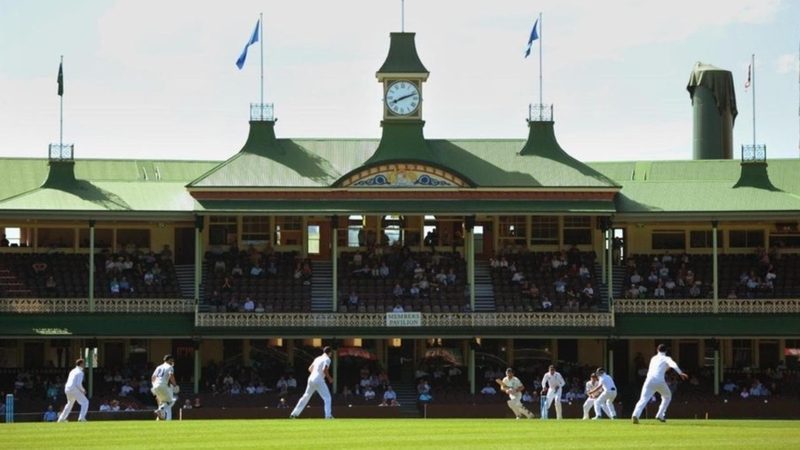
A minimum of 90 overs must be bowled on each of the first four days of a Test match. The last day is split: a minimum of 75 overs before the last hour, and a minimum of 15 overs in the last hour itself. That is 450 overs across a full five-day Test.
The number that matters most, and the one most often got wrong: 90 is a minimum, not a maximum. If the fielding side keeps up with the clock, more than 90 overs can be bowled in a day. The figures below are from the ICC Men’s Test Match Playing Conditions in force since June 2025, which are matched clause for clause by the World Test Championship 2025-27 conditions.
How many overs in a day of Test cricket?
| Day | Minimum overs | How it is set |
|---|---|---|
| Days 1 to 4 | 90 | Play continues until 90 overs or the scheduled close, whichever is later |
| Day 5, before the last hour | 75 | Measured over the playing time other than the final hour |
| Day 5, last hour | 15 | A fixed minimum, with its own calculation for stoppages |
| Full five-day Test | 450 | 90 × 4, plus 75 + 15 on the last day |
The rate underneath all of these is the same: 15 overs an hour. Six hours of scheduled play a day at 15 overs an hour is 90 overs, and the last day’s 75-plus-15 is the same rate with the final hour counted separately so that a chase cannot be strangled by slow bowling.
Why 90 is a minimum and not a maximum
On days one to four, play continues until either the 90th over is completed or the scheduled close of play is reached — whichever comes later. Two things follow from that wording.
- If the side is behind the clock at the scheduled close, play is extended by up to 30 minutes to get the overs in. That extension is called permitted overtime. If the overs still are not bowled when it expires, play stops at the end of the over in progress and those overs are gone — they are not made up on a later day.
- If the side is ahead of the clock, nothing stops them. The 91st and 92nd overs get bowled because the scheduled close has not arrived. Spin-heavy attacks routinely pass 90.
How a day’s play is divided
A Test day is six hours of scheduled play in three sessions of two hours, separated by a 40-minute lunch interval and a 20-minute tea interval. A home board may ask the ICC to move time between those two breaks, but the combined total must stay at 60 minutes. At 15 overs an hour, the rough expectation is 30 overs a session.
A day-night Test works to the same six hours; the start and finish times are agreed between the two boards and approved by the ICC.
When the minimum drops below 90
The 90 is a target that the conditions reduce in defined circumstances. The two that come up most often:
- Time lost to weather or bad light. If play is suspended for more than an hour in total on a day, the minimum falls by one over for every full four minutes of playing time lost. Up to an hour of lost time is first made up by extending the day.
- A change of innings. When an innings ends during a day’s play — a side is bowled out or declares — two overs are deducted from the day’s minimum. This does not apply if the change falls at lunch or tea, or during a stoppage, and the over in progress when the innings ends counts as completed.
Extra overs can also be added when a result is close. Umpires may play 30 minutes of extra time (a minimum of 8 overs) at the end of any day other than the last if a captain asks and they think it will produce a result that day, and may extend play by 15 minutes (a minimum of four overs) at lunch or tea on the same reasoning. Once granted, the whole period is played out even if the chance of a finish disappears.
The last hour
The final hour of the fifth day has its own rules because it is where matches are won and saved. A minimum of 15 overs must be bowled in it, and every calculation for a stoppage or a new innings inside it runs at one over per four minutes. The umpire at the bowler’s end signals when the last hour starts, and it keeps that name however long it actually runs.
If the 75 overs due before the last hour have not been bowled when an hour of scheduled time is left, the last hour starts only once they are. And if both captains agree on the final day that neither side can win, they may shake hands once the last hour has been reached or once 15 overs remain, whichever is later.
What happens if a team does not bowl its overs
Over rate is calculated at the end of the match, as the average the fielding side achieved across both of the opposition’s innings. A team that finishes short incurs one Penalty Over for every full over it is behind, and in the World Test Championship that costs one championship point per Penalty Over.
These are not small numbers. In the 2025-27 cycle, England have lost 14 points to over rates, the West Indies 2 and Pakistan 8 — England’s 88 points earned show on the table as 74, which is the difference between a mid-table position and a poor one.
The calculation is not a stopwatch on the whole day. Time is credited back for on-field medical treatment, serious injury, third-umpire referrals and reviews, batting-side time wasting, two minutes per wicket taken and four minutes per drinks break. There are also three let-offs: if a side bowls the opposition out inside 80 overs in an innings and was not already over the required rate, that innings is left out of the calculation; if it bowls the opposition out twice inside 160 overs in total, no sanction applies; and no sanction applies if it bowled 80 overs or fewer in the whole match.
The running over rate is shown to the players every 30 minutes by the third umpire, and the scoreboard must display both the total overs bowled with the current ball and the minimum overs still to come that day.
Which teams play Test cricket?
Twelve Full Members hold Test status. Nine of them contest the World Test Championship — Australia, Bangladesh, England, India, New Zealand, Pakistan, South Africa, Sri Lanka and the West Indies — while Afghanistan, Ireland and Zimbabwe play Tests outside it, and matches against them do not count towards the championship.
A quirk worth knowing: the ICC’s Men’s Test Team Rankings listed only ten sides on 12 September 2026. Afghanistan and Ireland play too few Tests to meet the qualification threshold, so they are absent from the table without having lost their Test status.
Overs in Test cricket: quick answers
How many overs are bowled in a day of Test cricket? A minimum of 90 on days one to four. More than 90 is allowed and happens.
How many overs on the final day? A minimum of 75 before the last hour, plus a minimum of 15 in the last hour.
How many overs in a whole Test match? 450 if all five days are completed in full.
How many overs per session? Around 30, from the required rate of 15 overs an hour over a two-hour session.
What if the overs are not bowled? Up to 30 minutes of extra time is added; anything still missing is lost, and the fielding side can be docked a World Test Championship point for every over it finishes short.
For how the championship those points feed into actually works, see our guide to the World Test Championship. For the format from the ground up, start with Test cricket rules explained.
Follow us on Telegram for the latest updates from the world of sports!
Interested in cricket betting? Click here to check out the list of top sites.
Photo credit: Alamy