






Impact Player rule in the IPL explained, and what four seasons of scoring data show
The Impact Player gives each IPL side a twelfth player. How the rule works, why the BCCI dropped it from its own domestic T20 competition, and what 1,214 first innings say about its effect on scoring.
Apr 15, 2024 · Updated Aug 17, 2026
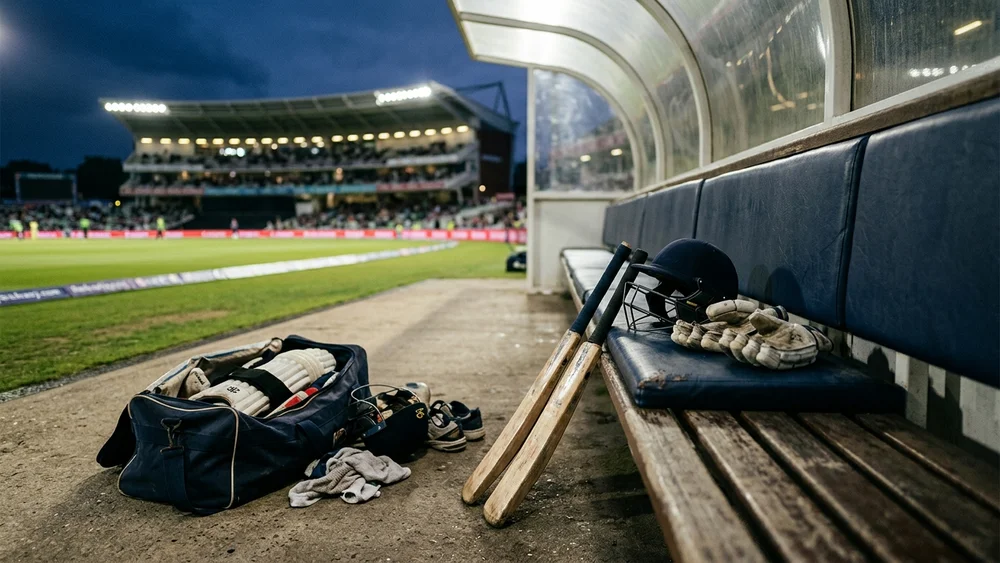
The Impact Player rule lets an IPL team swap one member of its starting XI for a substitute at any point in a match, and unlike a normal substitute that player can bat and bowl a full quota. In practice it gives each side twelve players instead of eleven. It has been in the IPL since 2023, it was used throughout the 2026 season, and it is the most argued-about regulation in the competition. Sachin Tendulkar wants it gone.
Here is how it works, and then something most explainers skip: what four seasons of scoring data actually show.
What is the Impact Player rule?
Each team names its XI at the toss along with five substitutes. One of those five can be brought on during the match as the Impact Player, replacing someone in the XI. The player who comes off takes no further part in the game.
The point is that this is a real substitution, not cricket’s usual twelfth-man arrangement where the replacement can only field. The Impact Player bats and bowls. A side batting first can load up with an extra batter, then bring on a specialist bowler for the defence. That is the whole idea, and it is also the whole complaint.
The Impact Player rules in full
| Condition | Rule |
|---|---|
| Who can be used | One of five substitutes named at the toss |
| When | Start of an innings, end of an over, fall of a wicket, or when a batter retires |
| Deadline | Must be introduced within the 14th over of an innings |
| What they can do | Bat, and bowl a full four overs, regardless of what the replaced player did |
| Overseas limit | Must be Indian unless the starting XI has fewer than four overseas players |
| Batting side | Still only eleven players may bat |
| Replaced player | Takes no further part in the match |
| Short matches | Not available if the game is reduced below ten overs a side |
Two details catch people out. A bowler brought on mid-over after a wicket cannot finish that over. And a team can replace a batter who has already been dismissed, or a bowler who has already sent down three overs, and still get four fresh overs out of the substitute. That second one is why the rule favours the side with the deeper bench.
Is the Impact Player rule still in the IPL in 2026?
Yes. It was in the playing conditions for the whole of IPL 2026 and was used all season. When the ten captains met BCCI officials in Mumbai three days before the season opened, a majority raised concerns about it and the board confirmed it stays until at least 2027, with no review planned before then. We covered that meeting and what else came out of it at the time.
What has changed is the pressure. The 2026 season finished on 31 May, and the rule’s future beyond the current cycle is now genuinely open rather than settled. No decision for 2027 has been announced.
What the rule has done to IPL scoring
This is the part worth having a number for. Working from ball-by-ball records of all 1,243 IPL matches from 2008 to 31 May 2026, and counting the first innings of every completed match where both teams batted while excluding games decided by Duckworth-Lewis, 1,214 innings qualify.
| Season | First-innings average | First innings of 200+ |
|---|---|---|
| 2019 | 166.7 | 13.3% |
| 2020 | 169.5 | 15.0% |
| 2021 | 159.3 | 10.0% |
| 2022 | 171.1 | 17.6% |
| 2023 (rule introduced) | 183.0 | 32.4% |
| 2024 | 189.6 | 36.6% |
| 2025 | 191.0 | 46.5% |
| 2026 | 195.1 | 51.4% |
Across the fifteen seasons before the rule, the first-innings average was 162.9 and a side passed 200 in 10.2% of innings. Across the four seasons with it, the average is 189.7 and the figure is 41.8%. A total of 200 used to turn up in about one first innings in ten. In 2026 it turned up in more than half of them.
The honest caveat, which the people arguing about this rarely offer: the timing is exact but the data cannot prove the rule caused it. Bats, boundary sizes, the standard of power hitting and other playing conditions all moved over the same period. What the numbers do establish is that the step change happened in 2023 and not gradually, and that a batting side which knows a specialist bowler is coming on later can afford to bat with almost no tail. That is the mechanism the critics describe, and the scoring record is consistent with it.
The same shift shows up elsewhere. Our breakdown of what a par score really is at each IPL ground found the score that wins half the time has climbed about 15 runs in three seasons, and the highest successful chases in IPL history are now dominated by recent seasons, with nine of the top fifteen made in 2026 alone. The ceiling has moved in the wider format too, as our list of the highest team totals in T20 cricket shows.
The BCCI already dropped it from the tournament that invented it
The detail that says most about how the board sees this rule: the Impact Player was not born in the IPL. It was trialled in the Syed Mushtaq Ali Trophy, India’s domestic T20 competition, and only then promoted to the IPL for 2023.
On 14 October 2024 the BCCI scrapped it from the Syed Mushtaq Ali Trophy. The instruction to the state associations was blunt, telling them the board had decided to do away with the provision for the ongoing season. That came days after the same board had confirmed the rule would stay in the IPL for three more seasons, up to 2027.
So the BCCI removed the rule from the tournament it was designed to test, on the grounds that it was not doing Indian cricket much good, and kept it in the competition that sells the television rights. Both decisions were taken in the same month.
The case against it
The objection is not that the rule is confusing. It is that it removes the need for all-rounders. If a side can pick a specialist batter and a specialist bowler and use whichever the situation demands, the player who does both adequately becomes redundant, and India has historically needed that player for international cricket.
Tendulkar put it plainly at the ESPNcricinfo Awards, saying the impact player needs to go away, and argued the rule has widened the gap between bat and ball. Shubman Gill has said it costs teams a skill when it comes to squad building. Rohit Sharma and Axar Patel have made versions of the same point, Axar noting that teams now prefer specialists. Ravindra Jadeja and Hardik Pandya are exactly the kind of cricketer the complaint is about.
The defence is simpler and mostly commercial. More runs make better television, the tactical layer gives captains something to think about, and an extra slot means one more young Indian player gets a game. Sunil Gavaskar backed it on those grounds when it arrived.
Who was the first Impact Player in the IPL?
Tushar Deshpande, for Chennai Super Kings against Gujarat Titans in the IPL 2023 opener at the Narendra Modi Stadium on 31 March 2023. He came on for Ambati Rayudu, which was the rule summarised in one substitution: a batter off and a fast bowler on for the defence of 178. It did not work. Gujarat got there with four balls to spare, Shubman Gill making 63.
Impact Player rule: quick answers
What does Impact Player mean in the IPL? A substitute named before the match who can come on and play a full part with bat and ball, replacing one of the original eleven.
When can the Impact Player come on? At the start of an innings, at the end of an over, when a wicket falls or when a batter retires, and no later than the 14th over.
Can the Impact Player be an overseas player? Only if the starting XI contains fewer than four overseas players, since a side may not field more than four.
Can a team bat twelve players? No. Eleven batters, whoever comes on.
Is the Impact Player rule still used in IPL 2026? Yes, throughout the season, and it is retained through 2027 unless the BCCI changes course.
Is the rule used in domestic Indian T20 cricket? Not since October 2024, when the BCCI removed it from the Syed Mushtaq Ali Trophy.