






Wide ball in cricket: the rules, the markings, and how often one is actually called
A wide costs one run, does not count as a ball in the over, and is the single biggest source of extras in limited-overs cricket. Here is what Law 22 says, and what 48,462 wides show about who bowls them and when.
Apr 24, 2024 · Updated Aug 27, 2026
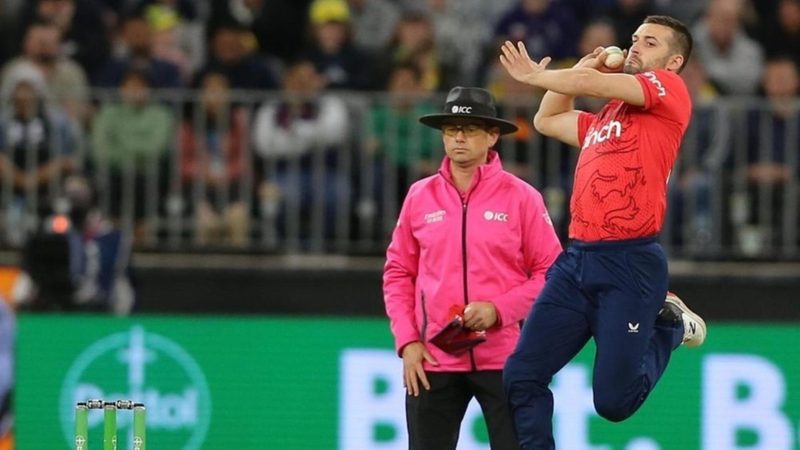
A wide is a delivery the umpire judges to be out of the striker’s reach, too far off the stumps for him to hit it with a normal cricket stroke. It costs the fielding side one run, it does not count as one of the six balls in the over, and the bowler has to bowl it again. It is the most common thing that goes wrong in a limited-overs innings by a distance.
How common is easy to underrate. Across every men’s T20 international, one-day international and Indian T20 League match with ball-by-ball data since 1 October 2015, umpires have called 48,462 wides, and they account for around 61% of all the extras conceded in each of those three competitions. Byes, leg byes and no balls put together do not add up to the wide.
Wide ball rules: what Law 22 actually says
The wide is Law 22 in the MCC code, and six of its clauses cover almost everything a viewer needs.
| Clause | What it means |
|---|---|
| 22.1 | Wide if out of reach of a normal stroke |
| 22.4 | Not a wide if the batter’s own movement caused it |
| 22.5 | The ball is not dead, so runs can be taken |
| 22.6 | One run penalty, even if a batter is out |
| 22.8 | Does not count as one of the over |
| 22.9 | Four dismissals still possible |
Clause 22.1 is the one that decides arguments. A ball is wide if it passes wide of where the striker is standing or has stood at any point after the ball came into play, and would also have passed wide of him had he been standing in a normal position. Both halves have to be satisfied. That is why a batter who backs away to leg and watches a good ball go past his original position does not get a wide out of it, and why 22.4 says in terms that movement by the striker which causes the ball to pass wide is not a wide at all.
One thing the Law does not settle is who gets the final say. A wide is a judgement call made live, and in most cricket it stands. The Women’s Premier League changed that in 2023 and the Indian T20 League followed in the same season, letting players send a wide or a no ball call upstairs on DRS. Those reviews come out of the same two unsuccessful reviews a side gets per innings, so a captain burning one on a wide down the leg side is spending a resource he may want later for an lbw.
The wide ball markings, and the sum that checks them
The tramlines either side of the pitch in white-ball cricket are wide guideline markings, and they exist only for limited-overs matches. They run between the popping crease and the bowling crease, and they are described two different ways depending on where you read about them, which makes them look inconsistent when they are not.
One description puts the line 17 inches inside the return crease. The other puts it 0.89 m from the middle stump. The return crease sits 4 ft 4 in from the middle stump, which is 52 inches, and 52 minus 17 is 35 inches. Thirty-five inches is 0.889 m. The two figures are the same line, measured from opposite ends, and a reader with a tape measure can confirm it in about a minute.
Worth being clear about what the line does. On the off side it is a guideline for the umpire rather than a boundary that decides the call by itself, because Law 22.1 turns on reach and not on a painted mark. In one-day internationals and T20 internationals the leg side is stricter, and that is the part of the wide that has just changed.

Can a batter be out off a wide?
Yes, and this is where the wide and the no ball stop being interchangeable in the way most explainers treat them. Law 22.9 allows four dismissals off a wide: hit wicket, obstructing the field, run out and stumped. A no ball allows three, and they are a different three: hit the ball twice, obstructing the field and run out.
So a batter can be stumped off a wide and cannot be stumped off a no ball or the free hit that follows one. He can be out hit wicket off a wide and not off a no ball. The archive follows the Law exactly.
| Format | Wides | Stumped | Run out | Hit wkt |
|---|---|---|---|---|
| T20I | 28,239 | 67 | 32 | 2 |
| ODI | 14,070 | 32 | 14 | 0 |
| T20 League | 6,153 | 27 | 9 | 0 |
| All three | 48,462 | 126 | 55 | 2 |
183 dismissals in 48,462 wides, and every single one of them is on Law 22.9’s list. Nobody has been caught, bowled or given lbw off a wide, which is what you would expect, since a ball the batter has touched is not a wide any more.
The split is the interesting part. Off a wide the batter is more than twice as likely to be stumped as run out. Off a no ball the stumping is impossible and the run out is effectively the only way out. Same family of illegal delivery, opposite dismissal profile, and the reason is simply where everyone is standing: a wide drags the batter out of his ground chasing it and puts the ball in the keeper’s gloves at the same time.
Hit wicket off a wide has happened twice in eleven years. The better known of the two ended the highest score in T20 international cricket at the time. Aaron Finch had made 172 off 76 balls against Zimbabwe at the Harare Sports Club on 3 July 2018 when he chased a wide from Blessing Muzarabani on the second-last ball of the innings, lost his balance and knocked the off bail off with his own bat.
How often a wide is called
| Format | Per 100 balls | Runs per wide | Share of extras |
|---|---|---|---|
| T20I | 4.00 | 1.20 | 61.5% |
| ODI | 2.29 | 1.19 | 60.6% |
| T20 League | 3.55 | 1.17 | 61.9% |
A T20 international gets a wide roughly every 25 deliveries, an ODI every 44. Put another way, 94.8% of T20 international innings and 97.9% of ODI innings contain at least one. The share-of-extras column is the one that surprised me: three competitions with different formats, different lengths and largely different players land within 1.3 percentage points of each other.
A wide is not one run
The penalty is one run, but the ball stays live under 22.5, so byes can be run off it and it can go to the boundary. Averaged out, a wide costs about 1.20 runs in T20 internationals rather than 1.00.
The distribution behind that average is lopsided. Of 28,239 T20 international wides, 25,442 cost exactly one run. Then it thins out fast: 1,515 cost two, 371 cost three, 48 cost four. But 838 of them cost five, which is a wide that beat the keeper and ran to the boundary, and that single category is why the average sits where it does. One wide has cost six, and one has cost seven.
Wides are rising in T20 cricket and flat in ODIs
| Year | T20I | ODI | T20 League |
|---|---|---|---|
| 2016 | 2.90 | 2.23 | 3.04 |
| 2019 | 3.26 | 2.31 | 2.78 |
| 2022 | 4.01 | 2.20 | 3.92 |
| 2024 | 4.00 | 2.28 | 4.26 |
| 2026 | 4.43 | 2.27 | 4.54 |
Wides per 100 balls. The two T20 competitions have risen about 50% in a decade and the one-day game has not moved at all, which is the sort of split that rules out a general drift in umpiring standards and points at how T20 is being bowled. A bowler defending a boundary-heavy total aims further from the bat, and a batter who has decided to move before the ball is released drags him further still.
The 2026 rows come from a part-finished year and should be read as provisional.
When wides happen, and who bowls them
Wides are not spread evenly through an innings. In the Indian T20 League the rate runs 4.15 per 100 balls in the first over, falls to 2.32 by the eighth, then climbs to 5.89 in the twentieth. In ODIs the same U appears stretched out: 4.09 in the first over, down to 1.53 around the twenty-second, back up to 4.20 by the forty-seventh. New ball and old ball, first spell and last, are the two places a bowler is either still finding his length or deliberately bowling away from a batter who is swinging at everything. The middle overs, where the field is set and the batters are accumulating, are the quiet stretch.
The bowler-level numbers point the same way and are blunter than I expected. Taking every bowler with at least 1,500 deliveries in the Indian T20 League, the five worst wide rates belong to Arshdeep Singh (5.95 per 100), Shardul Thakur (5.91), Dwayne Bravo (5.87), Mohammed Siraj (5.43) and Harshal Patel (5.33). The five best belong to Piyush Chawla (1.10), Rashid Khan (1.17), Axar Patel (1.29), Ravindra Jadeja (1.37) and Sunil Narine (1.62).
Every name in the first group is a fast bowler and every name in the second is a spinner, with no overlap and a gap of four to five times between the groups. Spin is slower, straighter and rarely asked to bowl the wide yorker, and it does most of its work in exactly the overs where the wide rate bottoms out. It also explains why the death, when the field restrictions are long gone and the quick bowlers come back, is where the wides pile up.
The most wides in an over, and in an innings
Eight is the record for a single over in the sample, and it has happened twice, both in T20 internationals. KY Wilfried bowled eight wides in the second over for Ivory Coast against St Helena at Abuja on 28 November 2024, and T Jamtsho bowled eight in the first over for Bhutan against the Maldives at Kirtipur on 7 December 2019. In both cases the over needed 14 deliveries.
The Indian T20 League record for an innings is 16, conceded by Lucknow to Kolkata at Eden Gardens on 8 April 2025, with Shardul Thakur responsible for half of them. Lucknow won that match by four runs, which is the sort of margin that makes 16 wides worth a long look in the dressing room afterwards.
The leg-side wide rule changed in 2026
The ICC spent the back half of 2025 trialling a change to how leg-side wides are judged in ODIs and T20 internationals, and at its annual board meeting in Ahmedabad on 31 May and 1 June 2026 it made the change permanent.
The mechanism is a new tramline and a fixed reference point. Instead of judging a leg-side ball against wherever the batter has moved to, the umpire works from where the batter’s legs were at the moment of delivery, with the protected area marker extended forward to the popping crease. A ball that passes between leg stump and that marker is not a wide, even if the batter has shuffled across and left the space behind him. It is aimed squarely at the batter who walks at the bowler and turns a decent delivery into an extra.
Whether it bites is a question for the next full season rather than this one. The T20 international wide rate for 2026 is the highest in this eleven-year sample, and the Indian T20 League rate is too, but the league is a separate competition under its own playing conditions and the 2026 sample is incomplete, so neither number tells you anything about the new rule yet.
Photo credit: Alamy