






Dead ball in cricket: the rule, the umpire’s call, and what changes in October 2026
A dead ball is a ball no longer in play, and it is Law 20, not Law 23. Here is when the ball dies on its own, when the umpire has to call it, and the rewrite arriving in October 2026.
Aug 28, 2026
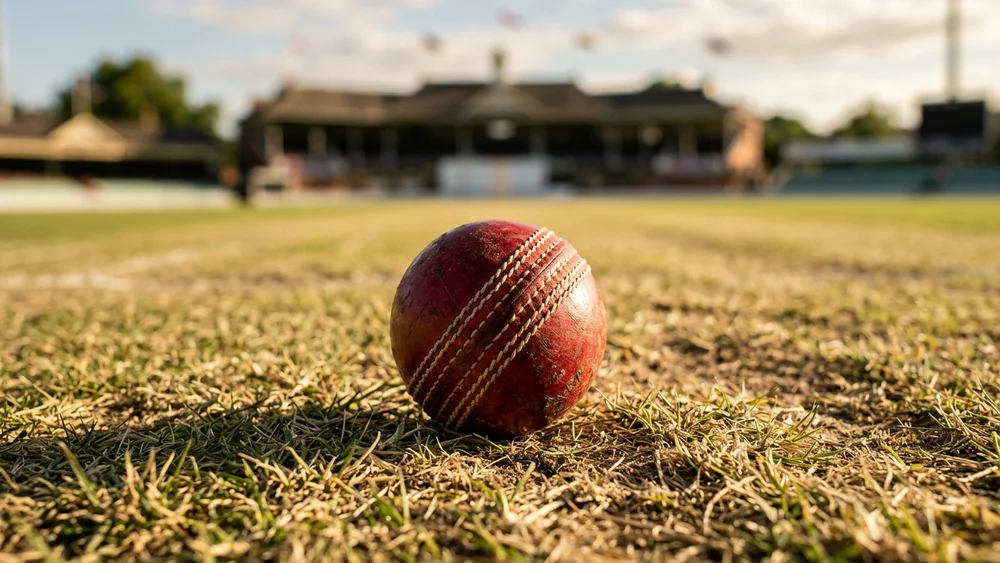
A dead ball is a ball that is no longer in play. Nothing can happen while it is dead: no runs, no wickets, no run out, no appeal that goes anywhere. It is governed by Law 20 of the Laws of Cricket, and the ball spends more of a day’s play dead than it does live, because it goes dead after every single delivery.
Worth clearing up before anything else, because the two pages currently ranking highest for this question both get it wrong in their own headlines: the dead ball is Law 20, not Law 23. Law 23 is Bye and Leg bye. Both of those pages then cite Law 20.4 correctly in their own body text, which tells you how the error got there.
What is a dead ball in cricket?
The ball comes into play when the bowler starts the run-up. It stays in play until something ends it, at which point it is dead and stays dead until the bowler starts the next run-up. That is the whole cycle, and Law 20.6 adds a hard edge to it: once the ball is dead, no revoking of any decision can bring it back into play for that delivery. An umpire who calls dead ball too early cannot take it back.
The Law splits into two halves that get muddled constantly. Some things make the ball dead automatically, whether or not anyone says a word. Other things require an umpire to call and signal it. The difference matters, because in the first case the ball was already dead before the call, and in the second it usually dies at the moment of the incident rather than the moment of the call.
When the ball goes dead by itself
Law 20.1 lists the situations where the ball is dead with no call needed. The umpire may still signal it to tell the players, but the signal is information, not the decision.
| The ball is dead when |
|---|
| It is finally settled in the hands of the wicket-keeper or the bowler |
| A boundary is scored |
| A batter is dismissed, dead from the instant of the incident |
| It is trapped between the bat and the batter, or between their clothing or equipment |
| It lodges in a batter’s clothing or equipment, or in an umpire’s clothing |
| Penalty runs are awarded under Law 24.4 or Law 28.2 |
| A fielding side helmet on the ground is struck, under Law 28.3 |
| The match is concluded |
There is a ninth, and it is the one that causes arguments. Law 20.1.2 says the ball is dead when it is clear to the bowler’s end umpire that the fielding side and both batters have ceased to regard it as in play. Note what that requires. Not the fielders alone, and not the umpire’s own sense that the passage is over. Everyone.
When the umpire calls dead ball
Law 20.4.2 runs to fourteen clauses. Either umpire must call and signal dead ball in each of them, and the ball is treated as dead from the instant of the incident, not from the call.
| Situation | Ball counts in the over? |
|---|---|
| The umpire intervenes in a case of unfair play | Depends on the Law invoked |
| A possibly serious injury to a player or umpire | Yes, if the striker could play it |
| An umpire leaves position to consult the other | Yes, if the striker could play it |
| A bail falls before the striker can play the ball | No |
| The striker is not ready and does not attempt the ball | No, if the reason was adequate |
| The striker is distracted by noise or movement | No |
| A deliberate attempt to distract or deceive the batter | No |
| The bowler drops the ball before delivery | No |
| The bowler throws at the striker’s end before the delivery stride | No |
| The ball never leaves the bowler’s hand | No |
| The ball in play cannot be recovered | Yes, if the striker could play it |
| A person, animal or object interferes with play | Yes, if the striker could play it |
| The striker plays the ball with no part of bat or body on the pitch | Yes |
| Any other Law requires it | Depends on the Law invoked |
The tenth of those carries a carve-out that most explainers miss. The ball not leaving the bowler’s hand is a dead ball for every reason except one: an attempt to run out the non-striker under Law 38.3. That is why a mankad attempt stays live until the appeal is settled, where a bowler who simply stops has killed the ball on the spot.
Do runs count off a dead ball?
Runs completed before the ball went dead stand. Runs completed after it do not, and the timing is what people get wrong, because the ball usually dies at the instant of the incident rather than when the umpire raises an arm. If a batter is run out, the run in progress when the wicket was broken is not scored, but any run they had already completed is.
Whether the delivery counts as one of the over is a separate question with its own clause. Law 20.7 says a ball called dead does not count if the striker had no opportunity to play it, and does count if they did, with a short list of exceptions. So a bowler who drops the ball in the run-up bowls it again. A bowler whose delivery is played and then goes dead has bowled one of the six.
Is a dead ball a no ball?
No, and the three calls do completely different jobs. This is the comparison the search results for this topic mostly avoid making.
| Call | Runs to batting side | Counts in over | Can a wicket fall? |
|---|---|---|---|
| Dead ball | None from the call itself | Sometimes | No |
| No ball | One, plus anything scored | No | Yes, three ways only |
| Wide | One, plus anything scored | No | Yes, four ways only |
They can also interact. If dead ball is called under certain clauses, an umpire who has already called no ball must revoke it, because the ball was dead before the bowler released it. A free hit, by contrast, is not in the Laws at all and lives only in competition playing conditions.
The dead ball signal
The umpire signals it by crossing and re-crossing the wrists below the waist. It is aimed at the players rather than at the scorebook, which is the point: its job is to stop everyone on the field at once.
Two calls that cost a fielding side
Two recent examples show how much rides on the call, and both went the batting side’s way.
At the 2024 Women’s T20 World Cup in Dubai on 4 October, India ran Amelia Kerr out in the 14th over of New Zealand’s innings and were told she was not out because the ball was already dead. Kerr had taken a single to Harmanpreet Kaur at long off; Kaur held the ball, and Kerr and Sophie Devine set off for a second, at which point Kaur threw and Richa Ghosh broke the stumps with Kerr short. India’s objection went straight to Law 20.1.2. Both batters were plainly still treating the ball as in play, because they were running, so on the wording the ball had not gone dead. The umpires disagreed and Kerr stayed. India lost the match.
In July 2026, Zimbabwe’s Brad Evans bowled Mosaddek Hossain and had Mohammad Saifuddin caught at deep midwicket with the next ball, then produced a hat-trick delivery that beat Mahedi Hasan’s attempted leg-side stroke and looked plumb. Dead ball had been called because a fielder was moving as the bowler ran in. Mahedi hit the next ball for four and Bangladesh took the T20I series.
What changes in the October 2026 Laws
The MCC is publishing a new edition of the Laws in October 2026, its first since 2022, with 73 meaningful changes. Law 20.1.1.1 is one of the ten the MCC picked out as most significant, and it rewrites exactly the clause the Amelia Kerr decision turned on.
| 2022 code | 2026 edition |
|---|---|
| Dead when “finally settled in the hands of the wicket-keeper or of the bowler” | Dead once it is “in the hand or hands of any fielder, or stationary on the ground” |
| Separate clause on nobody regarding it as in play | Folded in: “and the bowler’s end umpire determines that it is no longer in play” |
Two things follow. The ball no longer has to reach the keeper or the bowler to be settled, so a throw held at cover can end the passage. And the umpire’s own judgement is written into the test rather than sitting in a second clause, which means the decision India objected to in Dubai becomes squarely the umpire’s to make. Whether that reads as a fix or as a formalisation of the thing that annoyed them depends on which dressing room you were in.
The MCC’s own note says the change gives umpires greater leeway to determine whether a ball is finally settled, and that it matters most on the final ball of a close game. Harare is the case in point: Zimbabwe needed one ball, and did not get to bowl it.