






Mankading in cricket: the rule, every dismissal, and what changes in October 2026
Running out the non-striker has been legal since 1947 and stopped being filed under unfair play in 2022. Here is what Law 38.3 actually says, every instance in international cricket, and the rewrite landing in October 2026.
Apr 19, 2024 · Updated Aug 28, 2026
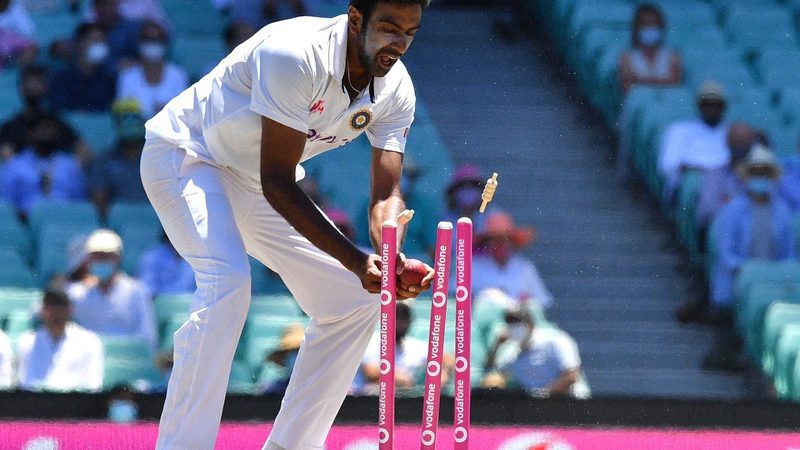
Mankading is the informal name for a run out at the non-striker’s end, where the bowler breaks the stumps before delivering because the batter has left the crease early. It is legal. It has been legal for the whole history of the Laws, and since October 2022 it has not even been filed under unfair play. From October 2026 the Law that governs it is being rewritten again, and the new wording settles the one question that has caused every recent argument about it.
What is mankading in cricket?
The non-striker is allowed to leave the crease once the bowler has released the ball, and not before. A batter who goes early gets a head start on every single, which over an innings is worth real runs. Law 38.3 lets the bowler punish that by stopping and taking the bails off instead of bowling.
The Marylebone Cricket Club, which owns the Laws, does not use the word mankading in them. Neither does the International Cricket Council. Both call it a run out at the non-striker’s end, and it is one of the ten ways a batter can be dismissed, credited to the bowler as a run out rather than as a wicket.
Is mankading legal, and what does the mankad rule say?
It is legal, and the wording is short. Law 38.3.1 reads: “At any time from the moment the ball comes into play until the instant when the bowler would normally have been expected to release the ball, the non-striker is liable to be Run out if he/she is out of his/her ground.”
What changed in 2022 was not the legality but the filing. Until then the dismissal sat in Law 41, headed Unfair play, as clause 41.16. The MCC’s 2022 code moved it word for word into Law 38, headed Run out, and it came into force on 1 October 2022. Nothing about what a bowler may do altered. The label did, and the label was the whole argument. Our rundown of everything the 2022 code changed covers the rest of that package.
When exactly can the bowler do it?
This is the part almost every explainer gets vague about, and it is the part that decides real appeals. The window opens when the ball comes into play, which is the moment the bowler starts the run-up. It closes at the instant the bowler would normally have been expected to release the ball, and the Law defines that instant precisely: the moment the bowler’s arm reaches the highest point of the normal bowling action in the delivery swing.
| Moment | Can the bowler run out the non-striker? |
|---|---|
| Before the run-up starts | No. The ball is not in play |
| During the run-up | Yes |
| Arm at the top of the delivery swing | Yes, up to that instant |
| After the arm has passed that point | No |
That last row is the one that gets missed, and it cost Adam Zampa a wicket. Playing for Melbourne Stars against Melbourne Renegades in the Big Bash at the MCG in January 2023, Zampa pulled out of his action and removed the bails with Tom Rogers well out of his ground. The third umpire gave not out, because Zampa’s arm had already passed the top of its swing. The MCC backed the decision and then tightened the wording so nobody could read it the other way, adding a clause on 19 January 2023 that says once the bowler has reached that point it is no longer possible to run the non-striker out under this Law, however early the batter left.
What changes in the October 2026 Laws
The MCC is publishing a new edition of the Laws in October 2026, its first since 2022, with 73 meaningful changes. Law 38.3 is one of them, and the rewrite does two things worth knowing before the season turns.
| Point | 2022 code | 2026 edition |
|---|---|---|
| Where the window closes | “the instant when the bowler would normally have been expected to release the ball”, defined in a separate clause | “the moment the bowler’s arm reaches the highest point of their normal bowling action in the delivery swing”, written into the main clause |
| How the stumps may be broken | Not specified | “by the bowler throwing the ball at the stumps or by the bowler’s hand holding the ball” |
| If the ball is then bowled | Covered across two sub-clauses | Stated in the main clause: it applies “whether or not the ball is subsequently delivered” |
The first is housekeeping that matters. The definition of the release point stops being a footnote and becomes the rule itself, so the sentence a captain reads on a phone at square leg now contains the answer. The second is new detail: the Law now says in terms that the bowler may throw at the stumps rather than only break them by hand, which is what Fazalhaq Farooqi did to Shadab Khan and what nothing in the old wording explicitly allowed.
What happens when the attempt misses
Nothing, and that is why bowlers try it. If there is no appeal, or the umpire says not out, the umpire calls dead ball and the delivery does not count as one of the over. The bowler goes back to the mark with six balls still to bowl.
Law 20 makes an explicit exception for this. Its list of situations where the umpire must call dead ball includes the ball not leaving the bowler’s hand “for any reason other than an attempt to run out the non-striker under Law 38.3”. Every other way of not delivering the ball is dead the moment it happens. A mankad attempt is live until the appeal is settled. It is also the reason a failed attempt is not a no ball for breaking the wicket in delivery, which it otherwise would be.
Every mankad in international cricket
The dismissal’s reputation is enormous and its frequency is not. Across nearly 150 years of Test cricket it has happened four times, the most recent in 1979.
| Bowler | Batter | Match |
|---|---|---|
| Vinoo Mankad | Bill Brown | Aus v Ind, Sydney, 1947 |
| Charlie Griffith | Ian Redpath | Aus v WI, Adelaide, 1969 |
| Ewen Chatfield | Derek Randall | NZ v Eng, Christchurch, 1978 |
| Alan Hurst | Sikander Bakht | Aus v Pak, Perth, 1979 |
In the limited-overs formats it has happened seven times, and only once in a men’s Twenty20 international.
| Format | Bowler | Batter | Match |
|---|---|---|---|
| ODI | Greg Chappell | Brian Luckhurst | Aus v Eng, Melbourne, 1975 |
| ODI | Dipak Patel | Grant Flower | NZ v Zim, Harare, 1992 |
| ODI | Kapil Dev | Peter Kirsten | Ind v SA, Port Elizabeth, 1992 |
| ODI | Sachithra Senanayake | Jos Buttler | Eng v SL, Edgbaston, 2014 |
| ODI | Fazalhaq Farooqi | Shadab Khan | Afg v Pak, Hambantota, 2023 |
| T20I | Aamir Kaleem | Mark Chapman | Oma v HK, Fatullah, 2016 |
| ODI (W) | Deepti Sharma | Charlie Dean | Eng v Ind, Lord’s, 2022 |
Two of those carry more weight than the rest. Kapil Dev ran out Peter Kirsten in December 1992 having warned him earlier in the series. Deepti Sharma ran out Charlie Dean at Lord’s on 24 September 2022 to finish a 3-0 series sweep, a week before the reclassification took effect, which is why that one was argued about in the language of the old Law and settled by the new one.
The record for a single innings belongs a long way from the Test grounds. Maeva Douma, a 16-year-old playing her first Twenty20 international for Cameroon against Uganda at the 2021 Women’s T20 World Cup Africa Qualifier in Gaborone, ran out four batters at the non-striker’s end in the same match.
The warning that nobody is obliged to give
Ravichandran Ashwin’s dismissal of Jos Buttler on 25 March 2019, bowling for Kings XI Punjab against Rajasthan Royals at the Sawai Mansingh Stadium in Jaipur, restarted the argument for a generation of Indian fans. The complaint was that Ashwin had not warned him. There is no warning in the Law, there never has been, and the MCC has said so repeatedly. A warning is a courtesy some bowlers extend and others do not.
The record is split on the point and always has been. Greg Chappell warned Brian Luckhurst twice at the MCG on New Year’s Day 1975 and acted on the third offence. Kapil Dev held up three fingers to Peter Kirsten to show how many warnings had gone by. Deepti Sharma said afterwards that India had warned Charlie Dean several times. Charlie Griffith, Ewen Chatfield and Alan Hurst all gave none at all, and all three dismissals stood.
The habit has softened rather than hardened since. In the 2025 season Lucknow Super Giants spinner Digvesh Rathi whipped the bails off with Jitesh Sharma out of his ground; the third umpire ruled Rathi’s action was already complete, and Rishabh Pant withdrew the appeal in any case. Jitesh went on to make 85 not out. A dismissal that is legal, cheap and available on any ball still gets declined more often than it gets taken.
Who was Vinoo Mankad?
Vinoo Mankad was one of India’s finest all-rounders, a left-arm spinner and opening batter who took 162 Test wickets and scored 2,109 Test runs, and who in 1956 put on 413 with Pankaj Roy against New Zealand at Madras, a first-wicket record that stood for 52 years. He is remembered instead for one dismissal.
On India’s 1947-48 tour of Australia he ran out Bill Brown at the non-striker’s end in the second Test at Sydney in December 1947, having already done it to the same batter in a tour match earlier on the trip, and having warned him then. The Australian press called it unsporting. Don Bradman, Australia’s captain on that tour, did not, and wrote in his autobiography that he could not understand the fuss, because the Laws made it perfectly clear that the non-striker had to stay in his ground until the ball was delivered.
Which is why a fair number of Indian commentators, Sunil Gavaskar among them, have argued for years that the term is backwards. It attaches a bowler’s name to a batter’s error. The Laws have never contained it, and the 2026 edition will not introduce it.
Featured photo: Saeed Khan / AFP