








India vs West Indies ODI series: the schedule, the head-to-head and what the three grounds actually do
Three ODIs from 27 September, the first meeting between the sides in more than three years, at two grounds with two ODIs each and one that has never staged one. What the numbers say before a ball is bowled.
Sep 16, 2026
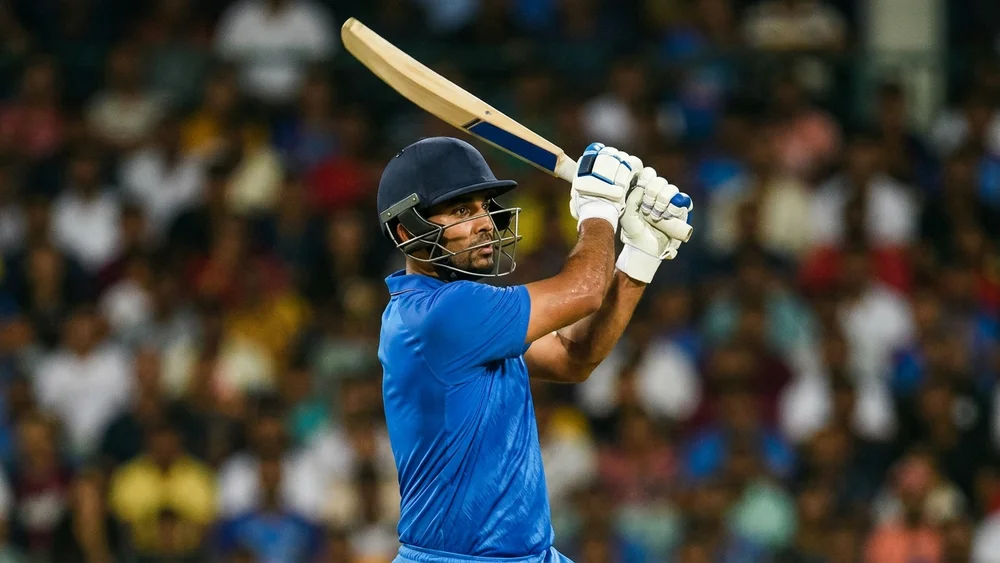
India and West Indies have not played a one-day international since 1 August 2023, when India won by 200 runs in Tarouba. Three years and two months later they meet again for three ODIs, starting at Thiruvananthapuram on 27 September. Rohit Sharma and Virat Kohli are back in India’s squad. West Indies, by the time the second match is over, will already know they are going to the World Cup Qualifier.
India vs West Indies ODI schedule
| Match | Date | Venue |
|---|---|---|
| 1st ODI | Sunday 27 September | Greenfield International Stadium, Thiruvananthapuram |
| 2nd ODI | Wednesday 30 September | Assam Cricket Association Stadium, Guwahati |
| 3rd ODI | Saturday 3 October | Maharaja Yadavindra Singh Stadium, Mullanpur |
All three start at 2pm IST and are day-night games. Five T20Is follow from 6 to 17 October, which is a separate squad and a separate argument.
The head-to-head number everyone quotes is doing a lot of hiding
India have won 72 of the 142 ODIs between the two sides. West Indies have won 64. Two were tied, and the rest were washed out, abandoned or cancelled. Set out like that it reads as one of cricket’s tightest rivalries, and preview pages have been repeating it for twenty years.
Split it by decade and the rivalry disappears.
| Period | Played | India | West Indies |
|---|---|---|---|
| 1970s | 1 | 0 | 1 |
| 1980s | 32 | 6 | 26 |
| 1990s | 28 | 15 | 13 |
| 2000s | 31 | 17 | 14 |
| 2010s | 35 | 26 | 9 |
| 2020s | 9 | 8 | 1 |
The columns add up to the all-time totals, which is the point: 6 plus 15 plus 17 plus 26 plus 8 is 72, and 1 plus 26 plus 13 plus 14 plus 9 plus 1 is 64. One decade is carrying the whole of West Indies’ side of the ledger. Take the 1980s out and it is India 66, West Indies 38. Since 2010 it is India 34, West Indies 10.
That is not a reason to write the series off. It is a reason to stop treating 72-64 as evidence of anything about 2026.
What the three grounds actually do
This is the odd part of the schedule. Between them, Thiruvananthapuram and Guwahati have hosted four men’s ODIs, ever. Mullanpur has hosted none.
Guwahati’s two have been run-soaked. West Indies made 322 for 8 there in October 2018 and India chased it in 43 overs. Sri Lanka were set 374 in January 2023 and got to 306. Four completed innings at that ground, four scores of 306 or more, and the two first-innings totals were 322 and 373. No side has yet been bowled out there in an ODI. Our Barsapara pitch report has the longer version, and nothing in the short-format record contradicts it.
Thiruvananthapuram’s two have been the opposite kind of strange. On 1 November 2018 West Indies were bowled out for 104 in 32 overs and India knocked it off in 15. On 15 January 2023 India made 390 for 5 and Sri Lanka were 73 for 9 when it ended, a 317-run win that remains the biggest margin by runs in any men’s ODI played in India. Two matches, two of the most one-sided results the format has produced in this country.
Four matches is not a pitch report. What it does say is that nobody, including the two captains, has much of a read on either surface, and that the third game is at a ground where the ODI sample size is zero. Mullanpur holds 38,000, is Punjab Kings’ home, and has a drainage system that clears standing water in about half an hour. Beyond that, everyone is guessing.
India’s fifteen, and the question it postpones
Shubman Gill captains. KL Rahul is vice-captain, standing in because Shreyas Iyer is in Japan with India’s Asian Games squad at the same time. The fifteen is Gill, Rahul, Rohit Sharma, Virat Kohli, Yashasvi Jaiswal, Ruturaj Gaikwad, Dhruv Jurel, Nitish Kumar Reddy, Ravindra Jadeja, Kuldeep Yadav, Prasidh Krishna, Gurnoor Brar, Mohammed Siraj, Auqib Nabi and Naman Dhir.
Rohit and Kohli have not played an ODI since 19 July, when India lost the third match at Lord’s by 27 runs. Rohit made 138 that day and Kohli 74. Those two innings are the reason both are still here, and they are also the reason the selection is awkward: Rohit turns 40 next April, and the next World Cup is in 2027. The selectors have not resolved that. They have given it three more matches. If you want the long version of how those two careers actually compare, we have the full stat breakdown.
Jadeja returns after eight months out of the format. Auqib Nabi and Naman Dhir are uncapped in ODIs. Hardik Pandya and Rishabh Pant are not in the squad at all.
West Indies are already out of the qualification race
The eight highest-ranked teams in the ICC ODI rankings on 30 September 2026, hosts excluded, go straight into the 14-team 2027 World Cup. West Indies are tenth, and the arithmetic stopped working for them in August: even two wins in India would not lift them far enough. Ireland are in the same position.
Look at the dates. The cut-off falls on 30 September, the day of the second ODI in Guwahati. So West Indies play two matches under a deadline they cannot meet, and the third at Mullanpur with the answer already known. They will go to the Qualifier, a ten-team tournament whose winner goes directly into the second round of the World Cup and whose second, third and fourth-placed sides get one more three-team play-off instead.
West Indies have not yet named their squad. Whoever they pick, the tour is preparation for that Qualifier rather than a route around it, and that changes what the series is worth watching for.
How the series looks from here
India are heavy favourites and the numbers behind that are not subtle. They have won eight of the last nine completed ODIs between the sides. They are at home. They have the stronger batting line-up by a distance, and in Kuldeep Yadav they have the bowler who took a hat-trick against West Indies at Visakhapatnam in December 2019, removing Shai Hope, Jason Holder and Alzarri Joseph in three balls to become the first Indian with two ODI hat-tricks.
The interesting questions are smaller than the result. Guwahati, on its two-match record, could be where a big total gets made and then chased anyway, so the toss there may matter less than it usually does in India. Thiruvananthapuram has not produced a close finish yet in two attempts, and a first one would tell us more about the pitch than either previous game did. And Mullanpur is genuinely unknown, which for a neutral is the most interesting of the three.
The case for West Indies, such as it is, rests on the shape of their recent one-day cricket rather than on this fixture’s history. They are a side that can put a total together quickly when the surface is flat, and two of these three grounds may well be flat. West Indies taking one of the three would not be a shock at all. West Indies winning the series would be, and nothing in the last fifteen years of this fixture suggests otherwise.
If any of the betting language around these games is unfamiliar, our explainers on how cricket markets and odds actually work and on the legal position in India cover the ground.
This article is general information about the India versus West Indies ODI series and how the two sides compare, not betting advice or a recommendation to gamble. Online real-money gaming is restricted or prohibited in some places, including in India under the Promotion and Regulation of Online Gaming Act, 2025. Always check the rules that apply where you are. 18+.