






Japan national football team players: the Kirin Cup squad, four debutants and Ueda’s four goals
Japan went through the October window unbeaten and won the Kirin Cup. Here is the current 28-man squad with caps, goals and clubs, who dropped out, the results and the road to the Asian Cup.
Sep 5, 2026 · Updated Oct 21, 2026
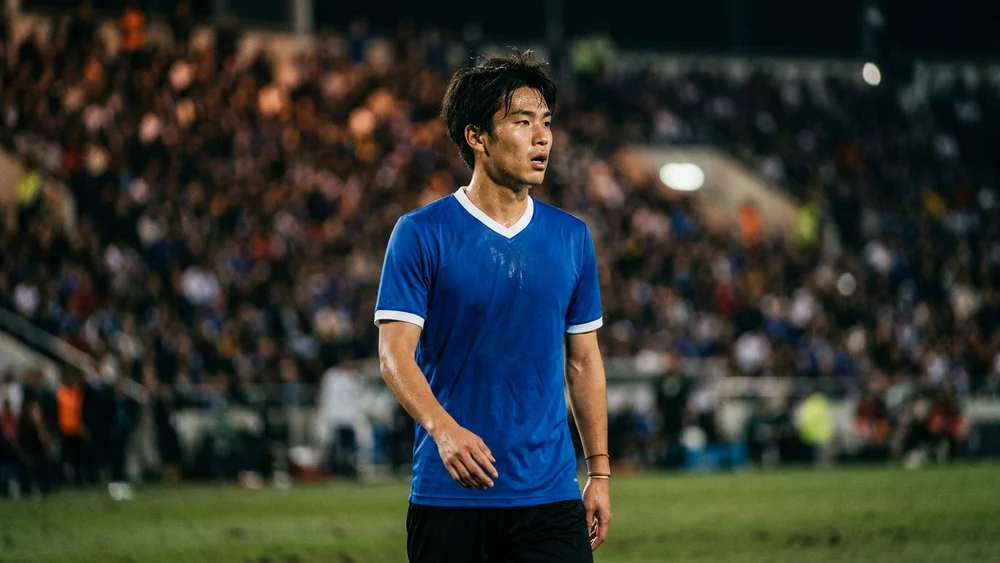
Japan’s current squad is the 28 players Hajime Moriyasu had at the end of the October window, the first since the World Cup, and it did not lose a game. Japan beat Uruguay and Venezuela in the Kirin Challenge Cup, got past Ecuador on penalties and beat New Zealand 2-1 in Tokyo on 5 October to win the Kirin Cup. Ayase Ueda scored four of their seven goals. Four players won their first caps.
Below is the full squad with caps and goals as they stood after the final, followed by who dropped out, the four results and Japan’s fixtures up to the Asian Cup in January.
Japan national football team squad: the current 28
Ages are as of 21 October 2026. Caps and goals are correct as of 5 October, after the Kirin Cup final.
| Player | Position | Age | Club | Caps | Goals |
|---|---|---|---|---|---|
| Zion Suzuki | Goalkeeper | 24 | Aston Villa | 31 | 0 |
| Tomoki Hayakawa | Goalkeeper | 27 | Kashima Antlers | 5 | 0 |
| Leo Kokubo | Goalkeeper | 25 | Sint-Truiden | 1 | 0 |
| Ko Itakura (captain) | Defender | 29 | Borussia Mönchengladbach | 44 | 2 |
| Hiroki Ito | Defender | 27 | Bayern Munich | 32 | 1 |
| Ayumu Seko | Defender | 26 | Le Havre | 20 | 0 |
| Junnosuke Suzuki | Defender | 23 | Copenhagen | 12 | 0 |
| Hayato Araki | Defender | 30 | Sanfrecce Hiroshima | 5 | 0 |
| Junya Ito | Midfielder | 33 | Genk | 77 | 16 |
| Ritsu Doan | Midfielder | 28 | Eintracht Frankfurt | 73 | 12 |
| Daichi Kamada | Midfielder | 30 | Crystal Palace | 57 | 14 |
| Takefusa Kubo | Midfielder | 25 | Real Sociedad | 54 | 7 |
| Ao Tanaka | Midfielder | 28 | Leeds United | 45 | 8 |
| Keito Nakamura | Midfielder | 26 | Lyon | 33 | 11 |
| Yuki Soma | Midfielder | 29 | Machida Zelvia | 22 | 5 |
| Kaishu Sano | Midfielder | 25 | Mainz | 19 | 1 |
| Henry Heroki Mochizuki | Midfielder | 25 | Machida Zelvia | 5 | 1 |
| Kodai Sano | Midfielder | 23 | PSV | 4 | 0 |
| Satoshi Tanaka | Midfielder | 24 | Schalke 04 | 3 | 0 |
| Kuryu Matsuki * | Midfielder | 23 | Southampton | 2 | 1 |
| Shuto Nakano * | Midfielder | 26 | Sanfrecce Hiroshima | 2 | 0 |
| Shunsuke Saito * | Midfielder | 21 | Westerlo | 1 | 0 |
| Ayase Ueda | Forward | 28 | Lille | 47 | 22 |
| Daizen Maeda | Forward | 29 | Ipswich Town | 33 | 5 |
| Yuito Suzuki | Forward | 24 | Freiburg | 9 | 0 |
| Keisuke Goto | Forward | 21 | Freiburg | 6 | 0 |
| Kento Shiogai | Forward | 21 | Wolfsburg | 6 | 1 |
| Kaina Tanimura * | Forward | 28 | Yokohama F. Marinos | 2 | 0 |
* First call-up to the senior side in this window.
Twenty-two of the 28 play outside Japan: eight in Germany, five in England and the rest spread across France, Belgium, the Netherlands, Spain and Denmark. The six J.League players are Tomoki Hayakawa of Kashima Antlers, Hayato Araki and Shuto Nakano of Sanfrecce Hiroshima, Yuki Soma and Henry Heroki Mochizuki of Machida Zelvia, and Kaina Tanimura of Yokohama F. Marinos.
The squad has 650 caps and 107 goals between it. Junya Ito, at 33 the oldest player in the group, has the most caps with 77. Ueda has the most goals with 22, four behind Takumi Minamino’s 26. Minamino has not been called up since November 2025.
Who was called up and who dropped out
Moriyasu named 31 players on 17 September, four of them uncapped: Kuryu Matsuki of Southampton, Shuto Nakano, Shunsuke Saito of Westerlo and the Yokohama F. Marinos forward Kaina Tanimura. All four played. Matsuki needed eleven minutes of his debut against Uruguay to score.
Five of the 31 did not finish the window. Takehiro Tomiyasu was ruled out injured before the first game. Tomoya Ando (injury) and Ryunosuke Sato (club situation) were released on 28 September, the day of the Venezuela game, and Koki Kumasaka (injury) the day after. Tsuyoshi Watanabe hurt his leg late against Venezuela after Japan had used all their substitutes, so they finished that game with ten men, and Mochizuki came in for him. Moriyasu added Araki on 30 September, which is how 31 names became 28.
Japan’s results in the October window
| Date | Result | Competition | Venue | Japan scorers |
|---|---|---|---|---|
| 24 September | Japan 3-1 Uruguay | Kirin Challenge Cup | Rifu (Miyagi) | Matsuki, Shiogai, Ueda |
| 28 September | Japan 2-1 Venezuela | Kirin Challenge Cup | Hiroshima | Ueda 2 (1 pen) |
| 1 October | Japan 0-0 Ecuador (won on penalties) | Kirin Cup semi-final | Yokohama | None |
| 5 October | Japan 2-1 New Zealand | Kirin Cup final | Tokyo | Ueda, Doan |
Matsuki opened the scoring against Uruguay in Miyagi, cutting in from the right and finishing with his left foot, and Maximiliano Araújo equalised before half-time. Japan won it in stoppage time: Kento Shiogai, on as a substitute, scored his first international goal in his fourth appearance, and Ueda added a third.
Moriyasu made ten changes for Venezuela four days later, and Japan went behind a minute into the second half to a Kevin Kelsy goal. Ueda equalised three minutes after that from a Junya Ito cross, then won it from the penalty spot in stoppage time after a VAR review of a foul on Takefusa Kubo.
The Kirin Cup semi-final against Ecuador in Yokohama finished 0-0 and Zion Suzuki’s save in the shootout put Japan through. In the final Ueda scored after 28 minutes, Ben Old equalised four minutes later and Ritsu Doan settled it in the 71st. Japan had 20 shots in the final; New Zealand had three.
What has changed since the World Cup?
Twenty of the 26 who went to North America were named in September, and 18 of them were still there at the end. Tomiyasu and Watanabe were the two who dropped out injured. Six World Cup players were not called up: the goalkeeper Keisuke Osako, the defenders Yuto Nagatomo, Shogo Taniguchi and Yukinari Sugawara, and the forwards Koki Ogawa and Shuto Machino.
Wataru Endo, the captain who was withdrawn from the World Cup squad with a foot injury, had already retired from international football. Ko Itakura took the armband then and still has it.
Japan’s key players
Ayase Ueda is the one in form. He played all four games, scored in three of them, took the first penalty in the shootout against Ecuador and went from 18 international goals to 22. He has scored them in 47 caps.
Junya Ito set up Ueda’s goals against Uruguay and Venezuela and is the most experienced player in the squad. Kubo is on 54 caps at 25 and won the penalty against Venezuela. Itakura captains the side from centre-back, and Zion Suzuki, Aston Villa’s goalkeeper, played three of the four games and made the save that won the semi-final.
When do Japan play next?
| Date | Fixture | Competition | Venue |
|---|---|---|---|
| 14 November 2026 | Japan v Brazil | Friendly | National Stadium, Singapore |
| 17 November 2026 | Japan v Paraguay | Friendly | National Stadium, Singapore |
| 11 January 2027 | Japan v Indonesia | Asian Cup, group | Jeddah |
| 16 January 2027 | Thailand v Japan | Asian Cup, group | Riyadh |
| 20 January 2027 | Japan v Qatar | Asian Cup, group | Riyadh |
Two friendlies in Singapore in November, the first a rematch with the Brazil side that knocked Japan out of the World Cup, then the Asian Cup in Saudi Arabia, where Japan open against Indonesia in Jeddah on 11 January. Moriyasu stays in charge through that tournament.
How Japan did at the 2026 World Cup
Japan opened with a 2-2 draw against the Netherlands, Kamada equalising late. Then came the best performance of their tournament, a 4-0 win over Tunisia in Monterrey, with Kamada scoring inside four minutes, Ueda twice and Junya Ito once. A 1-1 draw with Sweden then settled the group: Netherlands seven points, Japan five, Sweden four and through as one of the best third-placed sides, Tunisia out with none.
Brazil ended it in the round of 32, winning 2-1 through a stoppage-time Martinelli goal in Houston on 29 June.
The finishing position, 21st and out in the first knockout round, undersells the football. Japan scored eight goals across four games, more than at any previous World Cup. Their old best was six, in 2018.
Japan’s record at the World Cup
| Year | Result | Goals for |
|---|---|---|
| 1998 | Group stage | 1 |
| 2002 | Round of 16 | 5 |
| 2006 | Group stage | 2 |
| 2010 | Round of 16 | 4 |
| 2014 | Group stage | 2 |
| 2018 | Round of 16 | 6 |
| 2022 | Round of 16 | 5 |
| 2026 | Round of 32 | 8 |
Eight tournaments, 29 matches, eight wins, and no run past the round of 16 yet. In Asia the record reads very differently. Japan have won the AFC Asian Cup four times, in 1992, 2000, 2004 and 2011, which is one more than Iran or Saudi Arabia and the most of any country.
Quick answers
Who is the captain of the Japan national football team? Ko Itakura. He took the armband when Wataru Endo was withdrawn from the World Cup squad in June 2026.
Who is Japan’s most capped player? Yasuhito Endo, with 152 appearances between 2002 and 2015. Yuto Nagatomo is second. In the current squad the most capped player is Junya Ito, with 77.
Who is Japan’s all-time top scorer? Kunishige Kamamoto, with 75 goals. Ayase Ueda leads the current squad with 22.
Did Japan win the Kirin Cup 2026? Yes. They beat Ecuador on penalties in the semi-final and New Zealand 2-1 in the final at the National Stadium in Tokyo on 5 October.
More national-team squads: Germany, the Netherlands, Croatia, Belgium and India.