






Germany national football team players: the squad Klopp inherits, and the 214 caps he has lost
Germany’s World Cup 26, what has happened to each of them in the eight weeks since, and the goalkeeping decision Jurgen Klopp cannot put off.
Jul 20, 2026 · Updated Sep 14, 2026
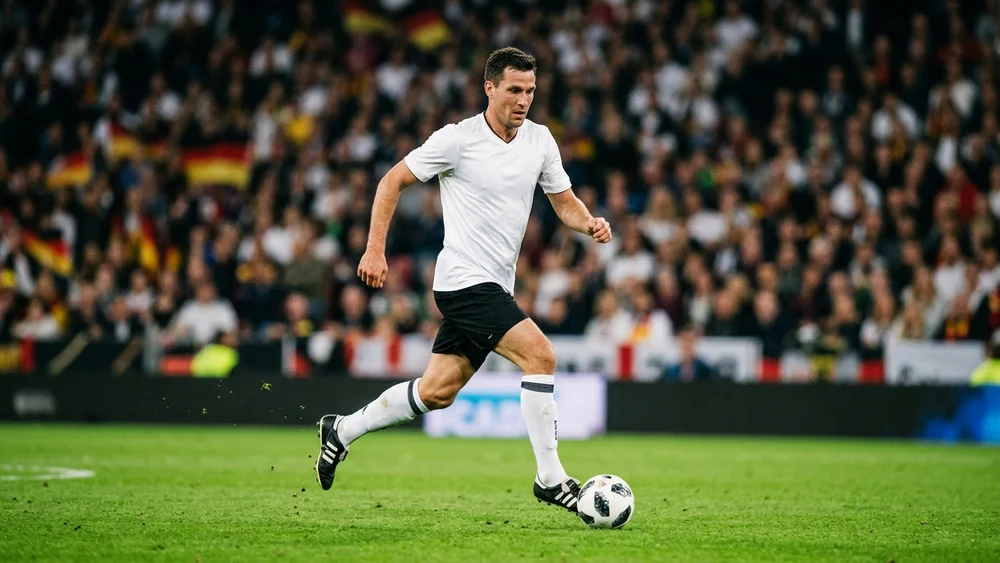
Germany’s squad has not changed hands so much as changed shape. Jurgen Klopp names his first squad as national coach on 17 September 2026, and the group he picks from is not the one that went to the World Cup: two of the three most experienced players in it have retired since the tournament, a third was released by Bayern Munich, and the country’s record appearance holder in goal is gone. This is the full 26 Germany took to North America, what has happened to each of them since, and the questions Klopp has to answer in his first fortnight.
Germany’s full squad: all 26 players
Julian Nagelsmann named his 26 on 21 May 2026. Lennart Karl, the 18-year-old Bayern forward and the youngest name on the list, withdrew injured on 6 June, and Assan Ouedraogo of RB Leipzig came in for him. The club column below shows where each player was at the tournament and where he is now, after a summer window that moved four of them.
| Player | Position | Club at the World Cup | Club now | Caps | Goals |
|---|---|---|---|---|---|
| Manuel Neuer | Goalkeeper | Bayern Munich | Bayern Munich (retired) | 128 | 0 |
| Oliver Baumann | Goalkeeper | Hoffenheim | Hoffenheim | 13 | 0 |
| Alexander Nubel | Goalkeeper | VfB Stuttgart | Besiktas | 3 | 0 |
| Antonio Rudiger | Defender | Real Madrid | Real Madrid (retired) | 86 | 3 |
| Jonathan Tah | Defender | Bayern Munich | Bayern Munich | 51 | 1 |
| Nico Schlotterbeck | Defender | Borussia Dortmund | Borussia Dortmund | 29 | 1 |
| Waldemar Anton | Defender | Borussia Dortmund | Borussia Dortmund | 15 | 0 |
| David Raum | Defender | RB Leipzig | RB Leipzig | 39 | 1 |
| Malick Thiaw | Defender | Newcastle United | Newcastle United | 7 | 0 |
| Nathaniel Brown | Defender | Eintracht Frankfurt | Bayern Munich | 8 | 1 |
| Joshua Kimmich (captain) | Midfielder | Bayern Munich | Bayern Munich | 114 | 10 |
| Aleksandar Pavlovic | Midfielder | Bayern Munich | Bayern Munich | 15 | 1 |
| Leon Goretzka | Midfielder | Bayern Munich | Aston Villa | 73 | 15 |
| Angelo Stiller | Midfielder | VfB Stuttgart | VfB Stuttgart | 9 | 0 |
| Pascal Gross | Midfielder | Brighton | Brighton | 19 | 1 |
| Felix Nmecha | Midfielder | Borussia Dortmund | Borussia Dortmund | 12 | 2 |
| Nadiem Amiri | Midfielder | Mainz | Mainz | 13 | 1 |
| Assan Ouedraogo | Midfielder | RB Leipzig | RB Leipzig | 1 | 1 |
| Florian Wirtz | Forward | Liverpool | Liverpool | 45 | 11 |
| Jamal Musiala | Forward | Bayern Munich | Bayern Munich | 46 | 10 |
| Kai Havertz | Forward | Arsenal | Arsenal | 62 | 25 |
| Leroy Sane | Forward | Galatasaray | Galatasaray | 80 | 18 |
| Nick Woltemade | Forward | Newcastle United | Juventus (on loan) | 12 | 4 |
| Deniz Undav | Forward | VfB Stuttgart | VfB Stuttgart | 13 | 9 |
| Maximilian Beier | Forward | Borussia Dortmund | Borussia Dortmund | 10 | 0 |
| Jamie Leweling | Forward | VfB Stuttgart | VfB Stuttgart | 6 | 1 |
Between them the 26 have 909 caps and 116 goals. Bayern Munich supplied six of them at the tournament and still supply six now, which sounds like nothing changed and hides the fact that it is not the same six.
Who has retired since the World Cup?
Two players, and they are the first and third most-capped men in the squad.
Manuel Neuer went first, within minutes of the final whistle in Boston. Asked by the German broadcaster ARD whether that had been his last game, the 40-year-old said yes, and that was the whole announcement. He had already retired once, after Euro 2024, and come back specifically to play a fifth World Cup. He finishes on 128 caps across 16 years, a world champion in 2014, and stays at Bayern Munich, where he is still club captain.
Antonio Rudiger took longer. He was reported to have told team-mates in the dressing room in Boston that he was finished, then paused once Nagelsmann left and Klopp arrived, and waited to see what his role would look like. On 1 September he confirmed it: “After some time reflecting, the moment has come for me to end my national team career and clear the way for the young generation.” He was 33, had 86 caps, and wanted to concentrate on Real Madrid.
That is 214 caps out of 909, close to a quarter of everything this squad knows, removed before the new manager picked a team. Neither was his call. It leaves Kimmich, on 114, as the most-capped player available to him, and it empties the goalkeeping position: the three keepers Nagelsmann took had 144 caps between them, Neuer owned 128 of those, and the two who remain have 16.
Germany’s key players under Klopp
Everything in attack still runs through Florian Wirtz and Jamal Musiala. Both are 23, both have scored ten or more for Germany already, and the pair have spent years describing the same instinct, the ability to find each other in traffic. Wirtz played his first World Cup in 2026 after moving to Liverpool, and Musiala went to his second at 23. Klopp coached neither, but Wirtz has spent a season at his old club under the system he built there, which is the closest thing to a head start this job offers him.
Joshua Kimmich has captained the side since 2024 and is the one fixed point in the team, comfortable in midfield or at right-back and rarely off the pitch when it matters. Kai Havertz is the squad’s leading scorer on 25 goals, though that figure says as much about Germany as about him: 25 out of 116 is barely a fifth, and no one in this group has ever carried the team’s scoring the way Harry Kane carries England’s or Lionel Messi carried Argentina’s. There is nobody to lean on, which also means there is nobody left to lose.
Behind them the holding role belongs to Aleksandar Pavlovic, 22, a Bayern-schooled passer who lets Kimmich push higher. Jonathan Tah and Nico Schlotterbeck inherit the centre of defence Rudiger organised, and between the two of them they have 80 caps to his 86 on his own. Leroy Sane, at Galatasaray since 2025, is still the quickest man in the squad and its second-highest scorer on 18.
The four players who changed clubs
The summer window moved four of the 26, and three of those moves point the same way: out of the Bundesliga.
| Player | From | To | Detail |
|---|---|---|---|
| Alexander Nubel | Bayern Munich | Besiktas | 8 July, three-year deal to 2029 |
| Nathaniel Brown | Eintracht Frankfurt | Bayern Munich | Signed in early July after the tournament |
| Leon Goretzka | Bayern Munich | Aston Villa | Free transfer, three-year deal, late August |
| Nick Woltemade | Newcastle United | Juventus | Season-long loan on deadline day, no option to buy |
Goretzka is the one that reads oddest. He played a World Cup as a Bayern player and was out of contract when it finished, spent seven weeks unattached while Milan, Juventus, Inter and Chicago Fire were all linked with him, and signed for Aston Villa in late August after Unai Emery rang him personally. He leaves Bayern after eight years, 312 appearances, 51 goals and 17 trophies, seven of them Bundesliga titles and one the 2020 Champions League.
Woltemade’s is the one that matters most to Klopp. Germany’s only recognised centre-forward in the squad joined Newcastle from Stuttgart a year ago for a club-record fee, was left out of their first two league games of the new season, and spent deadline day moving to Juventus on loan. There is no option or obligation to buy in the deal. A forward with four goals in 12 caps who is not first choice at either of his last two clubs is not a settled answer to Germany’s oldest question.
Nathaniel Brown’s move ran the other way. He emerged as the first-choice left-back at the tournament at 23, and Bayern signed him from Eintracht Frankfurt within a fortnight of it ending.
Why did Germany appoint Jurgen Klopp?
Because of one night in Boston. Germany were 12th in the world when they went out in the round of 32 to Paraguay, 37th, on 29 June. Julio Enciso put Paraguay in front in the 42nd minute, Havertz levelled in the 54th from a Wirtz cross, and it finished 1-1 after 120 minutes. Orlando Gill saved from Havertz and Woltemade in the shootout, Tah put his over, and Jose Canale scored in sudden death to win it 4-3. It was the first World Cup match Germany had ever lost on penalties.
Nagelsmann resigned within days rather than wait to be pushed, saying the team deserved a fresh start. The federation went straight for the name the country had wanted for years, and Klopp, 59, was presented at DFB headquarters in Frankfurt on 24 July. His contract began on 15 August and runs to the summer of 2030, covering the next World Cup in Spain, Portugal and Morocco. He had been Red Bull’s head of global soccer since 2025 under a deal that ran to 2029; the DFB paid no transfer fee for him and donated a million euros to the Wings for Life foundation instead. Peter Krawietz and Pep Lijnders, both with him at Liverpool, and the former Germany defender Sven Bender make up his staff.
Germany’s Nations League fixtures
Germany were drawn in Group A2 with the Netherlands, Serbia and Greece, and four of the six games land inside eleven days. Klopp takes the squad into camp at Herzogenaurach from 20 September.
| Date | Fixture | Venue |
|---|---|---|
| 24 September 2026 | Netherlands v Germany | Away |
| 27 September 2026 | Germany v Greece | WWK Arena, Augsburg |
| 1 October 2026 | Germany v Serbia | Home |
| 4 October 2026 | Greece v Germany | Away |
| 13 November 2026 | Serbia v Germany | Away |
| 16 November 2026 | Germany v Netherlands | Home |
The opening fixture is the awkward one. Klopp’s first competitive match is away to the Netherlands side Xavi has just taken over, in Amsterdam, four days after meeting most of his players for the first time.
What to expect from Klopp’s first squad
A bigger one than usual. Klopp is expected to name an expanded list on 17 September rather than the standard 23 or 26, on the logic that four matches in eleven days is the only chance he will get this year to look at a large group in person. That points to caps for players who were nowhere near North America, and it makes the squad announcement more interesting than the fixtures.
The goalkeeping decision cannot wait. Oliver Baumann is 36 and Alexander Nubel has moved to Turkey, so if Klopp wants a number one who will still be there in 2030 he has to start looking now. The centre-back pairing is the second question, and the centre-forward the third. What he does not have to worry about is the part Germany usually worry about. Wirtz, Musiala, Pavlovic, Brown and Ouedraogo are all 23 or younger and all capped, and that group will still be in its prime when the 2030 World Cup comes round.
For Indian fans who grew up on the 2014 side, the honest read is that the talent was never the problem in 2026 and is not the problem now. Germany went out to a team ranked twenty-five places below them because they could not hold their nerve, which is the specific thing Klopp built his reputation on fixing.
More national-team breakdowns: the Spain squad that won the World Cup, the England squad that finished third, the Argentina squad after Messi, the France squad and the Croatia squad Slaven Bilic has just named.