






France national football team players: Zidane’s first 23, the six debutants and Mbappé’s 67 goals
Zidane’s first window as France coach brought ten points from 12 and six debutants. Here are his 23 players, with caps and goals correct to 5 October 2026.
Jul 21, 2026 · Updated Oct 18, 2026
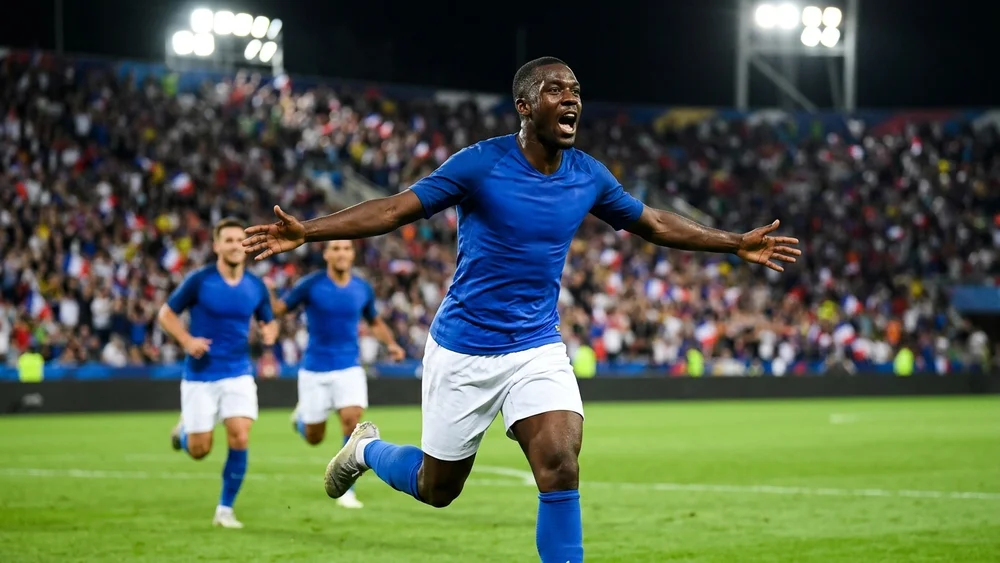
Zinedine Zidane has had his first international window as France coach, and France came out of it top of their Nations League group. His first squad, named on 18 September, had 23 players in it and only 15 of them had been at the 2026 World Cup. Six players made their debuts across four matches, Kylian Mbappé lasted 59 minutes before a knee injury sent him home, and France still took ten points from twelve.
This page lists the France national football team players Zidane used in that window, with career caps and goals correct to 5 October 2026, the night of the last game. It also covers the World Cup players who were not there, how the four matches went, and what comes next in November.
France’s current squad: Zidane’s 23
Three of the original 23 withdrew before a ball was kicked. Robin Risser was replaced by Jean Butez, Warren Zaïre-Emery by Maghnes Akliouche and Ibrahima Konaté by Leny Yoro. The tables below are the 23 who were in camp, including Mbappé, who left after the first game, and Dayot Upamecano, who was suspended for the last. The final column is appearances in the four Nations League games.
Goalkeepers
| Player | Club | Caps | Goals | Sep-Oct apps |
|---|---|---|---|---|
| Mike Maignan | AC Milan | 51 | 0 | 3 |
| Guillaume Restes | Toulouse | 1 | 0 | 1 |
| Jean Butez | Como | 0 | 0 | 0 |
Defenders
| Player | Club | Caps | Goals | Sep-Oct apps |
|---|---|---|---|---|
| Jules Koundé | Barcelona | 58 | 0 | 2 |
| Dayot Upamecano | Bayern Munich | 48 | 2 | 2 |
| Maxence Lacroix | Chelsea | 11 | 0 | 4 |
| Pierre Kalulu | Juventus | 5 | 0 | 2 |
| Adrien Truffert | Bournemouth | 3 | 0 | 2 |
| Andy Diouf | Inter Milan | 2 | 0 | 2 |
| Jérémy Jacquet | Liverpool | 2 | 0 | 2 |
| Leny Yoro | Manchester United | 1 | 0 | 1 |
Midfielders
| Player | Club | Caps | Goals | Sep-Oct apps |
|---|---|---|---|---|
| Adrien Rabiot | AC Milan | 69 | 7 | 3 |
| Eduardo Camavinga | Real Madrid | 33 | 2 | 4 |
| Manu Koné | Roma | 22 | 0 | 3 |
| Rayan Cherki | Manchester City | 18 | 3 | 4 |
| Maghnes Akliouche | Paris Saint-Germain | 12 | 1 | 2 |
| Lucas Da Cunha | Como | 3 | 0 | 3 |
Forwards
| Player | Club | Caps | Goals | Sep-Oct apps |
|---|---|---|---|---|
| Kylian Mbappé (c) | Real Madrid | 107 | 67 | 1 |
| Ousmane Dembélé | Paris Saint-Germain | 71 | 13 | 4 |
| Bradley Barcola | Liverpool | 32 | 6 | 4 |
| Michael Olise | Bayern Munich | 29 | 11 | 4 |
| Désiré Doué | Paris Saint-Germain | 19 | 4 | 4 |
| Esteban Lepaul | Rennes | 3 | 0 | 3 |
Zidane used 22 of the 23. Butez, called up at 31 for the first time, was the only one who did not get on the pitch.
Mbappé still has more goals than the rest of the squad put together
Add the four tables up and the 23 have 600 caps and 116 goals between them. Mbappé has 67 of those goals. The other 22 players have 49, so the captain alone accounts for 58 per cent of the squad’s international scoring. Across the World Cup 26 the figure was 55 per cent, and it has gone up because the players Zidane brought in have barely started scoring for France.
His goal in Izmit on 25 September was his 67th for France, and it came in his 107th match. He had passed Olivier Giroud’s national record of 57 at the World Cup in June, and nobody else is close: Giroud, Thierry Henry and Antoine Griezmann are all retired from international football. Dembélé is the next highest scorer in this squad on 13.
The other end of the table is where Zidane’s changes show. Eight of the 23 have fewer than five caps, and 13 have never scored for France.
How Zidane’s first four games went
| Date | Fixture | Result | France scorers |
|---|---|---|---|
| 25 September | Türkiye v France, Izmit | Won 1-0 | Mbappé |
| 28 September | Belgium v France, Brussels | Won 1-0 | Olise |
| 2 October | France v Italy, Saint-Denis | Drew 1-1 | Olise |
| 5 October | France v Belgium, Saint-Denis | Won 4-1 | Doué, Cherki, Olise 2 |
Mbappé scored early in the second half at the Kocaeli Stadium and was off minutes later with a left-knee injury. He left the camp and the federation did not replace him. Dembélé, whom Zidane calls his vice-captain, took the armband.
In Brussels three days later Zidane changed nine of his starting eleven. Andy Diouf, Jérémy Jacquet and Lucas Da Cunha all made their debuts from the start, and Olise, on as a 77th-minute substitute, scored the winner with two minutes left.
The first home game was the only one France did not win. Olise put them ahead from a free kick, Alessandro Bastoni equalised for Italy and Upamecano was sent off with five minutes left, which ruled him out of the Belgium return.
That return was the strangest of the four. Belgium led at the Stade de France from the 35th minute, and Guillaume Restes, making his debut in goal, was beaten by Dodi Lukébakio. Then France scored four times from the 77th minute, and all four came from players who had started on the bench.
Two numbers come out of that run. Olise scored four of France’s seven goals in the window, which took him from seven international goals to 11 in four appearances. And five of the seven came from substitutes, which says as much about how deep Zidane’s forward options are as it does about his starting line-ups.
The six debutants
| Player | Position | Club | Debut |
|---|---|---|---|
| Esteban Lepaul | Forward | Rennes | 25 Sep v Türkiye |
| Andy Diouf | Defender | Inter Milan | 28 Sep v Belgium |
| Jérémy Jacquet | Defender | Liverpool | 28 Sep v Belgium |
| Lucas Da Cunha | Midfielder | Como | 28 Sep v Belgium |
| Guillaume Restes | Goalkeeper | Toulouse | 5 Oct v Belgium |
| Leny Yoro | Defender | Manchester United | 5 Oct v Belgium |
Lepaul was Ligue 1’s top scorer last season with 21 goals and came on for the last minutes in Izmit. Yoro had not been in the original squad at all. He was at Clairefontaine with the under-21s when Konaté sprained his knee in training, and he was called across for his first senior squad.
Which World Cup players are missing, and why
Eleven of the 26 Deschamps took to North America were left out of the original 23. Akliouche was one of them and came back as Zaïre-Emery’s replacement, so ten are still outside the group.
William Saliba, Marcus Thuram and Jean-Philippe Mateta were injured, and Aurélien Tchouaméni was left out as a precaution. The other six were simply not picked: N’Golo Kanté, Lucas Hernandez, Theo Hernandez, Lucas Digne, Malo Gusto and Brice Samba.
Kanté is the one people ask about. L’Équipe reported in July that he would announce his international retirement after the World Cup, but no announcement has followed. Zidane settled it from the other side when he named his squad. “I didn’t call him. It’s my choice,” he said. “He’s 35 years old; I have four years at the head of this team.”
France’s Nations League group, and what comes next
| Team | P | W | D | L | GD | Pts |
|---|---|---|---|---|---|---|
| France | 4 | 3 | 1 | 0 | +5 | 10 |
| Italy | 4 | 2 | 1 | 1 | +3 | 7 |
| Belgium | 4 | 2 | 0 | 2 | +1 | 6 |
| Türkiye | 4 | 0 | 0 | 4 | -9 | 0 |
League A Group 1 finishes in November. France go to Italy at San Siro on 12 November and finish against Türkiye in Bordeaux on 15 November. They are not yet sure of a quarter-final place, because Belgium and Italy can both still overtake them.
How France’s 2026 World Cup finished
France won their first six matches at the World Cup. Spain ended it in the semi-final, 2-0, and then England beat them 6-4 in the third-place match in Miami Gardens after leading 4-0 at half-time. Fourth place was the end of the Deschamps era. Mbappé finished the tournament with ten goals and a second Golden Boot, and his 22 World Cup goals put him ahead of Lionel Messi as the competition’s all-time leading scorer.
Who is France’s captain?
Kylian Mbappé. He has held the armband since Hugo Lloris retired in 2023, and Zidane confirmed him as captain when he named his first squad. Ousmane Dembélé is vice-captain and led the side against Italy on 2 October.
Who is France’s head coach?
Zinedine Zidane, appointed on 28 July 2026 on a deal running to the 2030 World Cup. His record after four matches is three wins and a draw. He replaced Didier Deschamps, who led France for 14 years and won the 2018 World Cup and the 2021 Nations League.
Other national team squads
The same breakdown for the other leading nations: Spain, England, Argentina, Brazil, Portugal, Germany and Croatia.