






Brazil national football team players: the 26 Ancelotti used, and the ten who made their debuts
Every player Carlo Ancelotti took to Australia and India, with caps, goals and clubs after the three friendlies, plus who was left out and Brazil’s November games in Singapore.
Jul 13, 2026 · Updated Oct 15, 2026
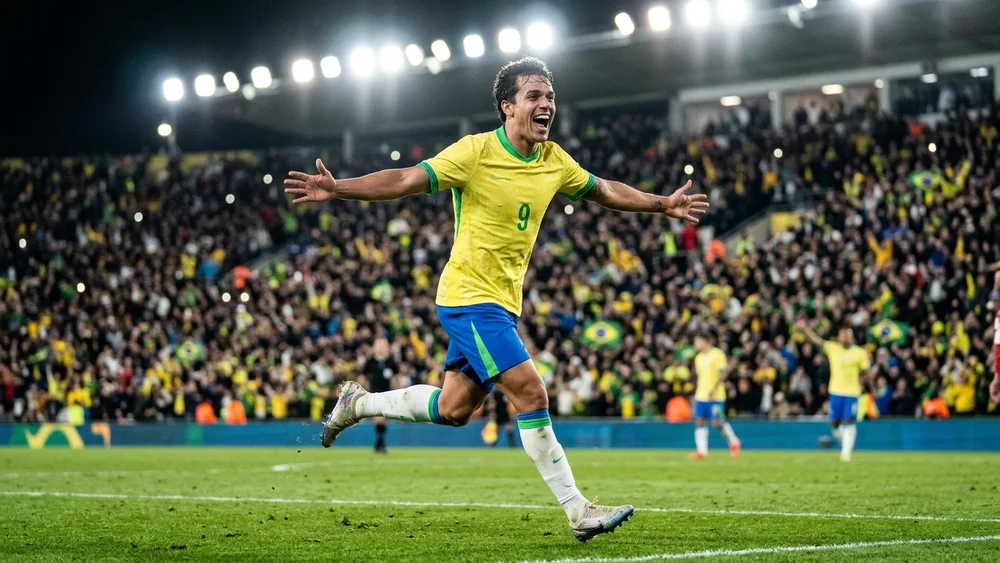
Carlo Ancelotti took 26 players to Australia and India for Brazil’s first matches since the World Cup, and every one of them got on the pitch. Ten of them made their senior debuts. Brazil drew 1-1 in Townsville, won 4-2 in Brisbane and beat India 4-0 in Kolkata, and by the end of the window the nine uncapped players he had picked in September had all been capped. Below is the full list of Brazil national football team players from that squad, with caps and goals as they now stand, and what comes next.
Who plays for the Brazil national football team?
These are the 26 players who were in the group across the three matches. João Pedro and Wesley withdrew injured before a ball was kicked and were replaced by Matheus Martinelli of Fluminense and Vanderson of Monaco. Raphinha played both games in Australia and then left before the India match with a thigh problem. Marquinhos captained the side. Caps and goals are correct to 3 October 2026, after the India game.
| Player | Position | Club | Caps | Goals |
|---|---|---|---|---|
| Hugo Souza | Goalkeeper | Corinthians | 2 | 0 |
| Otávio | Goalkeeper | Cruzeiro | 1 | 0 |
| Pedro Morisco | Goalkeeper | Coritiba | 1 | 0 |
| Marquinhos (c) | Defender | Paris Saint-Germain | 112 | 7 |
| Gabriel Magalhães | Defender | Arsenal | 24 | 1 |
| Douglas Santos | Defender | Zenit Saint Petersburg | 14 | 0 |
| Vanderson | Defender | Monaco | 9 | 1 |
| Matheuzinho | Defender | Corinthians | 3 | 0 |
| Vitor Reis | Defender | Manchester City | 2 | 0 |
| Arthur Dias | Defender | Athletico Paranaense | 2 | 0 |
| Mauro Júnior | Defender | PSV | 3 | 0 |
| Jair | Defender | Nottingham Forest | 3 | 0 |
| Bruno Guimarães | Midfielder | Arsenal | 51 | 4 |
| Danilo | Midfielder | Botafogo | 11 | 2 |
| Douglas Luiz | Midfielder | Juventus | 20 | 0 |
| Andrey Santos | Midfielder | Manchester United | 8 | 0 |
| Breno Bidon | Midfielder | Corinthians | 2 | 0 |
| Gabriel Bontempo | Midfielder | Santos | 2 | 0 |
| Matheus Martinelli | Midfielder | Fluminense | 2 | 0 |
| Vinícius Júnior | Forward | Real Madrid | 57 | 14 |
| Raphinha | Forward | Barcelona | 43 | 12 |
| Endrick | Forward | Real Madrid | 24 | 4 |
| Estêvão | Forward | Chelsea | 14 | 6 |
| Pedro | Forward | Flamengo | 8 | 2 |
| Rayan | Forward | Bournemouth | 8 | 2 |
| Samuel Lino | Forward | Flamengo | 4 | 2 |
Eleven of the 26 play their club football in Brazil and seven in the Premier League. The caps column is far more lopsided. Marquinhos, Vinícius Júnior, Bruno Guimarães and Raphinha hold 263 of the squad’s 430 caps between them, and eleven players have three caps or fewer.
Ancelotti used all 26 and gave ten debuts
The September squad had nine uncapped players. All nine played, and so did Martinelli, who came in as a replacement and made his debut off the bench in Brisbane. Four debuts came in Townsville (Vitor Reis, Matheuzinho, Jair and Mauro Júnior), five in Brisbane (Otávio, Gabriel Bontempo, Breno Bidon, Arthur Dias and Martinelli) and one in Kolkata, where Pedro Morisco started in goal.
The goalkeeping shows how deliberately it was done. Hugo Souza played in Townsville, Otávio in Brisbane and Morisco in Kolkata: three goalkeepers, one match each, with one previous cap between them before the trip. Alisson and Ederson were not picked, and after this window Ancelotti has three keepers with four caps between them.
Only nine players appeared in all three games: Matheuzinho, Jair, Mauro Júnior, Danilo, Bruno Guimarães, Vinícius, Estêvão, Endrick and Samuel Lino. Three of those nine had never played for Brazil before the trip. Nobody would call that a settled side. Ancelotti was running an audition, and he ran it on purpose.
The squad’s caps total went from 372 to 430 across the three games, which is the 58 appearances the window produced. Brazil’s World Cup group in June had 916.
Brazil’s results: Australia twice, then India
| Date | Opponent | Venue | Result | Brazil scorers |
|---|---|---|---|---|
| 25 Sep 2026 | Australia | Townsville | D 1-1 | Rayan |
| 29 Sep 2026 | Australia | Suncorp Stadium, Brisbane | W 4-2 | Vanderson, Raphinha (pen), Bruno Guimarães, Vinícius Júnior (pen) |
| 3 Oct 2026 | India | Salt Lake Stadium, Kolkata | W 4-0 | Estêvão, Pedro, Samuel Lino 2 |
| 14 Nov 2026 | Japan | National Stadium, Singapore | – | – |
| 17 Nov 2026 | Singapore | National Stadium, Singapore | – | – |
Nine goals came from eight different scorers. Rayan rescued the opener in Townsville with a header in the fifth minute of stoppage time, after Nestory Irankunda’s free kick had put Australia ahead. In Brisbane, Vanderson scored after three minutes, Australia went 2-1 up through Alessandro Circati and Connor Metcalfe, and Brazil came back with a Raphinha penalty before half-time and goals from Bruno Guimarães and a Vinícius penalty.
Then came Kolkata, the first senior men’s match between Brazil and India. India held out until the 28th minute, when Estêvão scored. Pedro added a second before half-time, and Lino came off the bench to score twice, the last of them five minutes into stoppage time. Our match report from the Salt Lake Stadium has the full story, and our India squad guide covers the other side of the fixture.
Brazil’s key players
Vinícius Júnior is the senior attacker, on 57 caps and 14 goals after his penalty in Brisbane. He started all three games. Estêvão, still 19, played all three as well and scored in Kolkata, taking him to six goals in 14 internationals. Endrick is on 24 caps at 20.
Marquinhos is the captain and the most experienced player in the squad by a distance. His 112 caps put him one behind Thiago Silva and sixth on Brazil’s all-time list, so two appearances in November would take him past Silva into fifth. Bruno Guimarães, now at Arsenal, is the midfield anchor with 51 caps, and he played in all three games.
Lino is the surprise of the window. He arrived with one cap from September 2025, played in all three matches off the bench, and left with two goals.
Who was left out of the Brazil squad?
Neymar is the obvious absence and it is permanent: he ended his international career after the World Cup as Brazil’s all-time top scorer on 80 goals, and we looked at where those 80 sit in Brazil’s scoring list. Alisson, Ederson, Casemiro, Lucas Paquetá, Fabinho, Alex Sandro and the full-back Danilo, born in 1991, are among the World Cup players Ancelotti did not pick. So were Matheus Cunha, Gabriel Martinelli and Gleison Bremer. Matheus Martinelli of Fluminense, the midfielder who made his debut in Brisbane, is a different player.
Who is the Brazil national football team coach?
Carlo Ancelotti, appointed in May 2025 after leaving Real Madrid. He is the only manager to have won the Champions League five times, twice with Milan and three times with Real Madrid. Brazil went out of the 2026 World Cup in the round of 16, beaten 2-1 by Norway at MetLife Stadium on 5 July. It was the first World Cup since 1990 at which they failed to reach the quarter-finals, and his answer has been to rebuild rather than tinker. Our assessment of that exit argued the problems ran deeper than one bad night.
When do Brazil play next?
Brazil finish 2026 with two friendlies at the National Stadium in Singapore: Japan on 14 November and Singapore on 17 November. The Japan game is a rematch of the World Cup round of 32, which Brazil won 2-1 with a stoppage-time goal. The Singapore game will be the first meeting between the two countries’ senior sides. Ancelotti had not named his squad for those matches at the time of writing.
The question for November is how many of the ten debutants keep their places. If the next list looks like this one, the audition is still running. If the World Cup regulars start coming back, Ancelotti has seen what he needed to see.