






Who is the King of Football? Why the title still belongs to Pele
The King of Football is Pele, O Rei since 1958. Why his goal total is disputed, why he could never win the Ballon d’Or, and where Messi and Ronaldo stand after Messi’s Argentina farewell.
Jun 29, 2024 · Updated Oct 16, 2026
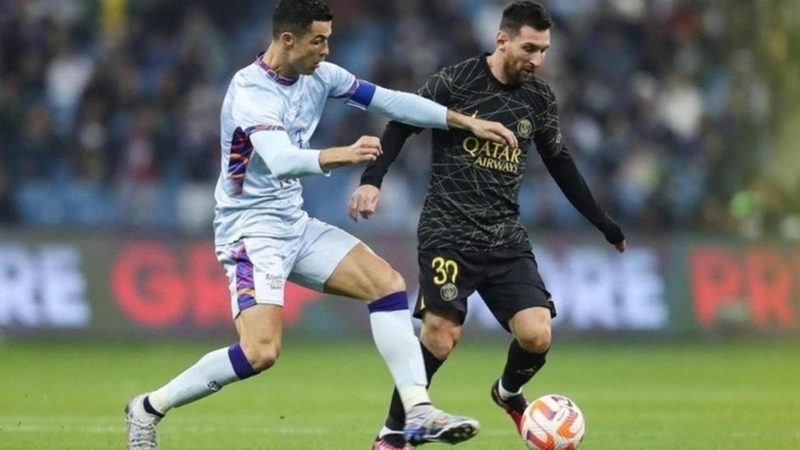
“King of Football” is not a ranking. It is a nickname, and it belongs to one man: Pele, who has been O Rei do Futebol in Brazil since 1958. Ask the question in India today, though, and most people mean something else. They are asking whether Lionel Messi or Cristiano Ronaldo has taken the crown.
Both are worth answering, and they have different answers. This page covers where the title came from, why the numbers behind it are impossible to compare across eras, and who the contenders have been from Pele to the players who will inherit the argument.
Why is Pele called the King of Football?
The nickname was given to him by crowds, not by a marketing department, and it dates from the 1958 World Cup in Sweden. Pele was 17. He scored a hat-trick in the semi-final and two more in the final as Brazil won their first world title, and by the time he came home the Brazilian press and the terraces had settled on O Rei, the King.
Nothing since has dislodged it. He won the World Cup three times, in 1958, 1962 and 1970, from the four tournaments he played. He is the only player in the history of the game to win three, and that is the single hardest record in this whole argument to attack: Messi has one, Maradona had one, Ronaldo has none.
Nobody agrees how many goals Pele scored
This is where every “king of football” comparison quietly falls apart, and it is worth understanding before you trust any table that puts Pele’s total next to a modern player’s.
| Source | Goals | What it counts |
| RSSSF (competitive only) | 767 in 831 games | Official matches only |
| RSSSF (all matches) | 1,284 in 1,375 games | Including friendlies and tours |
| FIFA | 1,281 in 1,363 games | Including friendlies and tours |
| Guinness World Records | Around 1,280 | Including friendlies and tours |
The gap is not a rounding error. It is roughly 500 goals, and it exists because Santos and the New York Cosmos played enormous numbers of exhibition matches and friendly tours that some record-keepers count and others do not. Neither Guinness nor FIFA publishes a full match-by-match list, so the disagreement cannot be resolved from the outside.
What that means in practice: comparing Pele’s “1,280” to Cristiano Ronaldo’s career total of 981 (the full most goals in football list is here) is not a like-for-like comparison, and neither is comparing Pele’s competitive 767 to a figure that includes friendlies. Any page that puts one number against the other without saying which basis it used is telling you nothing.
Pele and Maradona were not allowed to win the Ballon d’Or
Here is the fact that reframes every cross-era trophy table, and most articles on this subject leave it out.
When the Ballon d’Or began in 1956, only European players were eligible. That rule stood until 1995. Pele and Diego Maradona spent their entire careers ineligible for the award that modern comparisons treat as the measure of greatness, which is why both finished with zero while Messi has eight.
In 2016, for the award’s 60th anniversary, France Football went back and re-ran the pre-1995 years as if the world had always been eligible. The result:
| Player | Retrospective Ballons d’Or | Years |
| Pele | 7 | 1958, 1959, 1960, 1961, 1963, 1964, 1970 |
| Diego Maradona | 2 | – |
| Garrincha, Mario Kempes, Romario | 1 each | – |
That is 12 of the 39 awards handed out before 1995 that would have gone to South Americans. Two things to be clear about, though: this was a thought experiment, not a re-award, and the original winners keep their trophies. Nobody was stripped of anything.
Still, it changes the shape of the argument. “Messi has eight Ballons d’Or and Pele has none” is true and almost meaningless. On France Football’s own reckoning the honest line is eight to seven.
The other claimants to the crown
| Player | Country | World Cups won | Ballon d’Or |
| Pele | Brazil | 3 (1958, 1962, 1970) | 0 (7 retrospective) |
| Diego Maradona | Argentina | 1 (1986) | 0 (2 retrospective) |
| Zinedine Zidane | France | 1 (1998) | 1 (1998) |
| Ronaldo Nazario | Brazil | 1 (2002) | 2 (1997, 2002) |
| Ronaldinho | Brazil | 1 (2002) | 1 (2005) |
| Lionel Messi | Argentina | 1 (2022) | 8 |
| Cristiano Ronaldo | Portugal | 0 | 5 |
Maradona’s case rests almost entirely on one tournament, and it is a strong enough case that it has survived forty years. He captained an unfancied Argentina to the 1986 World Cup and produced, in a single quarter-final against England, both the most notorious goal in the sport’s history and one of its finest: the handball, and then the run from inside his own half past half the England team. That quarter-final is also why he, and not Pele, is the one they call the God of football.
Messi or Ronaldo: the modern version of the question
For the last twenty years the question has narrowed to two men. One of their international careers is now over, and the other is on hold.
Messi won the World Cup in 2022 and the Copa America in 2021 and 2024. At the 2026 World Cup he scored eight times, took his tournament total to 21 and passed Miroslav Klose’s old men’s record of 16, before Argentina lost the final to Spain. He did not keep the record for long: Kylian Mbappe finished the same tournament on 22. Messi announced his international retirement on 31 August and said goodbye at the Monumental on 6 October, setting up two goals and scoring a penalty in a 3-0 win over Benin. He finished on 126 goals in 208 games, and Argentina’s squad after his farewell already has eight new caps in it.
Ronaldo played his sixth and last World Cup in 2026 and became the first man to score at six different tournaments, but he has not retired from Portugal. He is the all-time leading scorer in men’s international football with 146 goals in 234 caps, still without a World Cup. He left the national team’s camp at the end of September, and the Portuguese federation has since provisionally suspended him from the national team while a disciplinary case runs. Its regulations allow a ban of between one and six months.
Both still play club football, and Ronaldo leads on career goals, 981 to 934. Messi has the next award night: he is on the 30-man shortlist for the 2026 Ballon d’Or, his first nomination since 2023, and the winner is named in London on 26 October. The career numbers side by side are on our Messi vs Ronaldo stats page.
The full head-to-head, trophy by trophy and award by award, is a page of its own: see our GOAT of football comparison for the complete breakdown.
The short version for this page: on the Pele test, World Cups, Messi has one and Ronaldo has none, and neither is close to three.
Who inherits the argument?
The 2026 World Cup was supposed to be the handover, and it half was. Kylian Mbappe took the Golden Boot with ten goals, becoming the first player to win it at two World Cups in a row, though France went out in the semi-finals. His two goals in the third-place play-off against England took him to 22 World Cup goals, one more than Messi and the most anyone has scored at the tournament. Erling Haaland carried Norway to a first World Cup quarter-final. Jude Bellingham scored the goals that took England past Mexico and then Norway.
But the tournament’s own prizes went elsewhere. Spain won it, and three of the four main awards went to Spanish players: Rodri the Golden Ball, Unai Simon the Golden Glove and the 19-year-old defender Pau Cubarsi the Young Player award. Lamine Yamal, the teenager most people expected to announce himself, finished the tournament with one goal and no assists and a winners’ medal anyway.
Which is a fair note to end on. Nobody has claimed the crown yet, and “King of Football” has only ever been given, never won.
King of Football: quick answers
Who is the King of Football?
Pele. The nickname O Rei has been his since the 1958 World Cup and no one has taken it since.
Why is Pele called the King?
He won the World Cup three times, more than any other player, and was 17 when he won the first of them.
How many goals did Pele score?
767 in competitive matches, or around 1,280 if you count friendlies and exhibition tours. Sources genuinely disagree, and the difference is about 500 goals.
Why did Pele and Maradona never win the Ballon d’Or?
It was restricted to European players until 1995. France Football’s 2016 re-run of those years credits Pele with seven and Maradona with two.
Is Messi the King of Football now?
He has the strongest modern case, with eight Ballons d’Or and the 2022 World Cup, but the nickname still belongs to Pele.
Who has scored more goals, Messi or Ronaldo?
Ronaldo. He had 981 career goals for club and country after scoring for Al Nassr on 12 October 2026, against Messi’s 934 after two for Inter Miami on 10 October. Both are still playing club football.
Has Messi retired from international football?
Yes. He announced it on 31 August 2026 and played his last game for Argentina against Benin on 6 October, finishing with 126 goals in 208 matches.
Photo credit: Alamy