






Most runs in Test cricket: Tendulkar’s 15,921 still leads, and Root is 1,741 away
Joe Root’s 66 at Headingley took him to 14,180 and left him 1,741 behind Sachin Tendulkar. The all-time Test run list as at 22 August 2026, and how to tell a current version from a stale one.
Aug 30, 2024 · Updated Aug 22, 2026
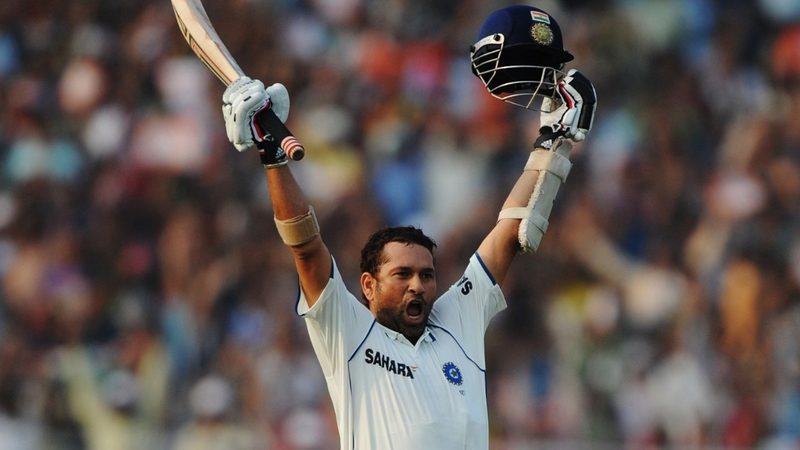
Sachin Tendulkar has the most runs in Test cricket, 15,921 in 200 matches, and the record has stood since he retired in 2013. Joe Root is second on 14,180 and is the only player still batting who is close to it. Fifteen men have reached 10,000 Test runs and thirteen of them have finished.
Most runs in Test cricket: the full 10,000 club
Figures below are as at 22 August 2026, the day after the first England v Pakistan Test at Headingley finished.
| Player | Team | Span | Mat | Inn | NO | Runs | Avg | HS | 100s | 50s |
| Sachin Tendulkar | India | 1989-2013 | 200 | 329 | 33 | 15,921 | 53.78 | 248* | 51 | 68 |
| Joe Root | England | 2012- | 167 | 305 | 25 | 14,180 | 50.64 | 262 | 41 | 68 |
| Ricky Ponting | Australia | 1995-2012 | 168 | 287 | 29 | 13,378 | 51.85 | 257 | 41 | 62 |
| Jacques Kallis | South Africa | 1995-2013 | 166 | 280 | 40 | 13,289 | 55.37 | 224 | 45 | 58 |
| Rahul Dravid | India | 1996-2012 | 164 | 286 | 32 | 13,288 | 52.31 | 270 | 36 | 63 |
| Alastair Cook | England | 2006-2018 | 161 | 291 | 16 | 12,472 | 45.35 | 294 | 33 | 57 |
| Kumar Sangakkara | Sri Lanka | 2000-2015 | 134 | 233 | 17 | 12,400 | 57.40 | 319 | 38 | 52 |
| Brian Lara | West Indies | 1990-2006 | 131 | 232 | 6 | 11,953 | 52.88 | 400* | 34 | 48 |
| Shivnarine Chanderpaul | West Indies | 1994-2015 | 164 | 280 | 49 | 11,867 | 51.37 | 203* | 30 | 66 |
| Mahela Jayawardene | Sri Lanka | 1997-2014 | 149 | 252 | 15 | 11,814 | 49.84 | 374 | 34 | 50 |
| Allan Border | Australia | 1978-1994 | 156 | 265 | 44 | 11,174 | 50.56 | 205 | 27 | 63 |
| Steve Waugh | Australia | 1985-2004 | 168 | 260 | 46 | 10,927 | 51.06 | 200 | 32 | 50 |
| Steve Smith | Australia | 2010- | 123 | 220 | 28 | 10,763 | 56.05 | 239 | 37 | 44 |
| Sunil Gavaskar | India | 1971-1987 | 125 | 214 | 16 | 10,122 | 51.12 | 236* | 34 | 45 |
| Younis Khan | Pakistan | 2000-2017 | 118 | 213 | 19 | 10,099 | 52.05 | 313 | 34 | 33 |
One row in that table is already wrong, and it is not a mistake
Steve Smith’s figures are correct up to the Sydney Test against England in January 2026, when he made 138. They have not moved since on most published versions of this list, and he has been batting in the meantime. He made 71 in the first Test against Bangladesh at Darwin this month, and 42 at Mackay in the second, which is being played as this is published. Those two innings alone put him past 10,876, before counting a second innings at Darwin, and the number is moving while you read it.
Every version of a records list is a snapshot. That is worth saying plainly because it explains almost every disagreement you will find between two of these tables. If one page says Root has 13,540 and another says 14,180, neither is necessarily wrong. One was compiled in July 2025 and the other after Headingley. The thirteen retired players in the table above cannot move, which is what makes them useful as a control: if a list has Ponting on anything other than 13,378, it has a real error rather than an old date.
The average column is a checksum, and it catches a dropped column
A Test batting average is runs divided by dismissals, and dismissals are innings minus not-outs. So every row above can be checked with one division, and the answer has to reproduce the printed average. Tendulkar: 329 innings, 33 not out, so 296 dismissals, and 15,921 divided by 296 is 53.78. Root: 305 and 25 leaves 280, and 14,180 over 280 is 50.64.
There is one wrinkle worth knowing before you try it. Cricket’s scorers truncate the second decimal place rather than round it. Tendulkar’s exact figure is 53.7871, which becomes 53.78 and not 53.79. Sangakkara’s is 57.4074, printed as 57.40. Do the division and round it up and roughly half the table will look wrong by a hundredth.
Run it with truncation and all fifteen rows reconcile exactly. That is a useful thing to know because the innings and not-out columns are the first things a table drops, and when they go the arithmetic stops closing. It also confirmed Root’s updated figure here: his 66 at Headingley was a single dismissed innings, so 14,114 became 14,180 and 279 dismissals became 280, and 14,180 over 280 lands on 50.64 exactly.
How close is Joe Root to Sachin Tendulkar?
Root needs 1,741 runs. He is 35, he has scored at 84.9 runs per Test across his career against Tendulkar’s 79.6, and at his own career rate the gap is about 21 more Tests. England play a lot of Test cricket, so that is roughly two years of work rather than five.
The complication is not his scoring rate, it is that he has to keep being picked and keep being fit. What makes the chase plausible at all is volume. Root debuted in December 2012 and has played 167 Tests since, a shade over 12 a year. Tendulkar played 200 in 24 years, about eight a year. Root is getting through a Test career half again as fast, which is why a 1,741-run gap is a conversation rather than a fantasy, and it is also the part of the equation he does not control.
He passed Alastair Cook to become England’s leading Test run-scorer in October 2024 and is now 1,708 clear of him. He also went level with Tendulkar at Headingley on a different record, reaching his 68th Test fifty, which is the most anyone has made. He is captain again, appointed in July 2026 after Ben Stokes retired from international cricket, having already led England in a record 64 Tests between 2017 and 2022.
The list is nearly closed
Only two of the fifteen are still playing, and one of them is 37. Nobody else is near: the next batters down the all-time list who are still active are a long way short of 10,000, and the format gives them fewer chances than it gave Tendulkar, who played 200 Tests in 24 years.
The other structural point is where the runs come from. Australia have four men in the top fifteen, India three, England, Sri Lanka and the West Indies two each, and South Africa and Pakistan one apiece. Seven countries, and the three that play the most Test cricket supply nine of the fifteen. It is the same shape as our list of the most wickets in international cricket, where volume of matches explains more of the order than quality does.
Common questions
Who has scored the most runs in Test cricket? Sachin Tendulkar, with 15,921 runs in 200 Tests at 53.78, including a record 51 Test centuries. He retired in November 2013.
Who has the most Test runs among active players? Joe Root, on 14,180, which is also second on the all-time list. Steve Smith is the only other active player in the 10,000 club.
What is Sachin Tendulkar’s highest Test score? An unbeaten 248 against Bangladesh at Dhaka in 2004. He never made a Test triple hundred, which four men in the table above did.
Who has faced the most balls in Tests? Rahul Dravid, which is a separate record from this one and a better measure of what he did.
For the surrounding records see our lists of most runs in international cricket across all three formats, most hundreds in international cricket, most Test runs in a calendar year and the India players with the most Test caps.
Featured photo: AFP / DESHAKALYAN CHOWDHURY