






The greatest Indian football players of all time
From the golden-era greats of the 1950s and 60s to Sunil Chhetri’s record-breaking goals, these are the greatest Indian football players of all time, and the case for who tops the list.
Jul 9, 2026
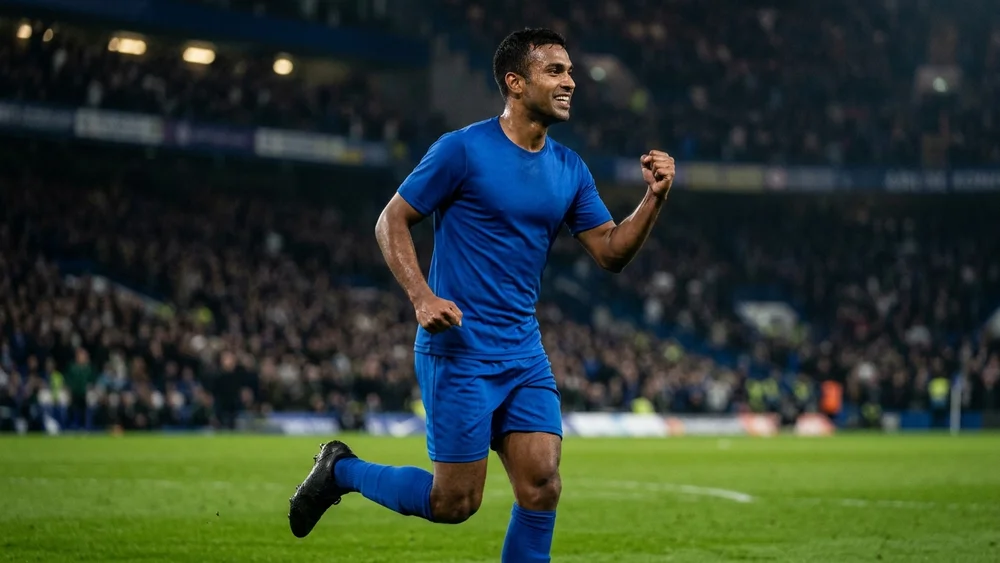
Indian football has never wanted for talent, even in the decades when the national team slipped down the world rankings. Ask any fan to name the greatest Indian football players of all time and the same figures come up: a record-breaking captain who outscored almost everyone on the planet, a striker who joined an English club before it was fashionable, and a golden generation that once made India one of the best sides in Asia. This is a run through the players who built that history, from the pioneers of the 1950s to the men still pulling on the blue shirt today.
Sunil Chhetri, India’s record-breaker
No list of the greatest Indian football players starts anywhere else. Sunil Chhetri has scored 95 goals in 157 international appearances since his debut against Pakistan in June 2005, a debut he marked with a goal. That tally makes him India’s all-time leading scorer by a distance and, for a long stretch, the fourth-highest men’s international goalscorer in the world, behind only Cristiano Ronaldo, Lionel Messi and Iran’s Ali Daei.
The medals back up the numbers. Chhetri captained India to the SAFF Championship in 2021 and 2023 and lifted the Intercontinental Cup twice, in 2018 and 2023, finishing top scorer at the 2018 edition. At club level he dragged Bengaluru FC to the Indian Super League title in the 2018-19 season. He announced his international retirement in 2024, then answered a call from head coach Manolo Márquez to return in 2025 for the 2027 Asian Cup qualifying campaign, one last stint in the shirt before stepping away for good.
Bhaichung Bhutia, the Sikkimese Sniper
Before Chhetri, Bhaichung Bhutia was the face of Indian football. The striker from Sikkim, nicknamed the Sikkimese Sniper for his finishing, scored 40 goals in 104 games for India and in 2009, in a Nehru Cup win over Kyrgyzstan, became the first Indian to reach 100 caps. His biggest mark on the game came off the pitch as much as on it. When he signed for English club Bury in 1999, he became the first Indian footballer to join a European club on a professional contract, and he spent three seasons in England. He retired from international duty in 2011 and remains one of the most influential figures the Indian game has produced.
IM Vijayan, the Black Pearl
Bhutia’s strike partner in the late 1990s was IM Vijayan, a forward from Kerala who rose from selling soda bottles outside a Thrissur stadium to being crowned the country’s finest player. Known as the Black Pearl, Vijayan scored 30 goals in 72 internationals and was named Indian Player of the Year three times, in 1993, 1997 and 1999, the first man to win it more than once. He is still in the record books for one of the fastest goals in international history, a strike against Bhutan at the 1999 SAFF Games timed at roughly 12 seconds. He also took the Arjuna Award in 2003 and finished top scorer at that year’s Afro-Asian Games on home soil. The Padma Shri followed in 2025, overdue recognition for one of the most naturally gifted footballers India has ever seen.
The golden generation: Goswami, Banerjee and Balaram
India’s strongest era came between the early 1950s and the early 1960s, when the national team genuinely ranked among Asia’s best. The attacking trio of Chuni Goswami, PK Banerjee and Tulsidas Balaram was known as the holy trinity of Indian football. Goswami captained the side that won gold at the 1962 Asian Games in Jakarta, beating South Korea 2-1 in the final through goals from PK Banerjee and Jarnail Singh. Banerjee, a tireless winger and forward, also played at the 1956 and 1960 Olympics and later became one of India’s most respected coaches.
That gold followed the fourth-place finish at the 1956 Melbourne Olympics, where India beat hosts Australia 4-2 and Neville D’Souza scored a hat-trick, the first by an Asian player at the Games. Much of the credit for the era belongs to coach Syed Abdul Rahim, who turned India into a continental force before his death in 1963.
The men at the back: Jarnail Singh and Peter Thangaraj
The golden generation was not all about forwards. Jarnail Singh was rated one of Asia’s finest centre-backs in the 1960s, and he wrote himself into Indian football folklore in that 1962 final. Carrying six stitches in his head from an injury picked up in the group stage, he was pushed up front and headed home the winner against South Korea. He went on to captain the country and won the Arjuna Award in 1964. Behind him for much of the era stood Peter Thangaraj, a towering goalkeeper who represented India from 1954 to 1968 and was voted Asia’s best goalkeeper in 1958. Plenty of people who saw him play still rate him the finest India has produced between the posts.
Sailen Manna and Gostha Pal, the original legends
The foundations were laid even earlier. Sailen Manna, a composed left-back, captained India to the country’s first major international honour, gold at the inaugural 1951 Asian Games in New Delhi, where the hosts beat Iran 1-0 in the final. In 1953 the English Football Association named him among the ten best captains in the world, and the AIFF later honoured him as its Player of the Millennium. Going back further still, Gostha Pal earned the nickname the Chinese Wall for his defending in the 1920s and 1930s and is remembered as India’s first great captain.
The modern guard: Gurpreet Singh Sandhu and Sandesh Jhingan
The current generation has its own standard-bearers. Goalkeeper Gurpreet Singh Sandhu made history in 2016 when he started a UEFA Europa League qualifier for Norwegian club Stabæk, becoming the first Indian to feature in a European club competition match. Now captain of the side nicknamed the Blue Tigers, he inherited the armband as Chhetri wound down and anchors a defence in which Sandesh Jhingan has been the leading centre-back for the best part of a decade. Neither carries the goal tallies of the forwards above them, and the truth is the current team has struggled to match the highs of earlier generations. But both have set the professional benchmark, in fitness, mentality and durability, for the players coming through India’s system today, and any revival will be built on those foundations.
So who is the greatest Indian footballer of all time?
If the measure is trophies, records and sheer weight of goals, Sunil Chhetri holds the title. His scoring numbers dwarf everyone else’s and his longevity carried India through two decades. But greatness is not only about statistics. Bhaichung Bhutia broke ground in Europe, IM Vijayan produced moments of magic no spreadsheet captures, and the golden generation played in an era when India actually beat the best in Asia. The honest answer is that each of them was the greatest of his time, and together they tell the story of Indian football better than any single name could.
For a look at the players wearing the shirt now, read our guide to the India national football team squad.