






Rohit Yadav took six wickets on debut in July, and now he is banned for two years
The Bengal legspinner was found holding three birth certificates giving three different years of birth. CAB has flagged more than 60 other cricketers in the same documentation drive.
Sep 4, 2026
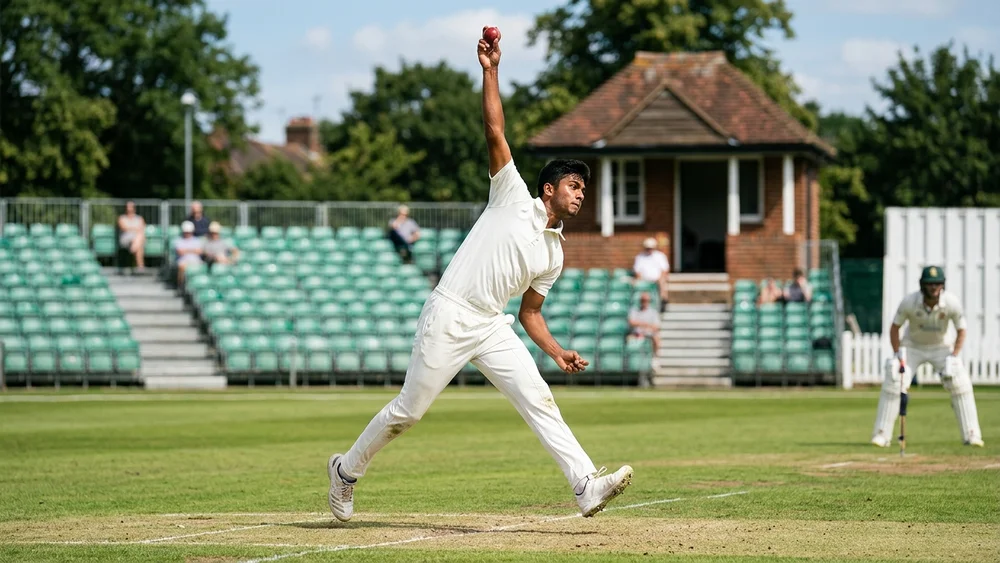
Rohit Yadav made his Youth Test debut for India Under-19s in Colombo in July, took two wickets in the first innings and four in the second, and India won by 211 runs. On Friday the BCCI banned him for two years. Nothing he did in that match was the problem. The problem was the paperwork he had arrived with.
Three birth certificates, three different years
The Bengal legspinner was found to be holding three separate birth certificates, giving his year of birth as 2007, 2009 and 2010. His Aadhaar record moved as well, showing 2006 in updates made between 2017 and 2020 before switching to 2009 in 2021. The Cricket Association of Bengal had him on its books as a 2007 birth.
Indian age-group eligibility rests entirely on those documents, and a player holding three versions of one cannot be cleared under any of them. The discrepancy came to light when his papers were scrutinised around the Sri Lanka tour. The suspension covers domestic cricket and has been circulated to every state association, so Rohit also drops out of India Under-19s’ home series against Australia, which starts in Rajkot on 18 September and runs to 8 October.
The list behind the headline
His is the name in the headline. The number underneath it is the story. CAB has flagged more than 60 further cricketers as ineligible to register or transfer for the 2026-27 and 2027-28 seasons after going through their documentation, and they are not all teenagers who slipped past a district trial.
Ravi Kumar is on the list. The Bengal left-arm quick was part of India’s Under-19 World Cup-winning squad in 2022, finished that tournament with 10 wickets and took four of them in the final against England. CAB records show a gap of more than three years against his registered age. Vishal Bhatti, a left-arm spinner who has played first-class cricket for the state, is on it too.
What a list like that shows is how far a wrong date travels before anyone checks it. A boy registered two years young at 14 carries that date through district cricket, into the state age-group sides, into a national Under-19 shirt and, in Ravi’s case, all the way to a World Cup medal. Nobody along the way has much reason to look. The player is taking wickets, the association is winning, and the certificate in the file says what everyone needs it to say.
A problem the BCCI has legislated against before
In August 2020 the board ran an amnesty. Any registered player who came forward before 15 September that year and gave a true date of birth would be allowed to carry on. Anyone caught afterwards would get a two-year ban and be barred from age-group cricket permanently once it ended. Rohit’s punishment is that policy working exactly as written, six years on.
The testing has been in place even longer. The BCCI adopted the TW3 bone-maturation test in 2012, a one-time X-ray of the forearm taken at Under-16 level to estimate a player’s real age. Under-19 registrations require birth certificates alongside school records.
None of it has closed the gap, because the incentive behind the fraud has not moved. Two years is an enormous edge in a country with this many cricketers. It is the difference between an ordinary 19-year-old and a promising 17-year-old, and promising 17-year-olds get academy places and IPL scouts in the stands. The certificate that makes it possible is issued years before anyone with a duty of care is watching.
Bengal is not an outlier. Every state association runs the same documentation drives and turns up the same thing. What marks this round out is the length of the list and the fact that a current India Under-19 selection was on it, which is why a two-year ban landed in public rather than a quiet deregistration.
What it costs him
Rohit is available again in two years, at whatever age his file finally settles on, with the Under-19 window shut behind him for good. That is the sharp end of an age-fraud ban. The years it takes are the ones that decide whether a player gets a first-class career at all, and India Under-19s will simply name somebody else for Rajkot.
The cricketers on CAB’s list are not far behind him. Two seasons without a registration, in a system where one missed season is enough to be forgotten, comes to much the same thing.