






South Korea national football team: the full squad and key players, and the 14 leagues they play in
Robert Moreno has taken over a group drawn from more national leagues than any other Asian side at the World Cup. Here are all 26 players, where they are registered now, and what the five summer moves changed.
Sep 9, 2026
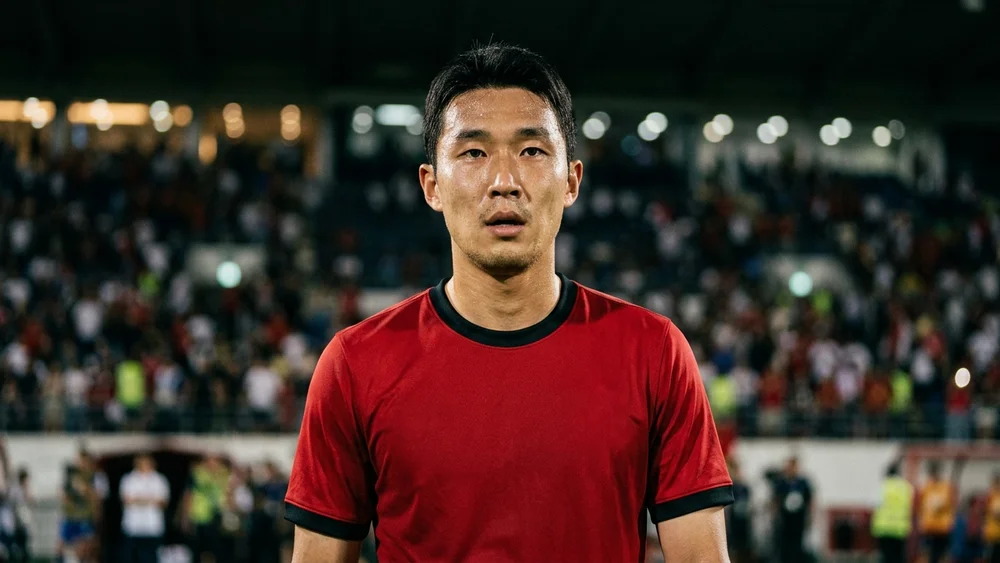
South Korea took 26 players to the 2026 World Cup and were home after three matches. The squad was built around Son Heung-min, Kim Min-jae and Lee Kang-in, and it is drawn from 14 different national leagues, more than any other Asian side at the tournament. Nineteen of the 26 play their club football outside Korea. Five of them changed clubs over the summer, a new coach arrived on 1 September, and the full list is below.
The South Korea national football team squad in full
Hong Myung-bo named this 26 on 16 May 2026. Cho Yu-min, then at Sharjah, withdrew injured on 31 May and Cho Wi-je replaced him. Ages, caps and goals are the figures listed at the tournament, on 11 June. The club column is where each player is registered now, after the summer window closed on 1 September.
| No | Pos | Player | Age | Caps | Goals | Club now |
|---|---|---|---|---|---|---|
| 1 | GK | Kim Seung-gyu | 35 | 87 | 0 | FC Tokyo (Japan) |
| 2 | DF | Lee Han-beom | 23 | 8 | 0 | Club Brugge (Belgium) |
| 3 | MF | Lee Gi-hyuk | 25 | 3 | 0 | Gangwon (South Korea) |
| 4 | DF | Kim Min-jae | 29 | 79 | 4 | Bayern Munich (Germany) |
| 5 | DF | Kim Tae-hyeon | 25 | 7 | 0 | Kashima Antlers (Japan) |
| 6 | MF | Hwang In-beom | 29 | 73 | 6 | Porto (Portugal) |
| 7 | FW | Son Heung-min (captain) | 33 | 144 | 56 | Los Angeles FC (USA) |
| 8 | MF | Paik Seung-ho | 29 | 27 | 3 | Birmingham City (England) |
| 9 | FW | Cho Gue-sung | 28 | 44 | 12 | Midtjylland (Denmark) |
| 10 | MF | Lee Jae-sung | 33 | 105 | 15 | Mainz 05 (Germany) |
| 11 | MF | Hwang Hee-chan | 30 | 79 | 17 | Schalke 04, on loan (Germany) |
| 12 | GK | Song Bum-keun | 28 | 3 | 0 | Jeonbuk Hyundai Motors (South Korea) |
| 13 | DF | Lee Tae-seok | 23 | 15 | 1 | Austria Wien (Austria) |
| 14 | DF | Cho Wi-je | 24 | 1 | 0 | Jeonbuk Hyundai Motors (South Korea) |
| 15 | DF | Kim Moon-hwan | 30 | 35 | 0 | Daejeon Hana Citizen (South Korea) |
| 16 | DF | Park Jin-seob | 30 | 14 | 1 | Zhejiang (China) |
| 17 | MF | Bae Jun-ho | 22 | 13 | 2 | Stoke City (England) |
| 18 | FW | Oh Hyeon-gyu | 25 | 27 | 6 | Besiktas (Turkey) |
| 19 | MF | Lee Kang-in | 25 | 47 | 11 | Atletico Madrid (Spain) |
| 20 | MF | Yang Hyun-jun | 24 | 9 | 0 | Celtic (Scotland) |
| 21 | GK | Jo Hyeon-woo | 34 | 48 | 0 | Ulsan HD (South Korea) |
| 22 | DF | Seol Young-woo | 27 | 34 | 0 | Augsburg (Germany) |
| 23 | DF | Jens Castrop | 22 | 7 | 0 | Borussia Monchengladbach (Germany) |
| 24 | MF | Kim Jin-gyu | 29 | 22 | 3 | Jeonbuk Hyundai Motors (South Korea) |
| 25 | MF | Eom Ji-sung | 24 | 9 | 2 | Swansea City (Wales) |
| 26 | MF | Lee Dong-gyeong | 28 | 18 | 4 | Ulsan HD (South Korea) |
No Asian squad at the World Cup was spread this wide
The number worth sitting with is 14. That is how many national leagues the 26 were registered in, and it is the highest of the eight Asian sides at the tournament. Seven of them played in the K League, which leaves 19 scattered across the rest of the world.
| AFC squad | Leagues represented | Players from the home league |
|---|---|---|
| South Korea | 14 | 7 |
| Australia | 13 | 5 |
| Japan | 10 | 3 |
| Jordan | 9 | 13 |
| Iran | 5 | 17 |
| Uzbekistan | 5 | 16 |
| Saudi Arabia | 2 | 25 |
| Qatar | 2 | 25 |
Australia sit close behind on 13, so this is a lead and not a gulf. The gap that matters is further down the column. Saudi Arabia and Qatar each took 25 of their 26 from their own domestic league, Iran 17 and Uzbekistan 16. Two entirely different models of Asian squad-building sit in the same table, and South Korea is at the opposite end from the Gulf.
A handful of smaller footballing nations, whose squads are scattered by necessity rather than reach, were spread across even more leagues. South Korea are the only major football nation in that company.
Japan make the closer comparison, and the split between them is the interesting part. Japan draw heavily on a few leagues, with seven players in Germany and five in the Netherlands out of ten countries in all. South Korea’s exports go one or two at a time to England, Germany, Denmark, Japan, Portugal, Spain, Belgium, Scotland, Wales, Austria, Turkey, China and the United States. Nobody has built a pipeline into one league the way Japan has into the Bundesliga.
Son Heung-min, and the record he is two goals short of
Son captains the side and everything is measured against him. He is now South Korea’s most-capped player, on 147 after starting all three World Cup matches, having gone past the 136 that Cha Bum-kun and Hong Myung-bo shared. He did not score in North America, which leaves him on 56 international goals, two behind Cha’s national record of 58. Hwang Sun-hong on 50 is the only other Korean to have reached that mark.
He has been at Los Angeles FC since August 2025, when he left Tottenham Hotspur for a fee reported at 26.5 million dollars, then a Major League Soccer record. He is the only member of the squad in MLS. Among the players named in the 48 World Cup squads, his 56 international goals put him alongside some of the game’s most prolific scorers.
Behind him the experience thins out faster than the famous names suggest. Six players arrived with 70 caps or more: Son, Lee Jae-sung on 105, Kim Seung-gyu on 87, Kim Min-jae and Hwang Hee-chan on 79 each, and Hwang In-beom on 73. Eight arrived with 10 or fewer. There is very little in between, and that shape is the problem the next coach inherits.
Five moved in the summer, and the spread did not change
The window that closed on 1 September rearranged the top of the squad without narrowing it. Lee Kang-in signed for Atletico Madrid on 25 July on a five-year deal, for a fee reported at around 40 million euros with 35 million fixed and 5 million in add-ons. Hwang In-beom joined the Portuguese champions Porto five days earlier on a contract to June 2029. Hwang Hee-chan is at Schalke 04 on loan after Wolverhampton Wanderers were relegated to the Championship. Lee Han-beom left Midtjylland for Club Brugge, and Seol Young-woo left Red Star Belgrade for Augsburg.
Those five moves took players out of France, the Netherlands, Denmark, Serbia and England, and put them into Spain, Portugal, Belgium and Germany. Germany went from three Koreans to five, England from three to two. The total came out at 14 leagues again, which is a coincidence worth noticing rather than a plan.
Lee Kang-in, Bae Jun-ho and the players carrying the next cycle
Lee Kang-in is the one asked to become the second Son. He was 25 at the World Cup with 47 caps and 11 goals, and the Atletico move is the biggest of his career after two years at Paris Saint-Germain in which starts were not guaranteed. Whether he can carry a national team rather than decorate one is the open question of the next two years.
Bae Jun-ho was the youngest outfield player in the squad at 22, with 13 caps, and he is still at Stoke City in the Championship. Yang Hyun-jun at Celtic and Eom Ji-sung at Swansea City are on nine caps each. Oh Hyeon-gyu has six goals in 27 appearances and is the most settled of the forwards behind Son and Cho Gue-sung. He reached Besiktas the long way round, leaving Celtic for Genk in 2024 and then moving to Istanbul in February 2026 for a reported 14 million euros.
Jens Castrop is the squad’s outlier. He was born in Dusseldorf in July 2003 to a German father and a South Korean mother, came through the academies at Fortuna Dusseldorf and Koln, and has been at Borussia Monchengladbach since February 2025. FIFA approved his switch of allegiance on 11 August 2025 and he debuted for South Korea a month later, as a substitute in a 2-0 win over the United States. He now has eight caps at 23.
What happened at the World Cup, and what happens next
South Korea opened Group A against Czechia at the Estadio Akron in Zapopan on 11 June and came from behind to win 2-1, Hwang In-beom equalising on 67 minutes and Oh Hyeon-gyu scoring the winner on 80. They then lost 1-0 to Mexico at the same ground on 18 June and 1-0 to South Africa on 24 June. Third place in the group on three points, with two goals scored, was not enough to reach the last 32.
Hong Myung-bo resigned within days. The fallout reached the presidential office, with a review of the national team programme ordered, and the Korea Football Association ran an open recruitment process through the summer rather than appointing a successor straight away.
It settled on Robert Moreno, approved on 1 September. The 48-year-old is the first Spaniard to take charge of the Korean men’s team. He managed Spain for nine matches in 2019 while Luis Enrique was on leave, and has since coached Monaco, Granada and Sochi. His contract runs only to 27 November, and the KFA has said he could be made permanent for the Asian Cup in Saudi Arabia in January depending on how the autumn goes.
Four friendlies are confirmed: Ecuador on 24 September, Uruguay on 28 September, Venezuela on 2 October and Uzbekistan on 6 October, with two more sought in the November window from the 9th to the 17th. Moreno’s first squad is the thing to watch, because it is the first real signal of how much of this 26 survives the reset.
For more on the squads that went to North America, see our breakdowns of the Japan squad, the Netherlands squad, the Senegal squad, the Qatar squad, the Croatia squad, the Belgium squad and the Cape Verde squad. Closer to home, there is our guide to the India national football team squad and our list of the greatest Indian footballers of all time.