






Olympic football winners list: every men’s and women’s champion since 1900
Every Olympic football gold, silver and bronze medallist in the men’s and women’s tournaments, the all-time medal table, and why Los Angeles 2028 will field more women’s teams than men’s for the first time.
Aug 10, 2024 · Updated Aug 10, 2026
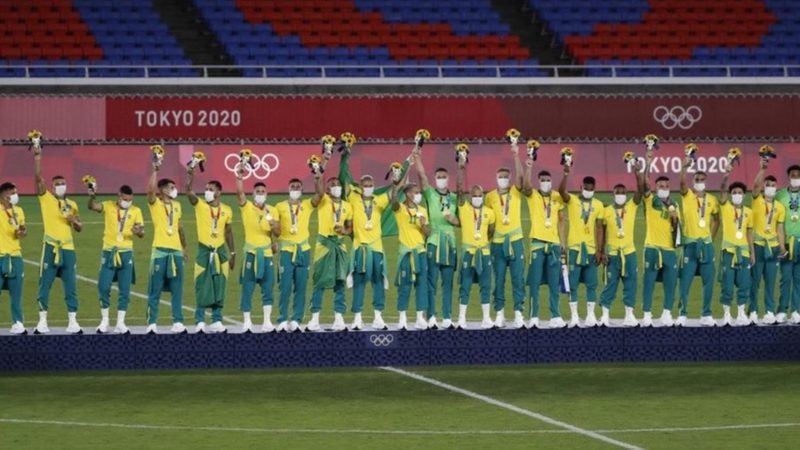
Football has been at the Olympics since Paris 1900, longer than it has had a World Cup. This is the complete winners list — every men’s and women’s gold, silver and bronze medallist, the all-time medal table, and the rule change that makes Los Angeles 2028 unlike any Games before it.
Two nations lead the men’s competition on three golds each: Great Britain and Hungary — and the most recent of those six golds was won in 1968. The women’s tournament is far more one-sided — the United States have won five of the eight ever staged. Figures are current to 10 August 2026, two years to the day since the last Olympic football final.
Men’s Olympic football winners list
The men’s tournament has been held at every Summer Olympics except 1896, when there was no football, and Los Angeles 1932, when it was dropped. There were no Games at all in 1940 or 1944 because of the Second World War.
| Games | Gold | Silver | Bronze |
| Paris 1900 | Great Britain | France | Belgium |
| St Louis 1904 | Canada | Christian Brothers College (USA) | St Rose Parish (USA) |
| London 1908 | Great Britain | Denmark | Netherlands |
| Stockholm 1912 | Great Britain | Denmark | Netherlands |
| Antwerp 1920 | Belgium | Spain | Netherlands |
| Paris 1924 | Uruguay | Switzerland | Sweden |
| Amsterdam 1928 | Uruguay | Argentina | Italy |
| Berlin 1936 | Italy | Austria | Norway |
| London 1948 | Sweden | Yugoslavia | Denmark |
| Helsinki 1952 | Hungary | Yugoslavia | Sweden |
| Melbourne 1956 | Soviet Union | Yugoslavia | Bulgaria |
| Rome 1960 | Yugoslavia | Denmark | Hungary |
| Tokyo 1964 | Hungary | Czechoslovakia | Germany |
| Mexico City 1968 | Hungary | Bulgaria | Japan |
| Munich 1972 | Poland | Hungary | Soviet Union and East Germany (shared) |
| Montreal 1976 | East Germany | Poland | Soviet Union |
| Moscow 1980 | Czechoslovakia | East Germany | Soviet Union |
| Los Angeles 1984 | France | Brazil | Yugoslavia |
| Seoul 1988 | Soviet Union | Brazil | West Germany |
| Barcelona 1992 | Spain | Poland | Ghana |
| Atlanta 1996 | Nigeria | Argentina | Brazil |
| Sydney 2000 | Cameroon | Spain | Chile |
| Athens 2004 | Argentina | Paraguay | Italy |
| Beijing 2008 | Argentina | Nigeria | Brazil |
| London 2012 | Mexico | Brazil | South Korea |
| Rio 2016 | Brazil | Germany | Nigeria |
| Tokyo 2020 | Brazil | Spain | Mexico |
| Paris 2024 | Spain | France | Morocco |
Two entries in that table need explaining. St Louis 1904 was contested by club sides rather than national teams, which is why two American parish and college teams took the silver and bronze; those medals are still credited to the United States. And Munich 1972 is the only shared medal in the list — the Soviet Union and East Germany drew the third-place match 2-2, and under a rule introduced for those Games there was no replay or tie-break, so both were given bronze.
Women’s Olympic football winners list
Women’s football joined the programme at Atlanta 1996, 96 years after the men’s. Eight tournaments have been played and only four nations have ever won one.
| Games | Gold | Silver | Bronze |
| Atlanta 1996 | United States | China | Norway |
| Sydney 2000 | Norway | United States | Germany |
| Athens 2004 | United States | Brazil | Germany |
| Beijing 2008 | United States | Brazil | Germany |
| London 2012 | United States | Japan | Canada |
| Rio 2016 | Germany | Sweden | Canada |
| Tokyo 2020 | Canada | Sweden | United States |
| Paris 2024 | United States | Brazil | Germany |
Brazil’s record is the hard-luck story of the competition: three silvers, in 2004, 2008 and 2024, and no gold. Marta played in all three. She almost missed the last one — sent off in the group stage against Spain for a high boot, banned for two matches, her appeal rejected hours before the semi-final — and came off the bench in the final, which turned out to be her last game for Brazil.
All-time Olympic football medal table
Men’s and women’s medals combined, including the club-team medals from 1900 and 1904. Nations that no longer exist are listed as they competed.
| # | Nation | Gold | Silver | Bronze | Total |
| 1 | United States | 5 | 2 | 2 | 9 |
| 2 | Hungary | 3 | 1 | 1 | 5 |
| 3 | Great Britain | 3 | 0 | 0 | 3 |
| 4 | Brazil | 2 | 6 | 2 | 10 |
| 5 | Spain | 2 | 3 | 0 | 5 |
| 6 | Argentina | 2 | 2 | 0 | 4 |
| 7 | Soviet Union | 2 | 0 | 3 | 5 |
| 8 | Canada | 2 | 0 | 2 | 4 |
| 9 | Uruguay | 2 | 0 | 0 | 2 |
| 10 | Yugoslavia | 1 | 3 | 1 | 5 |
The table is ranked on golds, which is what buries the most interesting line in it. Brazil have won more Olympic football medals than anybody — ten — and only two of them are gold. Six of the ten are silver. Their men lost the final in 1984, 1988 and 2012 before finally winning at home in Rio, and their women have lost three.
The United States top the table on nine medals, and seven of those come from the women’s tournament: five golds, a silver in 2000 and a bronze in 2020. The other two are the club-team silver and bronze from St Louis 1904. Canada’s two golds come one from each competition — the men in 1904 and the women in Tokyo.
Which nations have won the most Olympic football gold?
In the men’s competition it is Great Britain and Hungary on three each, and both totals are old. Great Britain won the first three tournaments they entered — 1900, 1908 and 1912 — and have not won a medal of any colour since. Hungary’s run of 1952, 1964 and 1968 ended nearly 60 years ago.
Below them, five nations have two men’s golds: Uruguay (1924, 1928), the Soviet Union (1956, 1988), Argentina (2004, 2008), Brazil (2016, 2020) and Spain, who joined that group by winning Paris 2024 to go with Barcelona 1992.
In the women’s competition the United States are clear on five. Germany, Canada and Norway have one each, and nobody else has ever won it.
How the Paris 2024 finals were won
The men’s final on 9 August 2024 was the best match the tournament has produced in years. France led inside 11 minutes through Enzo Millot, then Spain scored three in ten minutes — Fermin Lopez twice and Alex Baena — to lead 3-1. Maghnes Akliouche pulled one back on 79 minutes, Jean-Philippe Mateta equalised from the penalty spot in the 93rd, and Camello scored twice in extra time, on 100 minutes and in the last seconds of the 120th, for a 5-3 win.
The women’s final came the following evening at the Parc des Princes, and was the opposite kind of game: United States 1-0 Brazil, decided by a Mallory Swanson goal on what was her 100th cap. It gave the USA a record fifth gold and goalkeeper Alyssa Naeher a fourth clean sheet in a single Olympic tournament.
The full group tables, knockout results and the story of Canada’s mid-tournament points deduction are in our page on Paris 2024 Olympic football results and medallists.

Why the men’s Olympic tournament is an under-23 competition
The reason the winners list reads so oddly — Cameroon and Nigeria as champions, Great Britain and Hungary still leading it — is that the men’s Olympic tournament has been deliberately held below full international strength for most of its history, so that it does not compete with the World Cup.
The restrictions have changed repeatedly. Since Barcelona 1992 the men’s competition has been limited to under-23 players, and since Atlanta 1996 each squad may add a maximum of three overage players. That is why an Olympic men’s gold is not counted alongside a World Cup, and why nations who have never come close at a World Cup have won it.
No such cap applies to the women’s tournament. It is a full senior competition, which is why the same countries win it as win the Women’s World Cup, and why the USA’s five golds sit comfortably alongside their World Cup record.
What changes at Los Angeles 2028
The next Olympic football tournament will be the first with more women’s teams than men’s. The women’s competition expands from 12 teams to 16, and the men’s is cut from 16 to 12 — a straight swap of the numbers Paris 2024 used.
It is part of a wider shift. LA28 will be the first Games at which every team sport fields at least as many women’s teams as men’s, and the first at which female athletes are the majority overall, with the core athlete quota set at 50.7% women. The football matches are spread across seven venues in US cities.
For the winners list, the practical effect is that a men’s gold gets harder to reach — four fewer places — while the women’s field widens to include nations that have never qualified before. If you want the other great international winners list, we also keep the European Championship winners list up to date.
If you plan to follow the LA 2028 qualifying tournaments and want somewhere to price up the outrights, our guide to the best football betting sites in India compares the operators that cover international football.
Frequently asked
Who has won the most Olympic football gold medals? In the men’s tournament, Great Britain and Hungary with three each. In the women’s, the United States with five. Counting both, the United States lead with five golds and nine medals overall.
Which country has the most Olympic football medals? Brazil, with ten — but only two are gold and six are silver.
Who won Olympic football gold at Paris 2024? Spain beat France 5-3 after extra time in the men’s final; the United States beat Brazil 1-0 in the women’s.
When did women’s football join the Olympics? At Atlanta 1996, 96 years after the men’s competition began at Paris 1900.
Why is Olympic men’s football under-23? To stop it competing with the World Cup. Squads have been limited to under-23 players since 1992, with up to three overage players allowed since 1996.
Has Olympic football ever been cancelled? There was no football at the 1896 Games or at Los Angeles 1932, and no Olympics at all in 1940 and 1944 because of the Second World War.
How many teams play at LA 2028? Sixteen in the women’s tournament and twelve in the men’s — the first Olympics with more women’s football teams than men’s.
Photo credit: Imago