





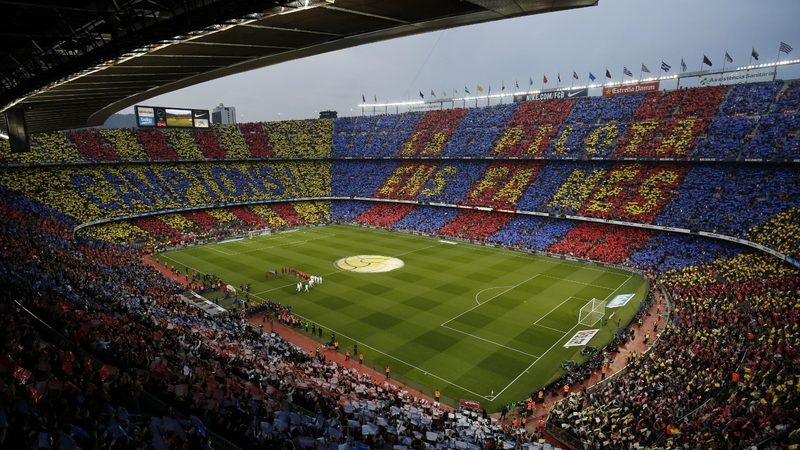
The Rungrado 1st of May Stadium in Pyongyang, North Korea is the largest football stadium in the world, with 113,281 seats. It is also the second-largest stadium of any kind, behind India’s Narendra Modi Stadium, a cricket ground.
The rest of the list has changed since this page was first written in 2022. Barcelona’s Camp Nou, long the second-largest, is in the middle of a rebuild and holds 62,652 for now, and Kolkata’s Salt Lake Stadium is down to 68,000. The ranking below uses Wikipedia’s list of football stadiums by capacity for the candidates, with each stadium’s current seated capacity taken from its own Wikipedia page, checked on 21 October 2026.
Largest football stadiums in the world
| Rank | Stadium | Location | Capacity |
|---|---|---|---|
| 1 | Rungrado 1st of May Stadium | Pyongyang, North Korea | 113,281 |
| 2 | FNB Stadium | Johannesburg, South Africa | 94,736 |
| 3 | Misr Stadium (New Capital Stadium) | New Administrative Capital, Egypt | 93,940 |
| 4 | Cotton Bowl | Dallas, United States | 92,100 |
| 5 | Wembley Stadium | London, England | 90,000 |
| 6 | Lusail Stadium | Lusail, Qatar | 88,966 |
| 7 | Estadio Azteca | Mexico City, Mexico | 87,523 |
| 8 | Bukit Jalil National Stadium | Kuala Lumpur, Malaysia | 87,411 |
| 9 | Borg El Arab Stadium | Alexandria, Egypt | 86,000 |
| 10 | Estadio Monumental | Buenos Aires, Argentina | 85,018 |
1. Rungrado 1st of May Stadium, Pyongyang
The Rungrado opened on 1 May 1989 on Rungra Island in Pyongyang. It was built with an official capacity of 150,000, and after a remodel in 2014 that replaced some bench seating with individual seats, its capacity was estimated at around 114,000. It is home to the North Korea men’s and women’s national teams and is also used for athletics and the Arirang mass games.
2. FNB Stadium, Johannesburg
Also known as Soccer City, the FNB Stadium near Soweto holds 94,736. It hosted the 2010 FIFA World Cup final between the Netherlands and Spain, and it is home to Kaizer Chiefs and the venue for South Africa’s biggest national team matches.
3. Misr Stadium, New Administrative Capital
Egypt’s largest stadium, also called the New Capital Stadium, holds 93,940. It opened on 22 March 2024 with a 1-0 win for Egypt over New Zealand and is now the home of the Egypt national team.
4. Cotton Bowl, Dallas
The Cotton Bowl opened in 1930 at Fair Park in Dallas and seats 92,100. It was long the home of college football’s Cotton Bowl Classic, and it is now home to Atletico Dallas and Dallas Trinity FC.
5. Wembley Stadium, London
England’s national stadium opened in 2007 on the site of the original Wembley. With 90,000 seats it is the largest stadium in the UK, and while Camp Nou is being rebuilt it is the largest football stadium in Europe.
6 to 10
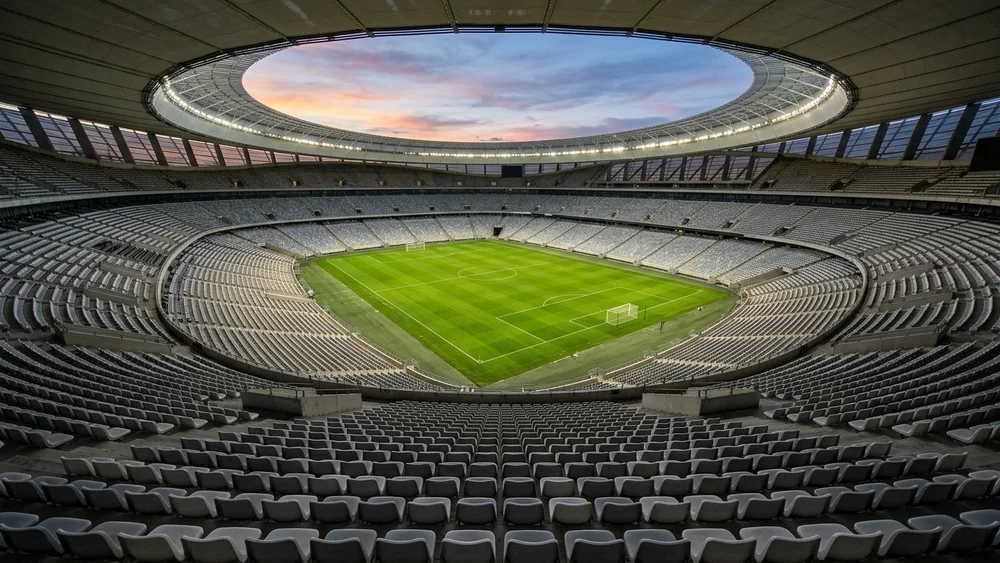
Lusail Stadium in Qatar (88,966) hosted the 2022 World Cup final between Argentina and France. Mexico City’s Estadio Azteca (87,523) staged the opening match of the 2026 World Cup, Mexico against South Africa, and is the only stadium to host matches at three World Cups; its capacity for that tournament was 80,824. Malaysia’s Bukit Jalil National Stadium (87,411), Egypt’s Borg El Arab Stadium in Alexandria (86,000) and River Plate’s Estadio Monumental in Buenos Aires (85,018) complete the top 10.
What about Camp Nou?
Camp Nou held 99,354 before Barcelona began rebuilding it in 2023. The club played at the Olympic Stadium on Montjuic for two seasons and returned to Camp Nou for competitive matches in November 2025, at reduced capacity. The current figure is 62,652, and once the work is finished the stadium is expected to hold 105,000, which would make it the second-largest football stadium in the world again.
Michigan Stadium and the MCG
Two bigger stadiums are not on the list because they are not football grounds. Michigan Stadium in the United States, home of the University of Michigan’s American football team, seats more than 107,000; in 2014 it drew 109,318 for a friendly between Manchester United and Real Madrid, a record for a soccer match in the US. The Melbourne Cricket Ground holds 100,024 and is the largest stadium in Australia, but it is a cricket and Australian rules ground.
The largest football stadium in India
The Salt Lake Stadium in Kolkata, officially the Vivekananda Yuba Bharati Krirangan, is still India’s largest football stadium. It opened in 1984 with a capacity of 120,000, which made it the largest football stadium in the world by seating. Renovations have since cut that to 68,000. It hosted the 2017 FIFA U-17 World Cup final and is a home ground for Mohun Bagan and East Bengal. The next largest in India is the Jawaharlal Nehru Stadium in Delhi, at 60,254.
Featured photo: AFP / Pau Barrena