








The ICC names 12 venues for the 2027 World Cup, and Namibia still has to qualify for it
The ICC unveiled the 12 host venues and a new brand for the 2027 ODI World Cup at a ceremony in Johannesburg on Thursday. Namibia will stage matches at a tournament they have not yet qualified for.
Jul 31, 2026
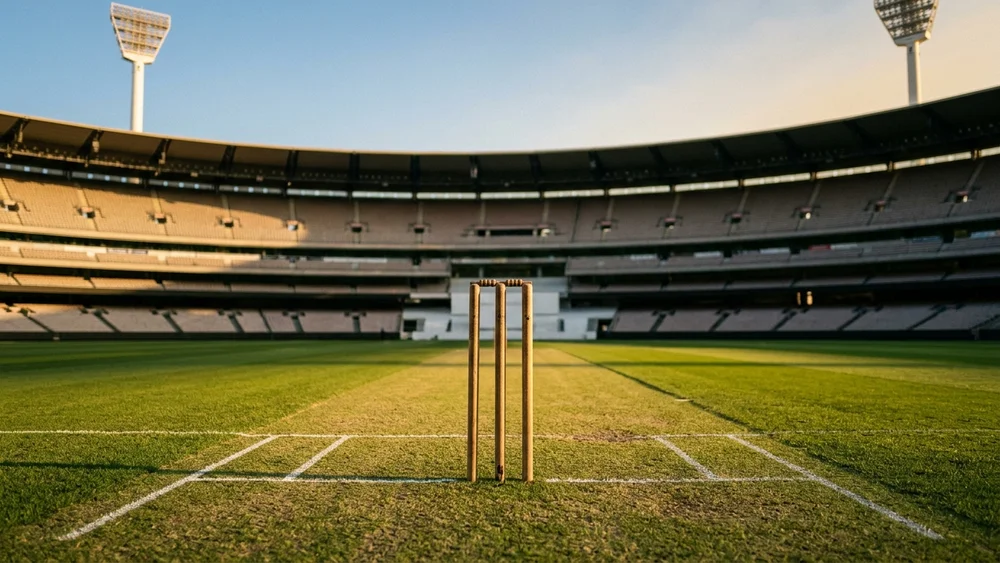
Twelve grounds, three countries, one time zone. The ICC put names to the map for the 2027 men’s ODI World Cup on Thursday, unveiling the host venues and a new tournament brand at a launch ceremony at the Inanda Polo Club in Johannesburg. The 14th edition runs across October and November next year, and it takes the 50-over World Cup back to Africa for the first time since 2003.
South Africa carries eight of the twelve venues: the Wanderers in Johannesburg, SuperSport Park in Centurion, Newlands in Cape Town, Kingsmead in Durban, St George’s Park in Gqeberha, Mangaung Oval in Bloemfontein, Boland Park in Paarl, and Buffalo Park in KuGompo City, the coastal ground cricket followers have known for decades as East London. Zimbabwe has three, at Harare Sports Club, Queens Sports Club in Bulawayo and the Mosi-oa-Tunya International Cricket Stadium at Victoria Falls. Namibia has one, the Namibia Cricket Ground in Windhoek.
Namibia are hosting a tournament they have not qualified for
Windhoek is the line on that list that deserves a second read. Namibia will stage a senior ICC event for the first time, and they will do it without any guarantee of playing in it. The qualification rules hand automatic places to the Full Member hosts only, which covers South Africa and Zimbabwe. Namibia are an Associate, and their route is the same one every other Associate takes.
Eight more sides go through on the ICC ODI rankings as they stand on 31 March 2027. The last four places are settled at the Qualifier. That gets you to 14. If Namibia cannot come through the pathway, the Windhoek crowd will be watching other people’s cricket at their own World Cup.
A tournament that runs through three stages
The format is new, and it is nothing like the straight round robin of 2023. The three lowest-ranked of the 14 qualified teams open the tournament in a Super Series played as a round robin, and only the side that finishes top moves on.
That leaves 12 teams split into two groups of six for a 30-match group stage. The top three in each group qualify for the next round, joined by the best of the fourth-placed sides across both groups. Seven teams then play a Super 7 round robin of 21 matches, with the top four going to the semi-finals. The side that finishes first meets the fourth-placed team, second plays third.
The arithmetic lands on 57 matches. It also means a team that starts in the group stage and wins the thing will have played at least 13 games to do it: five in the group, six in the Super 7, then a semi-final and a final. A side that has to come through the Super Series first will play more. That is a heavier load than the 11 matches the 2023 finalists got through, which is why Australia head coach Andrew McDonald has already asked the ICC to lift squads from 15 players to 17.
Make the circle bigger
The brand launched alongside the venues is built on the circular woven bowl found across Southern Africa, the kind used to present a harvest or a gift. The ICC has run with the idea of widening that circle to take in the rest of the cricket world, and the campaign line is “Make the Circle Bigger”. The colour palette carries names drawn from the region: Zimbabwe Chilli, African Root, Fynbos pop, Namib Dune, Harare Dawn and Two Oceans.
The ceremony ran under a “Three Nations, One Heartbeat” theme and pulled in Graeme Smith, Makhaya Ntini, Hashim Amla, Temba Bavuma, Kagiso Rabada and Zimbabwe’s Hamilton Masakadza. ICC chairman Jay Shah called the return of the tournament to Africa after 24 years a landmark moment for the sport.
What it looks like from India
The travel is long, the viewing is not. South Africa, Zimbabwe and Namibia all sit on the same clock, three and a half hours behind India. A 10am start in Johannesburg is 1.30pm at home, and a day-night game that finishes around 10pm local wraps up at 1.30am IST. For an away World Cup, that is about as friendly as the scheduling gets.
India will arrive carrying the same question they have carried since Ahmedabad. The last 50-over title came in 2011, and the 2023 final was lost to Australia on home soil. The 2027 squad is already being shaped around that, and the pitches waiting in Centurion, Cape Town and Bulawayo will ask different questions of it than a subcontinental tournament ever did.