





Jay Shah was the only name in Bali, and India now have dates for the 2029 Champions Trophy and the 2031 World Cup
The ICC has reappointed Jay Shah unopposed for a second two-year term as chair, and its board has fixed windows for every men’s global event up to 2035.
Nov 16, 2026
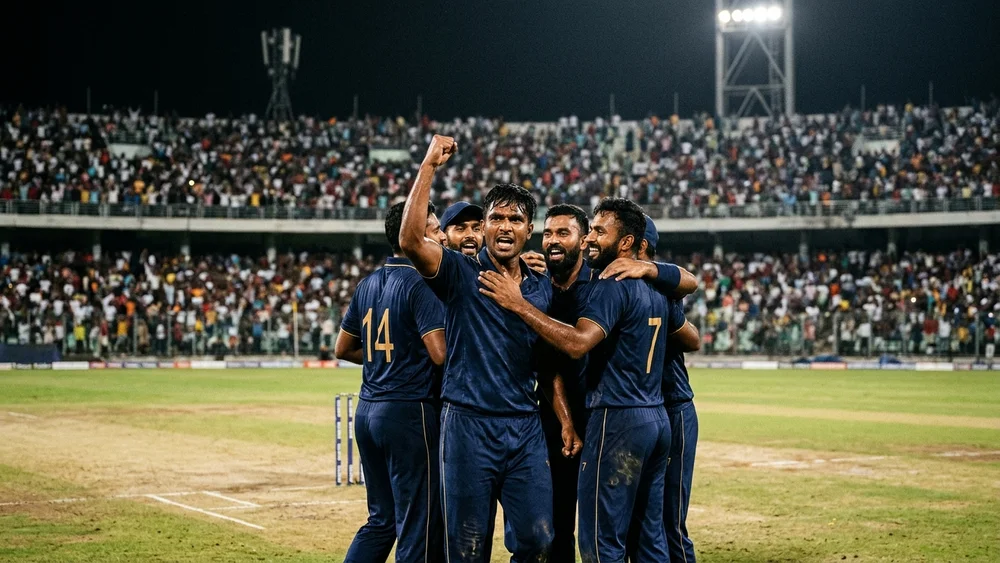
Jay Shah will stay on as ICC chair for another two years. The ICC announced his reappointment on Monday, 16 November, after its board meetings in Bali ended on Sunday. Nobody stood against him: the ICC directors put his name forward, and he was reappointed unopposed.
Shah is 38. He was elected in August 2024 and took office that December, which made him the youngest person to hold the job. Before that he was BCCI secretary and chaired the ICC’s Finance and Commercial Affairs committee. His second term covers the 2027 ODI World Cup in southern Africa and cricket’s return to the Olympics at Los Angeles in 2028.
“Serving as Chair of the ICC is both a privilege and a responsibility,” Shah said in the ICC’s release. He called LA28 “an extraordinary opportunity” to bring the game to new audiences.
India’s next two ICC events now have dates
The more practical news from Bali came a day earlier. On Sunday the board approved windows for every established men’s ICC event up to 2035, and two of them are in India.
The 2029 Champions Trophy will be played in India from 9 to 28 October. The 2031 ODI World Cup, which India co-host with Bangladesh, runs from 9 October to 23 November. Before both of them comes the 2028 T20 World Cup in Australia and New Zealand, from 12 October to 12 November.
The schedule also settles where the World Test Championship final goes. England keep it in 2029 (8 to 12 June) and again in 2031 (12 to 16 June). The 2033 and 2035 finals have windows but no host yet.
For the 2032 to 2035 cycle, the board approved two T20 World Cups, two WTC finals, a Champions Trophy in 2033 and an ODI World Cup in 2035. Hosts for all of them are still to be named. There is no new men’s event in the plan either, even though the ICC had been discussing extra multi-team events with its members.
No Super Six at the 2027 qualifier
The format of the 2027 World Cup Qualifier has changed. Ten teams will play 23 matches in February and March, in two groups of five, then semi-finals and a final. The Super Six round used in the last three editions is gone.
The top four all go to the World Cup. The winner goes straight into the group stage. The other three play a first-round Super Series for one more group-stage spot. West Indies, Ireland, the USA, the Netherlands, Scotland and Oman are already in the qualifier. The last four places will be decided at a playoff in Nepal next month. The ICC has not named a venue for the qualifier itself, though Cricinfo reports it is likely to be played in Potchefstroom and Windhoek.
Bangladesh and the USA host the LA28 qualifiers
The last step to the Olympics now has hosts and dates. Bangladesh will stage the men’s LA28 qualifier from 5 to 13 February 2028, and the USA the women’s from 26 February to 5 March. Each has eight teams in two groups of four, and only the winner of the final goes to Los Angeles.
The board also set out how the 2028 men’s T20 World Cup qualifier works. Sixteen teams, 31 matches, and eight places at the main event. All four semi-finalists qualify, and the top team from each of the five regions is guaranteed a spot as long as it does not finish bottom of its group.
According to Cricinfo, the meetings also confirmed that the World Test Championship stays at nine teams until 2031.
What it means for India
India already had the 2029 Champions Trophy and a share of the 2031 World Cup. The ICC handed out those hosting rights in 2021. What was missing were the dates, and both now sit in October, with the World Cup running into late November.
Shah’s reappointment was never in doubt. The decision from Bali that will last longer is the one on Test cricket. Keeping the World Test Championship at nine teams means Zimbabwe, Ireland and Afghanistan go through two more cycles without a way in, and I think that is a bigger call than who sits in the chair.