





Finn Allen topped the Big Bash run charts for Perth, and the new rules let Melbourne Stars take him
Melbourne Stars have signed Finn Allen on a three-year deal for BBL|16, and Perth Scorchers, whose title he helped win, could not match the offer.
Sep 10, 2026
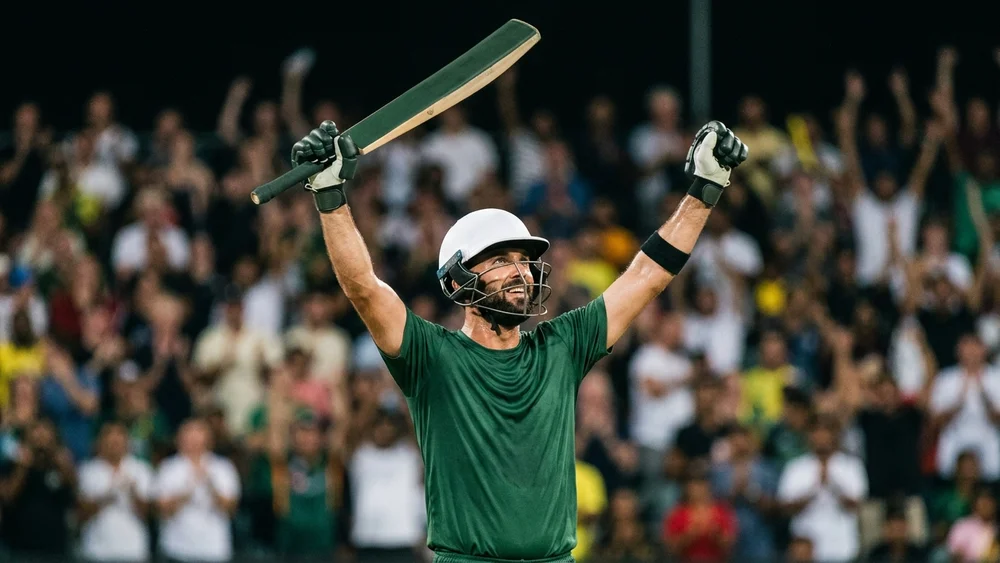
Perth Scorchers have just found out what the Big Bash’s new rulebook costs them. Finn Allen, the man who topped the run charts in their title-winning summer, has signed a three-year deal with Melbourne Stars ahead of BBL|16, and Perth could not match the offer.
In late August, Cricket Australia scrapped the overseas player draft and went back to an open market of direct signings, the system that ran before 2022. Clubs no longer have to contract a minimum number of internationals at all, and the money that used to be spread across six mandatory marquee contracts now has to cover only three. Allen is the first marquee name to move under those rules, and the shape of the move tells you exactly what they were designed to do.
The season that made him unaffordable
Allen made 466 runs at 42.36 in BBL|15, more than anyone else in the tournament. He hit 38 sixes along the way, the most any batter has managed in a single Big Bash season, and took the Simon Katich Medal as the competition’s best overseas player. His best innings was 101 from 53 balls against the Renegades at Marvel Stadium, and he added 49 and 36 in the matches that decided the season as Perth beat Sydney Sixers to a sixth title on 25 January. Seven months on, he belongs to somebody else.
It is worth remembering how badly the partnership started. Allen managed 181 runs across 10 innings in his first summer at the Scorchers, the sort of return that quietly ends an overseas stint. He had arrived as Perth’s first BBL pre-signing, under a rule that let each club lock in one international ahead of the draft. With the draft now gone, that route no longer exists either.
Indian fans have seen this act up close
The months since that title have been the busiest stretch of his career. He hit an unbeaten 100 from 33 balls in New Zealand’s T20 World Cup semi-final at Eden Gardens, the fastest hundred in the men’s tournament’s history, and the Black Caps chased 170 in 12.5 overs to win by nine wickets and reach the final. Then came his first IPL season: 349 runs for Kolkata Knight Riders, second only to Angkrish Raghuvanshi at the club, including a maiden IPL century against Delhi Capitals. A Major League Cricket summer with San Francisco Unicorns followed, then a stint with Trent Rockets, who lost the Hundred final to Manchester Super Giants at Lord’s.
That is what the Stars have bought. His method travels. Different grounds, different balls, different standards of bowling, and the field still goes back inside the powerplay.
The only founding club still waiting
Melbourne Stars are the last of the Big Bash’s original clubs without a trophy. Fifteen seasons, three grand finals, nothing to show for any of it, and a roll call of signings including Shane Warne, Kevin Pietersen, Glenn Maxwell and Marcus Stoinis. Read the Allen deal against that history and the aggression makes sense.
He is the twelfth player on an 18-man list under Cameron White, who captained the Stars in their first season and has crossed town from the Renegades to coach them, with Peter Moores installed above him as director of coaching. Maxwell and Stoinis are already in the batting group. Test off-spinner Todd Murphy has come in alongside leg-spinner Mitch Swepson, and England’s Overton brothers, Jamie and Craig, have been linked with the remaining six spots.
Allen sounded like a man who had thought about the venue as much as the fee. “The Stars are a powerhouse team in this competition, so it’s going to be a lot of fun playing for them,” he said. “I think all cricketers love playing at the MCG, so to be able to call that my home ground now is really exciting.”
Perth begin their defence without the batter who led the tournament for runs and for sixes in the same summer. They were beaten to him by a club with more cap space and fewer trophies, which is roughly what an open market was always going to produce.