






Cricket’s laws are being rewritten, and the Ranji Trophy starts ten days after they land
The MCC’s new edition of the Laws takes effect on October 1 with 73 amendments, headlined by a final over that has to be bowled out even after a wicket falls. India’s first-class season starts ten days later.
Jul 21, 2026
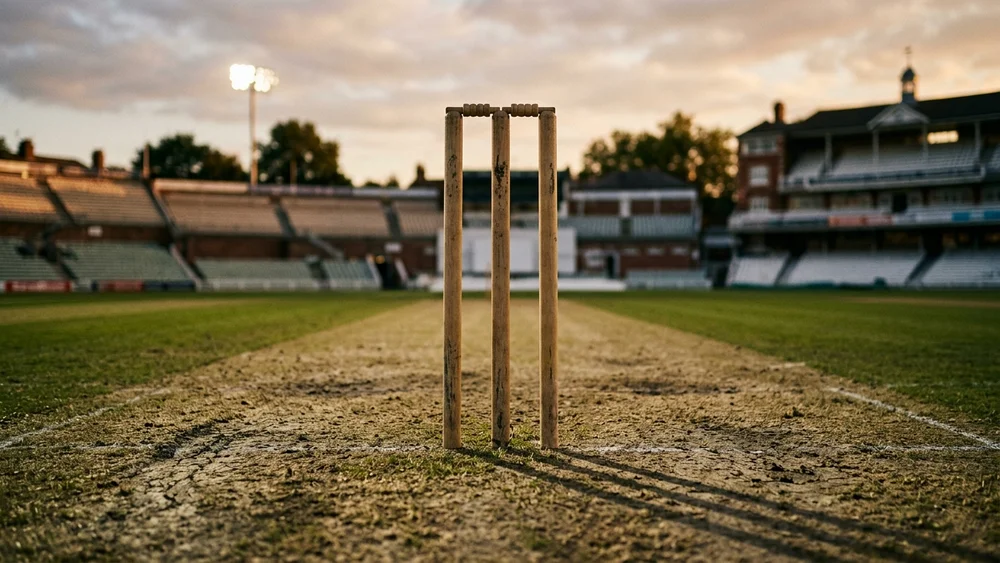
The last over of a day’s play has always carried a small escape hatch. Lose a wicket with three balls left, keep the nightwatchman in the pavilion, walk off and start again in the morning. From October 1 that option is gone.
The final over now has to be bowled out
The Marylebone Cricket Club has published a new edition of the Laws of Cricket carrying 73 amendments, and the change that will be felt first is the one governing the close of play in multi-day cricket. Under the revised Law 12.5.2, if a wicket falls in the final over of the day, the over is completed. A new batter walks out and faces whatever is left of it.
The thinking behind it came from the MCC’s Laws sub-committee, which took the view that a bowling side was effectively being penalised for its own success. Take a wicket with two balls remaining and the reward was an early finish for the batting side. The committee also felt the old arrangement stripped out one of the more charged passages in a Test match, the walk to the middle in fading light with a fresh bowler waiting.
Anyone who has watched a nightwatchman argument play out on television will recognise what this does. The decision about who goes in at 6.28pm stops being optional.
The rest of the code has been reworked too
The final-over rule has taken the headlines, but the new edition reaches into corners of the game that rarely get discussed until they cost somebody a match.
A ball is now considered settled when it is held by any fielder or sitting stationary on the ground, rather than only when the bowler or wicketkeeper has it. That hands umpires more room to call dead ball at a sensible moment instead of waiting for the ball to travel back to the top of the mark.
Boundary catches have been tightened. A fielder who has gone beyond the rope can touch the ball once while airborne, and after that must be wholly grounded inside the boundary for the remainder of the delivery. The relay catches that produced a decade of freeze-frame replays and arguments now have a clear limit written into the Law.
Overthrows have been given a definition. An overthrow is an attempt to direct the ball towards the stumps to stop runs or to attempt a run out. A fielder who simply pushes the ball back in the general direction of the keeper, or lets it run away near the rope, is misfielding rather than throwing an overthrow, and the scoring follows accordingly.
There is a penalty aimed at deliberate short runs as well. Where a batter is judged to have taken fewer runs on purpose, the fielding captain gets to choose which of the two is on strike for the next ball. Wicketkeepers, meanwhile, will no longer be penalised for having their gloves in front of the stumps during the bowler’s run-up. Batters who lose balance after playing a shot and topple onto the stumps are out hit wicket. Laminated bats, previously restricted to junior cricket, are now legal in the adult game.
India’s domestic season sits right on the line
The timing matters for Indian cricket more than for most. The BCCI’s 2026-27 domestic season opens on August 23 with the Duleep Trophy at the Centre of Excellence in Bengaluru, comfortably before the new code takes effect. The Ranji Trophy starts on October 11, ten days after it does.
TV9 and several other Indian outlets reported on July 20 that the board intends to apply the new Laws across its domestic competitions, the Ranji Trophy, the Vijay Hazare Trophy and the Syed Mushtaq Ali Trophy among them. The BCCI has not put out a playing-conditions document confirming it, so how far the adoption actually goes is still an open question.
If it lands as reported, the opening phase of the Ranji Trophy, running from October 11 to November 5, becomes the first serious first-class cricket in India played under the rewritten code. The second phase runs from January 17 to February 4, with the knockouts following between February 9 and March 3, 2027. Thirty-two teams contest the Elite division in four groups of eight, with six more in the Plate section, and the season as a whole spans 1,788 matches across formats and age groups.
The international game has one more step
None of this reaches Test cricket automatically. The MCC writes the Laws, but international matches are played under ICC playing conditions, and the ICC’s Cricket Committee has to work through the amendments and decide which ones it ratifies. National boards make their own call for domestic cricket, which is why the Indian decision is a separate story from the MCC announcement.
The practical effect is that two fielders chasing the same ball to the same rope, one in a Ranji match and one in a Test, could be working under slightly different rules about what they are allowed to do once they leave the field of play. Cricket has lived with that gap between the Laws and the playing conditions before. It rarely lasts long.