






In March 2021, in the fourth T20I between India and England at Ahmedabad’s Narendra Modi Stadium, Suryakumar Yadav made 57 off 31 balls in his first innings for India before he was given out on a soft signal.
He hit Sam Curran into the deep, where Dawid Malan took a low catch. Replays suggested the ball might have touched the ground, but the on-field umpire’s soft signal was out and TV umpire Virender Sharma could not find conclusive evidence to overturn it. India still won by eight runs.
Explained: What is a soft signal in cricket?
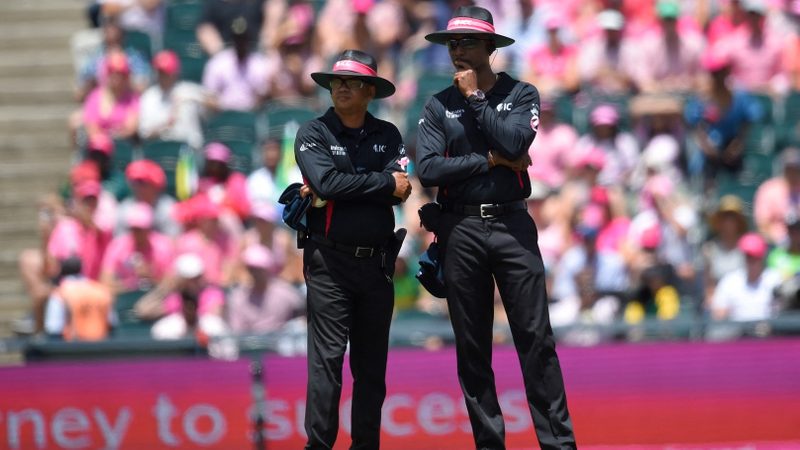
Earlier, whenever there was a tight call during the match, let’s say a close catch, the on-field umpires had to come up with a decision often based on their intuition. In Suryakumar Yadav’s case, the umpire had given out. That intuition is what is known as a soft signal.
The on-field umpire had to make that call before referring the decision to the third umpire. The TV umpire then looked at the replays from every angle and in slow motion, but if they could not reach a conclusion, the soft signal stood.
So the soft signal could only be overturned with conclusive evidence. In Suryakumar Yadav’s case, nobody could prove from the replays whether the ball had touched the ground or not.
That uncertainty led to plenty of debate about why the soft signal existed at all. Commentator Harsha Bhogle summed up the problem on Twitter:
The reason an umpire has to give a soft signal is documented. On the replays, even clean catches look not out because it is a 2D image of a 3D event. Hence, umpires look at whether the fingers are under the ball. It is a grey area but tech has no answer for now. Need 3D cameras?
Harsha Bhogle (@bhogleharsha), March 18, 2021
On 15 May 2023, the International Cricket Council (ICC) announced that the soft signal would be scrapped, after its Chief Executives’ Committee approved the recommendations of the Men’s Cricket Committee, led by Sourav Ganguly.
“The committee deliberated this at length and concluded that soft signals were unnecessary and at times confusing since referrals of catches may seem inconclusive in replays,” Ganguly said.
Since then, on-field umpires no longer give a soft signal when they refer a catch. In the ICC’s words, “The on-field umpires will consult with the TV umpire before any decisions are taken.”
The change took effect on 1 June 2023 with the Lord’s Test between England and Ireland, and the World Test Championship final between India and Australia a week later was played under the new conditions.
The IPL had already dropped the soft signal for its 2021 season, a few weeks after the Suryakumar Yadav dismissal.
How a catch is referred now
Under the ICC’s current men’s playing conditions (October 2026), if the bowler’s end umpire cannot decide whether a catch is fair, they first consult the striker’s end umpire. If both need help, the bowler’s end umpire talks to the third umpire by two-way radio and then makes the TV-screen signal, and the third umpire decides whether the batter was caught. The phrase ‘soft signal’ no longer appears in the Test or T20I playing conditions.
Betting on the next match? Compare the cricket betting sites.
Feature image courtesy: AFP / Christiaan Kotze