






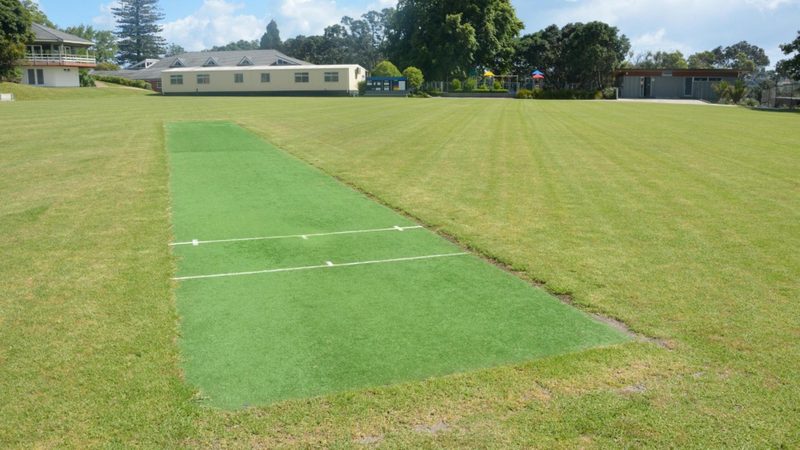
A drop-in pitch is a cricket pitch that is grown and prepared away from the ground, usually in a tray, and then lifted into place in the middle of the field before a match. When the cricket is over, it is lifted out again. That lets a stadium host cricket and winter sports such as Australian rules football and rugby on the same field.
They are standard at several of the world’s biggest grounds, and they were in the headlines at the 2024 T20 World Cup, when the pitches at New York’s temporary stadium struggled. Here is how they work and where they are used.
How is a drop-in pitch made?
The pitch is grown in a large tray or set of trays, filled with the same kind of soil, clay and grass a curator would use for a traditional pitch, and kept at a nursery or greenhouse site while the turf establishes. When it is needed, the trays are moved to the stadium with specialist machinery and set into a slot in the middle of the field, so the surface sits flush with the outfield. A ground can keep several pitches in rotation and prepare each one for the conditions it wants.
Where did drop-in pitches come from?
They were invented for Kerry Packer’s World Series Cricket. Packer was shut out of Australia’s traditional cricket grounds, so his matches were played at football venues such as VFL Park in Melbourne. His groundsman, John Maley, who had come from the Gabba in Brisbane, grew pitches in concrete trays in a hothouse and had them lifted into place by crane. The first WSC Supertest on one, Australia against West Indies at VFL Park, began on 2 December 1977.
Which grounds use drop-in pitches?
In Australia, the Melbourne Cricket Ground, Adelaide Oval and Perth’s Optus Stadium all use them, because each is also a major Australian rules football venue in winter. In New Zealand, Eden Park in Auckland and Sky Stadium in Wellington (formerly Westpac Stadium) use them for the same reason, sharing the ground with rugby.
Pakistan came close to joining them. In December 2021 the Pakistan Cricket Board announced drop-in pitches for Karachi and Lahore, but the installation was delayed in early 2022, and in April 2022 the plan was dropped in favour of improving the existing pitches.
Drop-in pitches at the 2024 T20 World Cup
The best-known recent use was in New York. The Nassau County International Cricket Stadium was a temporary venue built for the 2024 T20 World Cup, and its drop-in pitches were grown in Florida under the direction of Adelaide Oval’s head curator, Damian Hough, then trucked north.
They did not play well. Bounce was uneven in the early games, with Rohit Sharma retiring hurt after being hit during India’s match against Ireland, and the ICC rated the pitches for the first two matches “unsatisfactory”. Scoring stayed low throughout: India beat Pakistan there by defending only 119.
Pros and cons of drop-in pitches
The advantage is flexibility. A stadium can run cricket in summer and football in winter, and a curator can grow a pitch to order, in conditions controlled from day one. The drawback is that a pitch grown in a tray has less depth and time to settle than one that has been in the ground for decades. Drop-in pitches have often been criticised for being too flat and slow, and New York showed that a new drop-in pitch with little time to bed in can go the other way.
Image courtesy: Alamy