








Diamond duck in cricket: what it means, how it happens, and how rare it really is
A diamond duck is a dismissal for nought without facing a ball. How it happens, the 307 we counted across four competitions, and why the 20th over produces most of them.
May 15, 2023 · Updated Sep 16, 2026
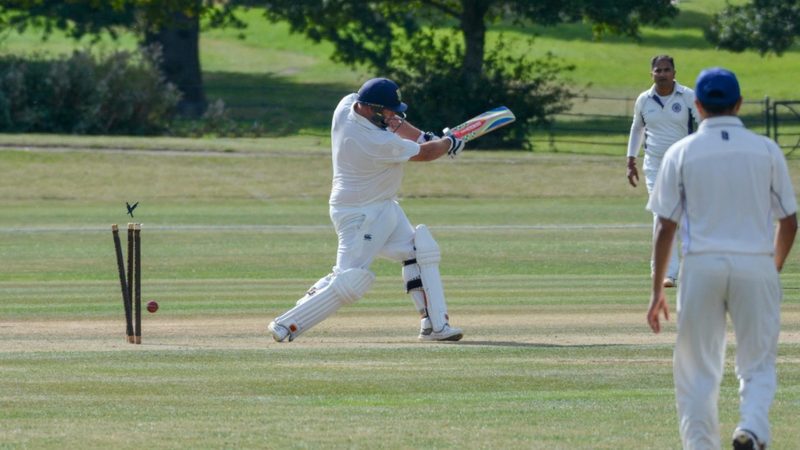
A diamond duck is a dismissal for nought without facing a single legal delivery. It is the one duck a batter cannot do anything about: there is no shot to play, no ball to survive, nothing to get wrong. You walk out, and you walk back.
It is also the rarest duck in the game by a distance. We counted every diamond duck in the ball by ball record of men’s Tests, ODIs, T20 internationals and the IPL, and found 307 of them — against more than 15,000 ducks in the same sample. In the IPL there have been 56 in nineteen seasons, roughly one every 340 batting innings.
What is a diamond duck in cricket?
A diamond duck is a dismissal on nought with 0 balls faced. That is the whole definition, and the ball count is what separates it from every other kind of duck. A golden duck means out to the first ball faced. A diamond duck means there was no first ball.
Worth knowing before you go further: the Laws of Cricket never mention a duck at all. The 2017 Code, now in its fourth edition, has no Law that defines a duck, a golden duck or a diamond duck. The vocabulary belongs to scorers and commentators, and the ball count it rests on is a scoring convention — a wide is not debited to the batter as a ball faced, a no-ball is. That convention is what makes a diamond duck possible in the first place.
How a diamond duck actually happens
There are three routes, and in our sample they are wildly unequal. Of the 307 diamond ducks we counted, 297 were run outs, nine were stumpings and one was a timed out.
| Route | How it works | In our sample |
|---|---|---|
| Run out at the non-striker’s end | The non-striker is out backing up, sent back, or beaten by a deflection onto the stumps — all before taking strike | 297 |
| Stumped or run out off a wide | The striker is at the crease, but a wide is not a ball faced, so the dismissal costs no ball | 9 |
| Timed out | The incoming batter is not ready in time and is dismissed before reaching the middle | 1 |
The run out is the whole story, and it splits three ways. The non-striker can be run out going for a run the striker has called and then refused. He can be run out by a straight drive or a bowler’s fingertip that deflects onto the stumps at his end. Or he can be run out backing up too far, which Law 38.3 covers under Non-striker leaving their ground early — the dismissal long known by another name, and the subject of its own long argument. Law 38.3.2 adds the detail that matters here: if the ball is not delivered, it does not count as one of the over, so nothing is charged to anybody.
The wide route is the one most explanations miss. Law 22.9 sets out exactly who can be dismissed off a wide — hit wicket, obstructing the field, run out or stumped — and Law 39.4 deals specifically with a striker stumped from a wide. Since a wide is not counted as a ball faced, a batter stumped off the first delivery he stands up to is out for 0 off 0. That is a diamond duck, and it has happened nine times in our sample. Hit wicket and obstructing the field off a wide are legal too, and have not yet produced one.
Timed out is the rarest of the three by some way. Law 40.1.1 gives the incoming batter three minutes to be ready to receive the ball; miss it, and he is out. Law 40.2 adds that the bowler gets no credit for the wicket, which makes a timed-out diamond duck the only dismissal in cricket with nobody’s name on either side of it.
How rare is a diamond duck?
Rare, and rarer the longer the format. We counted every completed batting innings in the ball by ball archive and picked out the dismissals on nought with no ball faced.
| Format | Diamond ducks | Share of all ducks | Roughly one every |
|---|---|---|---|
| Test | 18 | 0.5% | 1,800 batting innings |
| ODI | 80 | 2.1% | 570 batting innings |
| T20I | 153 | 2.5% | 380 batting innings |
| IPL | 56 | 3.7% | 340 batting innings |
The archive starts at different points by format — Tests from December 2001, ODIs from June 2002, T20 internationals from the first one in February 2005, and the IPL complete from 2008 — so read the table as the modern game rather than as all of cricket history. Everything up to September 2026 is included.
The gradient runs one way with no exceptions, and the reason is in the table above rather than anything about ducks. A diamond duck is essentially a run out, and run outs are a function of how hard a side is scrambling for runs. A Test batter has no reason to take a risky single off the third ball of a spell. A T20 side is taking them from the first over to the last, which is why the diamond duck is more than seven times more common as a share of ducks in the IPL than in Tests.
They nearly all come at the two ends of the innings
Sort the 56 IPL diamond ducks by when they happened and the shape is stark. Twenty-five of them came in the 20th over, 36 in the last three overs, and nine in the very first over. That is 45 of 56 — four overs out of twenty producing eighty per cent of them.
Both ends make sense for the same reason. In the final over a tailender walks in with two balls left and is immediately backing up for a second run he was never going to complete. In the first over an opener who has not yet taken strike is out of his ground for a single the other man has called and cancelled. In between, with a set batter on strike and no need to run at anything, almost nothing happens.
It also explains who this happens to. Of the 15 diamond ducks by India batters in international cricket, 13 belong to bowlers — Zaheer Khan and Jasprit Bumrah twice each, Arshdeep Singh twice, plus S Sreesanth, Harbhajan Singh, Bhuvneshwar Kumar, Amit Mishra, Umesh Yadav, Akash Deep and Varun Chakaravarthy. Only two belong to specialist batters, Virat Kohli and Ruturaj Gaikwad, and no India player has more than two in international cricket.
The four diamond ducks worth knowing
Angelo Mathews, Sri Lanka v Bangladesh, Delhi, 6 November 2023. The only timed out in the history of international cricket, and therefore the only diamond duck of its kind. Mathews came in at the fall of Sadeera Samarawickrama’s wicket in the 25th over of a World Cup match, found the strap on his helmet had broken, and was still sorting it out when Bangladesh appealed. He was given out before facing a ball.
Manish Pandey, Rajasthan Royals v Kolkata Knight Riders, Ahmedabad, 5 May 2014. The only diamond duck in IPL history that is not a run out. Pandey arrived at 14.4 as the non-striker, took strike at the start of the 15th over, and was stumped by Sanju Samson off a Pravin Tambe googly that went down the leg side for a wide. Nought off nought. Tambe took three wickets in three deliveries, the first of them that wide, and Kolkata went from 121 without loss to 123 for 6.
Virat Kohli, India v Zimbabwe, Bulawayo, 28 May 2010. The biggest name on the list. Kohli was run out by Elton Chigumbura at the non-striker’s end in the tenth over of an ODI, with Dinesh Karthik on strike, before he had faced a delivery.
Simon Katich, Australia v England, Adelaide, 3 December 2010. Four balls into the second Ashes Test, Katich was run out by Jonathan Trott without facing. Ricky Ponting was caught behind off the next delivery. Australia were nought for two before the first over was done.
Every type of duck in cricket
Eight terms are in common use, and only two things separate them: how many balls the batter faced, and when in the innings the dismissal came.
| Type | What it means |
|---|---|
| Duck | Out for nought, whatever the ball count |
| Golden duck | Out to the first legal ball faced |
| Silver duck | Out to the second ball faced, still on nought |
| Bronze duck | Out to the third ball faced, still on nought |
| Diamond duck | Out without facing a legal ball at all |
| Royal duck | Out to the first ball of the team’s innings |
| Laughing duck | Out for nought on the final ball of the innings |
| Pair | Out for nought in both innings of the same match |
A royal duck is also called a platinum duck, and because it can only happen to an opener facing the first delivery of a team’s innings, every royal duck is a golden duck as well. A king pair is not a ninth type but a harder version of the eighth: a pair in which both dismissals were golden ducks. The scorecard, meanwhile, says none of this. All of them appear as a plain 0, and the label comes from the ball count printed beside it.
The one term the game disagrees on
Diamond duck is the only entry on that list whose meaning is genuinely disputed. The definition used almost everywhere, and the one this page uses, is a dismissal without facing a legal delivery. Some regional usage instead applies it to the first dismissal of an innings, which is what most of the game calls a royal or platinum duck. If a commentator’s diamond duck does not match yours, that is the reason — and it is why the ball count beside the 0 on the scorecard is the only thing worth trusting.
For the ducks that do get recorded as records, our lists of the most ducks in international cricket, the most ducks in T20 internationals and the most golden ducks in ODIs are the places to go next.
More cricket explainers and records
Photo credit: Unsplash
Counts derived from the Cricsheet ball by ball archive, men’s matches only, to 9 September 2026. Law references are to the 2017 Code of the Laws of Cricket, 4th edition (2026).