






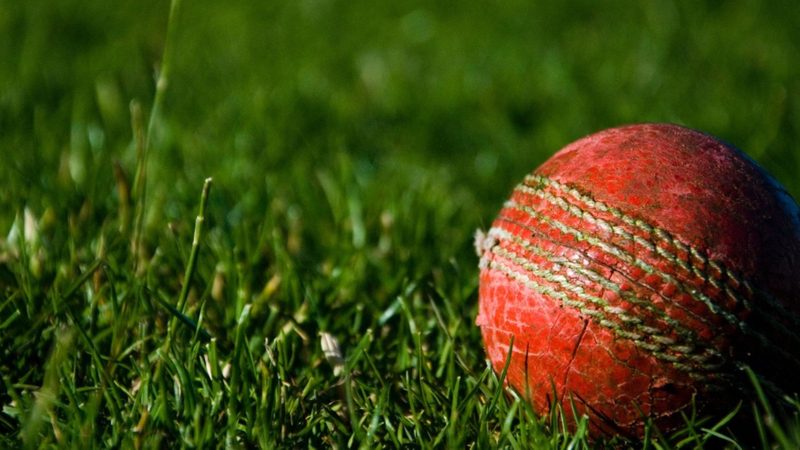
The seam of a cricket ball is the raised ring of stitching that runs around its middle and holds the two halves of leather together. Seam bowling is the art of landing the ball on that seam so it deviates sideways off the pitch, and the bowlers who live on it, almost always fast or medium-pace bowlers, are called seamers.
The word does double duty in commentary. “He’s a seamer” describes a type of bowler; “it seamed back in” describes what the ball did after pitching; and “a seaming pitch” is one where the ball keeps doing it.
What is the seam on a cricket ball?
A red or white ball is made from leather stitched around a cork core. The main seam carries six rows of stitching, three on each side of the join, and it stands slightly proud of the leather. How proud it stands, and how long it stays that way, depends on the ball: the hand-stitched Dukes used in England keeps its seam upright for longer than the Kookaburra used in most other countries. Our guide to the Dukes, Kookaburra and SG balls explains the difference.
How seam bowling works
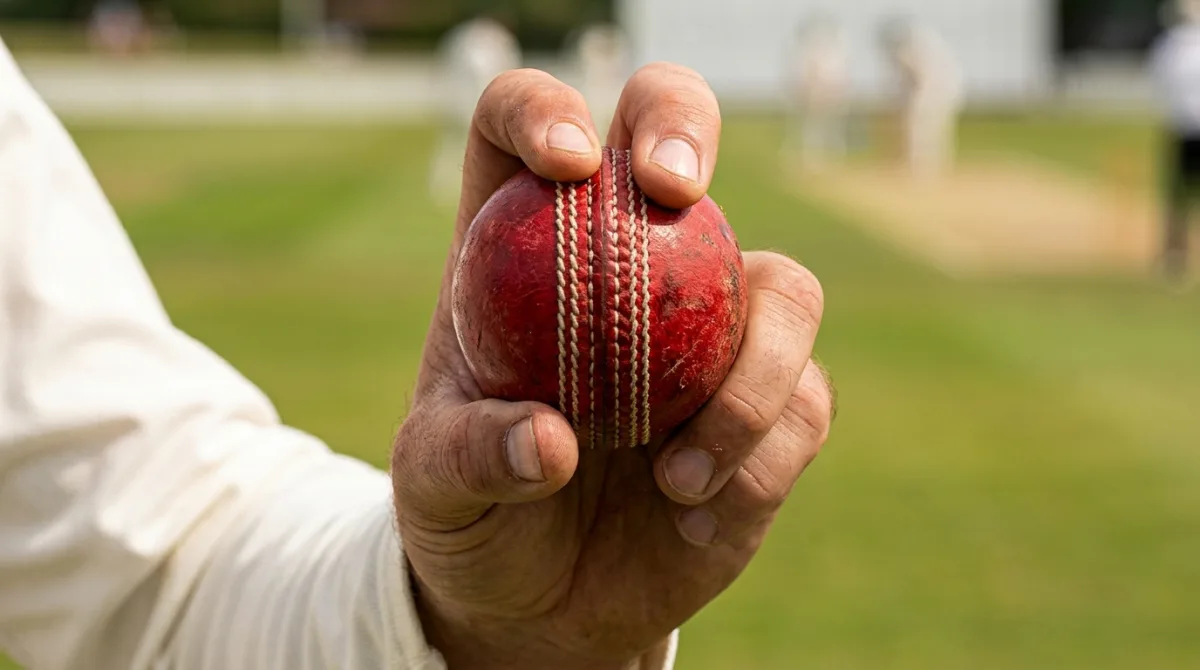
A seam bowler tries to release the ball with the seam upright, so that it lands on the stitching rather than on the smooth leather. The seam acts like a small ridge: depending on exactly how it meets the surface, the ball can jag a few centimetres one way or the other. Because neither the bowler nor the batter knows precisely which way it will go, a ball that seams late is very hard to play, and it is a major source of edges to the wicketkeeper and slips and of lbw and bowled dismissals.
Seam vs swing: what’s the difference?
| Seam movement | Swing | |
|---|---|---|
| When the ball moves | Off the pitch, after it bounces | In the air, before it bounces |
| What causes it | The raised seam hitting the surface | Air flowing differently over the two sides of the ball |
| What helps it | Grass on the pitch, a hard surface, a prominent seam | A shiny side and a rough side, overcast or humid conditions |
| Can the bowler predict the direction? | Only partly, which is the point | Largely, by how the ball is held |
Many fast bowlers do both. The seam position matters for swing too, because it decides how air flows around the ball. Once the ball gets old and one side is rough, it can reverse swing, moving the opposite way to conventional swing.
Types of seam delivery
- Seam-up: the stock ball. The index and middle fingers sit either side of an upright seam, so the ball lands on the stitching and can deviate either way.
- Wobble seam: the fingers are spread slightly so the seam wobbles in flight rather than staying upright. It lands at an unpredictable angle, which makes the movement even harder to read.
- Scrambled seam: the ball is released so the seam tumbles. It is usually used to hit the smooth leather and get extra skid or bounce rather than sideways movement.
- Cross seam: the seam is held across the fingers, so it lands on its side. Bowlers use it on slow or dry pitches to get uneven bounce.
- Cutters: the bowler drags the fingers down one side of the ball at release, a leg-cutter or off-cutter, so it spins a little and grips off the surface.
Conditions that help seam bowlers
A green pitch with live grass is the classic seamer’s surface, because the grass gives the seam something to grip. A hard, true pitch keeps the seam effective for longer, while a soft, dry or dusty one blunts it. A new ball, with its seam at its most prominent, does the most; teams usually take the second new ball once 80 overs have been bowled for exactly that reason.
Great seam bowlers
England’s James Anderson took 704 Test wickets between 2003 and 2024, the most by any fast bowler, and his long-time new-ball partner Stuart Broad took 604. Australia’s Glenn McGrath took 563 with a relentless line just outside off stump, and South Africa’s Shaun Pollock 421. For India, Kapil Dev leads the pace bowlers with 434 Test wickets, ahead of Zaheer Khan and Ishant Sharma on 311 each, and Jasprit Bumrah and Mohammed Shami have been India’s leading seamers of the last decade.
Seam meaning in cricket: FAQs
What does seam mean in cricket?
The seam is the raised stitching around the middle of the ball. Seam bowling means using that stitching to make the ball move sideways after it pitches.
What is a seamer in cricket?
A fast or medium-pace bowler who relies mainly on movement off the pitch rather than sheer speed or swing in the air.
Is seam the same as swing?
No. Seam movement happens off the pitch after the ball bounces; swing happens in the air before it bounces.
Who has taken the most Test wickets as a fast bowler?
James Anderson, with 704. Only two spinners, Muttiah Muralidaran (800) and Shane Warne (708), have more.
For a different type of bowler, see our explainer on chinaman bowling.
Photo credit: Unsplash