




Biggest cricket stadium in the world: the largest grounds ranked, and what they host
Six of the ten biggest cricket grounds on earth are in India, on capacity figures that no two sources agree on. Here is the ranking, and the match counts showing which of those grounds cricket actually uses.
Nov 7, 2022 · Updated Sep 18, 2026
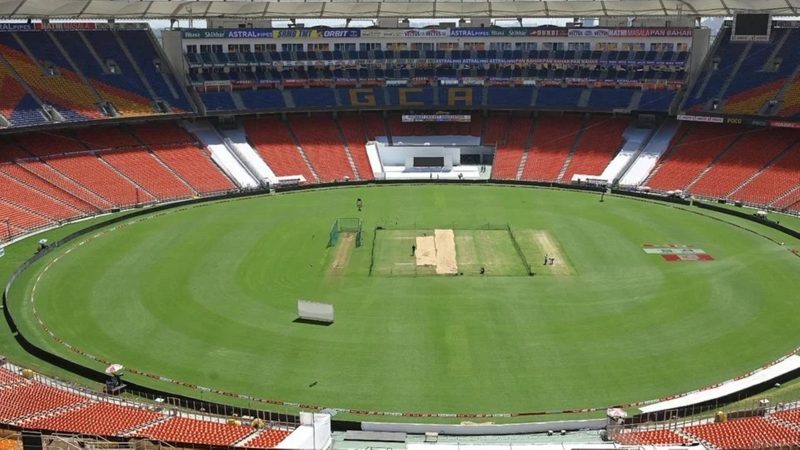
The biggest cricket stadium in the world is the Narendra Modi Stadium in Ahmedabad, which holds 132,000 people. The Melbourne Cricket Ground is second at 100,024, and those two are the only cricket grounds on earth with a six figure capacity. After that the numbers drop sharply, and they also stop agreeing with each other.
That second part is the reason every list of the biggest cricket stadiums you find gives a slightly different answer. Some of the grounds ranked in the world’s top twelve seat nowhere near the figure printed next to them, and four of them have hosted almost no cricket at all. This page gives the capacity ranking, then sets it against the number of matches each ground has actually staged, derived match by match from the ball-by-ball record rather than copied from another list.
Biggest cricket stadiums in the world
Capacities below are the published figures used by the BCCI, the ICC’s 2023 World Cup media guide and each ground’s own operator. Where two sources disagree, the conflict is noted further down.
| Ground | Capacity | Location |
| Narendra Modi Stadium | 132,000 | Ahmedabad, India |
| Melbourne Cricket Ground | 100,024 | Melbourne, Australia |
| Eden Gardens | 68,000 | Kolkata, India |
| Shaheed Veer Narayan Singh Stadium | 65,000 | Raipur, India |
| Perth Stadium | 61,266 | Perth, Australia |
| Adelaide Oval | 53,500 | Adelaide, Australia |
| Singapore National Stadium | 52,000 | Kallang, Singapore |
| Ekana Cricket Stadium | 50,100 | Lucknow, India |
| Greenfield International Stadium | 50,000 | Thiruvananthapuram, India |
| Brabourne Stadium | 50,000 | Mumbai, India |
Two grounds usually printed inside this top ten are left out of it here. The JSCA International Stadium Complex in Ranchi is listed at 50,000 by the capacity tables and at 40,000 by its own entry, both citing the same source. The Shrimant Madhavrao Scindia Cricket Stadium in Gwalior is listed at 50,000, which is the figure for the completed final stage; the stage that has been built seats 30,000, and that was the capacity when it staged its first international in October 2024.
Biggest cricket stadium in India
Six of the ten grounds above are in India, and eight of the twelve once Ranchi and Gwalior are counted back in. The Indian order, on the same basis as the table above, looks like this.
| Ground | Capacity | City |
| Narendra Modi Stadium | 132,000 | Ahmedabad |
| Eden Gardens | 68,000 | Kolkata |
| Shaheed Veer Narayan Singh Stadium | 65,000 | Raipur |
| Ekana Cricket Stadium | 50,100 | Lucknow |
| Greenfield International Stadium | 50,000 | Thiruvananthapuram |
| Brabourne Stadium | 50,000 | Mumbai |
| Barsapara Cricket Stadium | 46,000 | Guwahati |
| DY Patil Stadium | 45,300 | Navi Mumbai |
| Vidarbha CA Stadium | 45,000 | Nagpur |
| Barabati Stadium | 45,000 | Cuttack |
Add Ranchi and Gwalior back at their listed 50,000 and they slot in at fifth and sixth, pushing Barabati to twelfth, which is where most published lists place it.
Eden Gardens is the interesting one. It held 100,000 between 1987 and 2010 and was comfortably the biggest cricket ground in the world for most of that time. The seats that replaced the terraces before the 2011 World Cup cut it to 68,000, so Kolkata lost the record to a renovation rather than to a rival.
How much cricket these grounds actually host
Capacity is what a ground could hold. The table below is what it has been asked to hold. The counts are men’s Tests, ODIs, T20Is and IPL matches since 1 January 2015, derived from the ball-by-ball archive of every match played, and that window sits entirely inside the archive’s coverage so nothing is missing at the edges. Rows run from busiest to quietest, not by capacity.
| Ground | Capacity | Internationals | IPL |
| Wankhede Stadium | 33,100 | 26 | 95 |
| Eden Gardens | 68,000 | 29 | 67 |
| Narendra Modi Stadium | 132,000 | 25 | 45 |
| Sydney Cricket Ground | 48,000 | 45 | 0 |
| Melbourne Cricket Ground | 100,024 | 37 | 0 |
| Ekana Cricket Stadium | 50,100 | 8 | 29 |
| Brabourne Stadium | 50,000 | 1 | 19 |
| DY Patil Stadium | 45,300 | 0 | 20 |
| Shaheed Veer Narayan Singh Stadium | 65,000 | 4 | 6 |
| Greenfield International Stadium | 50,000 | 7 | 0 |
| Shrimant Madhavrao Scindia Stadium | 30,000 | 1 | 0 |
| Singapore National Stadium | 52,000 | 0 | 0 |
The Wankhede Stadium is the point of the table. It seats about 33,100, which does not put it in India’s top fifteen, and it has staged more senior men’s cricket in the last decade than any ground on the capacity list. Mumbai has three Tests, eight ODIs and fifteen T20Is on its record since 2015 alongside 95 IPL matches. Ahmedabad, with four times the seats, has 70 matches in the same period.
At the other end, the Singapore National Stadium’s 52,000 is a cricket configuration rather than a cricket history. The venue is a football, rugby and athletics bowl that can be reconfigured for cricket in about 48 hours, and its own record lists no cricket match at all. Singapore’s internationals are played at the Singapore National Cricket Ground and the Indian Association Ground, neither of which comes close to the capacity list.
Brabourne has not staged a match of any kind since May 2022, and DY Patil has not either. Two more sit in the same bracket. The Saifai International Cricket Stadium in Uttar Pradesh is ranked at 43,000 and has never staged a senior men’s international or IPL match. Docklands Stadium in Melbourne is ranked at 48,003, which is its oval figure; in cricket mode it holds 47,000, and it has not hosted an international since February 2006.
What the biggest cricket stadium in the world actually holds
Ahmedabad’s record crowd came at the 2022 IPL final, reported as 104,859 and certified by Guinness World Records at 101,566 for a T20 match. Both figures are a long way short of 132,000, and the two showpiece finals since have drawn smaller crowds, not bigger ones.
| Match | Date | Attendance | Share of capacity |
| IPL final | 29 May 2022 | 104,859 | 79% |
| ODI World Cup final | 19 Nov 2023 | 92,453 | 70% |
| T20 World Cup final | 8 Mar 2026 | 86,824 | 66% |
Compare that with Melbourne. Day one of the 2025 Boxing Day Test drew 94,199, a world record for a single day of Test cricket, into a ground that holds 100,024. The MCG filled 94% of itself for the first day of a Test match. Ahmedabad filled 66% of itself for a World Cup final it went on to win, and the crowd in Melbourne in December was larger than the crowd in Ahmedabad three months later.
Why the biggest stadium lists never agree
Four things are being counted under one heading, which is why no two rankings match.
Configuration capacity against cricket capacity. Multi sport venues publish a number for their largest configuration. Docklands is 56,347 as a venue, 48,003 on the cricket list and 47,000 with a cricket field laid out. Singapore’s 52,000 is its cricket setting for a ground that does not stage cricket.
Built capacity against planned capacity. Gwalior’s new ground is ranked on the 50,000 it will hold when the second stage is finished rather than the 30,000 standing today.
Competing official figures. The Ekana Stadium is 50,000 in the ranking tables and 50,100 in the BCCI’s own venue list. The Wankhede is 33,108 on ESPNcricinfo, 33,100 in the BCCI and ICC listings and about 32,000 elsewhere. Ranchi is 50,000 in one place and 40,000 in another, both citing the same page.
Duplicated entries. The Maharaja Yadavindra Singh International Cricket Stadium in New Chandigarh appears twice in the standard capacity table, once at 40,000 and once at 38,000, which is enough on its own to shuffle the order of everything below it.
The two grounds at the top are not affected by any of this. Ahmedabad at 132,000 and Melbourne at 100,024 are far enough clear that no plausible correction moves them. Everything from third place down should be read as an estimate.
Questions people ask
Which is the biggest cricket stadium in the world? The Narendra Modi Stadium in Ahmedabad, capacity 132,000. It reopened in 2021 after a rebuild on the site of the old Sardar Patel Stadium, which had stood since 1983.
Which is the biggest cricket stadium in India? The same ground. India also holds second and third place through Eden Gardens at 68,000 and the Shaheed Veer Narayan Singh Stadium in Raipur at 65,000.
What is the second biggest cricket stadium in the world? The Melbourne Cricket Ground, 100,024, made up of about 95,000 seats and 5,000 standing places.
What is the highest attendance at a cricket match? 104,859 for the 2022 IPL final at Ahmedabad, with Guinness World Records certifying 101,566 for the same match under its own counting method.
Which Indian ground hosts the most cricket? The Wankhede Stadium in Mumbai, which has staged 121 senior men’s matches since the start of 2015, ahead of Eden Gardens on 96 and the MA Chidambaram Stadium in Chennai on 81.