





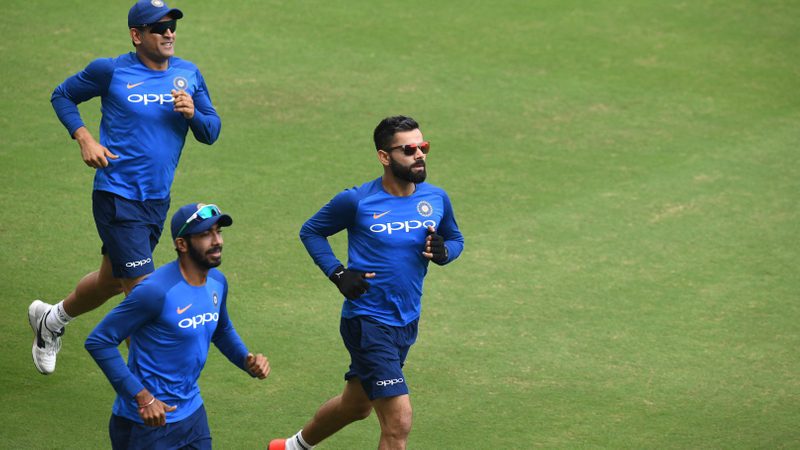
Updated 27 October 2026: The Yo-Yo test is still part of how India checks its cricketers’ fitness, but it is no longer the only test. When India’s top centrally-contracted players reported to the BCCI’s Centre of Excellence in Bengaluru for fitness testing at the end of August 2026, the tests included the Bronco test, a 2 km run and the Yo-Yo test, and PTI reported that the Yo-Yo marker “for long has been 16.5”.
What is the Yo-Yo test?
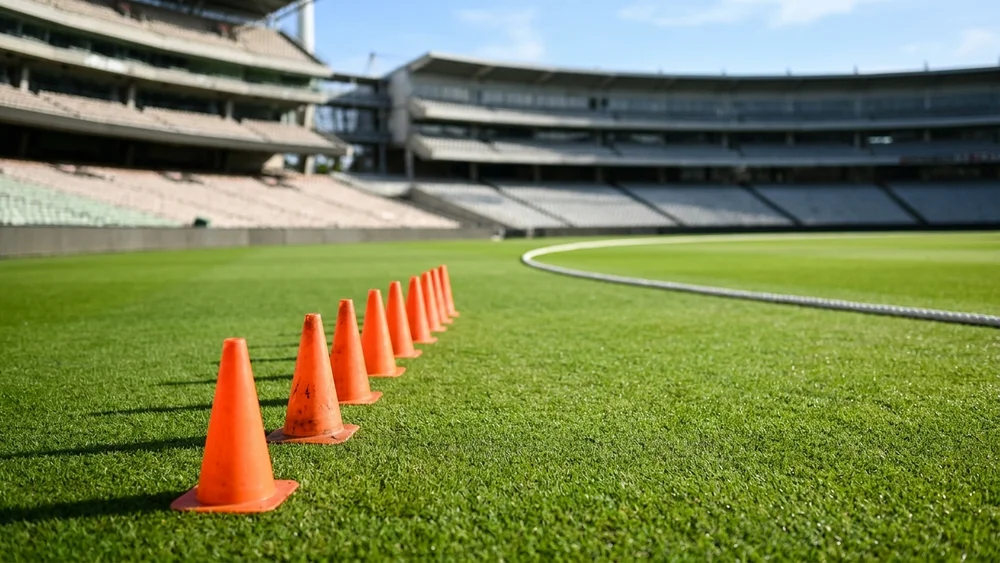
The version used in cricket is the Yo-Yo Intermittent Recovery Test Level 1. Two cones are set 20 metres apart. On a beep, the player runs to the far cone before the next beep, then turns and gets back to the start before the third beep. That out-and-back run of 40 metres is one shuttle. After each shuttle the player gets ten seconds to recover, and the beeps keep getting closer together, so the running gets faster.
The test starts at speed level 5, which has one shuttle. Level 9 also has one shuttle, level 11 has two, level 12 three and level 13 four, and from level 14 upwards every level has eight shuttles. Level 23 is the highest. A player who fails to reach the cone before the beep gets a warning, and the warnings end the test. The score is written as level and shuttle: 16.1 means the first shuttle of level 16 was completed, which is an accumulated distance of 1,120 metres.
| Yo-Yo score | Distance run | Where it has been India’s mark |
|---|---|---|
| 16.1 | 1,120 m | The original benchmark from 2016 |
| 16.5 | 1,280 m | Reported by PTI in 2023 and 2026 |
| 17.1 | 1,440 m | Reported by ESPNcricinfo in February 2021 |
Who invented the Yo-Yo test?
The Yo-Yo intermittent test was devised in the early 1990s by Jens Bangsbo, a Danish soccer physiologist, and described in a 2008 paper in Sports Medicine. It grew out of the Léger multi-stage “beep test”, in which athletes run 20-metre shuttles without a break. The Yo-Yo test adds the short recovery after each shuttle, which suits stop-start sports like football and cricket.
When did India start using the Yo-Yo test?
Shankar Basu was India’s strength and conditioning coach when the test was introduced in 2015, and he set 16.1 as the minimum level for Indian players. It became a requirement for selection in mid-2016, after Anil Kumble took over as India coach in June that year, with backing from captain Virat Kohli and senior players such as MS Dhoni.
India’s fitness benchmark over the years
- 2016: passing 16.1 on the Yo-Yo test becomes mandatory for selection.
- February 2021: ESPNcricinfo reported the level raised to 17.1, with a new alternative: a 2 km time trial in 8 minutes 15 seconds for fast bowlers and 8 minutes 30 seconds for everyone else. Players had to clear one of the two.
- January 2023: after its review meeting in Mumbai, the BCCI said “The Yo-Yo Test and Dexa will now be part of selection criteria”.
- August 2023: at India’s camp in Alur before the Asia Cup, PTI reported the cut-off as 16.5. Shubman Gill had the highest score, 18.7, and Virat Kohli posted 17.2 on his Instagram story.
- 2025: India’s strength and conditioning coach Adrian Le Roux introduced the Bronco test.
- August 2026: the fitness tests at the Centre of Excellence included the Bronco test, the 2 km run and the Yo-Yo test. PTI reported a 16.5 Yo-Yo marker and a 2 km run to be completed within 10 minutes.
Reports have not always agreed on the number. ESPNcricinfo put the level at 17.1 in 2021, while PTI’s reports from 2023 and 2026 give 16.5.
Which Indian cricketers have failed the Yo-Yo test?
- Suresh Raina: picked for the home ODIs against New Zealand in October 2016, he failed the test at the National Cricket Academy, missed the first two ODIs, then failed a retest. He was the first big name to fail it, and Yuvraj Singh soon followed.
- Mohammed Shami: failed the test in June 2018 and missed India’s Test against Afghanistan; Navdeep Saini got his first Test call-up.
- Sanju Samson: failed his fitness test the same week and was replaced in the India A squad by Ishan Kishan.
- Ambati Rayudu: failed a fitness test at the National Cricket Academy on 15 June 2018 and was dropped from the ODI squad for England, with Suresh Raina named in his place.
- Varun Chakravarthy: before the England T20Is in March 2021, reports said he had not met either of the new benchmarks, the 17.1 Yo-Yo score or the 2 km run.
Other teams set their own marks. In 2017 ESPNcricinfo reported Pakistan’s minimum at 17.4 and West Indies’ at 19, with New Zealand “probably” the highest at 20.1.
Yo-Yo test vs Bronco test
The Bronco test comes from rugby. Markers are placed at 0, 20, 40 and 60 metres, and the player runs out and back to each of them in turn. That makes one set of 240 metres, and the test is five sets, 1,200 metres, without a break. PTI reported in 2026 that Indian players are expected to finish it in five and a half minutes. The difference from the Yo-Yo test is the rest: the Yo-Yo test has a recovery period after every shuttle, while the Bronco test is continuous running.
Following India’s next series? See our guide to cricket betting sites.
Featured photo: NOAH SEELAM / AFP