






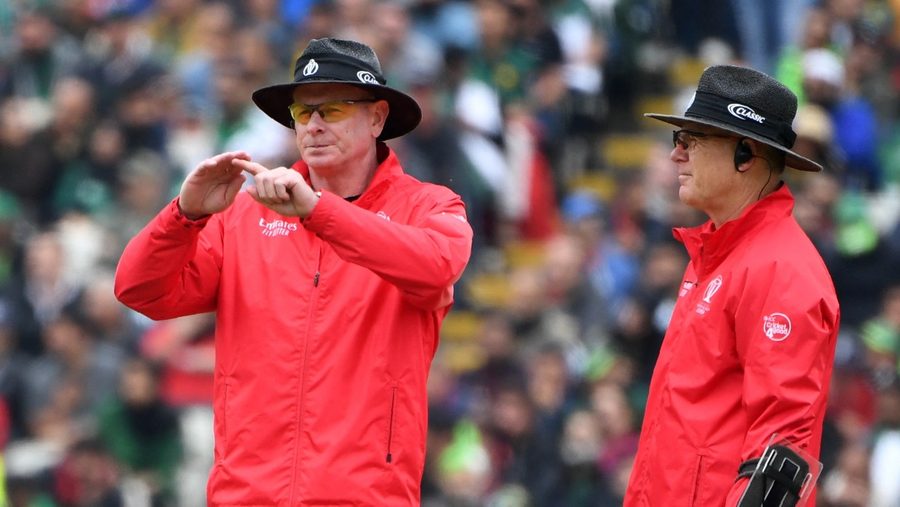
The Decision Review System (DRS) lets players challenge an on-field umpire’s decision on whether a batter is out. In T20 internationals each team gets two unsuccessful reviews per innings, the same as in ODIs, under the ICC’s current playing conditions (October 2026). Test sides get three. The old limit of one review per innings in T20 cricket no longer applies.
How many reviews are allowed in each format?
| Format | Unsuccessful reviews per team, per innings |
| Test cricket | 3 |
| ODIs | 2 |
| T20 internationals | 2 |
| IPL (rules from 2023) | 2 |
The limit counts only unsuccessful reviews. A review that gets the decision overturned does not use one up.
When is a review not lost?
Under the ICC playing conditions, a team keeps its review in three situations:
- The decision is overturned. A successful review does not count towards the limit.
- Umpire’s call. If an LBW decision stands only because ball-tracking shows an umpire’s call, the review is not counted as unsuccessful.
- No ball. If a Not out decision stands because the delivery was a no ball, the review does not count against the team.
An Out decision that stands for a different mode of dismissal still counts as an unsuccessful review.
How a review works
Only the batter who has been given out can review an Out decision, and only the fielding captain can review a Not out decision. The player makes a ‘T’ sign with both forearms at head height, and must do so within 15 seconds of the ball becoming dead. The bowler’s end umpire gives a prompt after 10 seconds. A team can only review decisions on whether a batter is out, and a timed-out decision cannot be reviewed.
The on-field umpire then makes the shape of a TV screen and passes the decision to the third umpire. The third umpire first checks for any kind of no ball. For an LBW, they then check whether the batter hit the ball, and finally use ball-tracking to see where the ball pitched, where it hit the batter and whether it would have hit the stumps. If the replays are inconclusive, the on-field decision stands. If they show the decision was wrong, the on-field umpire reverses it.
Reviewing wides and no balls in the IPL
The IPL goes further than international cricket. Since 2023, teams have also been allowed to review wide and no-ball calls. The Women’s Premier League introduced the change first, and the IPL followed that season. Those reviews come out of the same two unsuccessful reviews per innings. In T20 internationals, a player review can only be used on whether a batter is out.
A short history of DRS
DRS was first used in a Test match between India and Sri Lanka in 2008. The ICC officially launched it on 24 November 2009, in the first Test between New Zealand and Pakistan at the University Oval in Dunedin, and it was first used in ODIs in January 2011. From July 2020, as a COVID-19 measure, the limits were raised to three unsuccessful reviews per innings in Tests and two in ODIs, and both have since become permanent.
Featured photo: AFP / Paul Ellis