








Germany national football team: full squad and key players
Germany head into a new era under Jurgen Klopp after a chastening 2026 World Cup. Here is the full squad he inherits, from Manuel Neuer and Joshua Kimmich to the Wirtz, Musiala and Havertz generation.
Jul 20, 2026
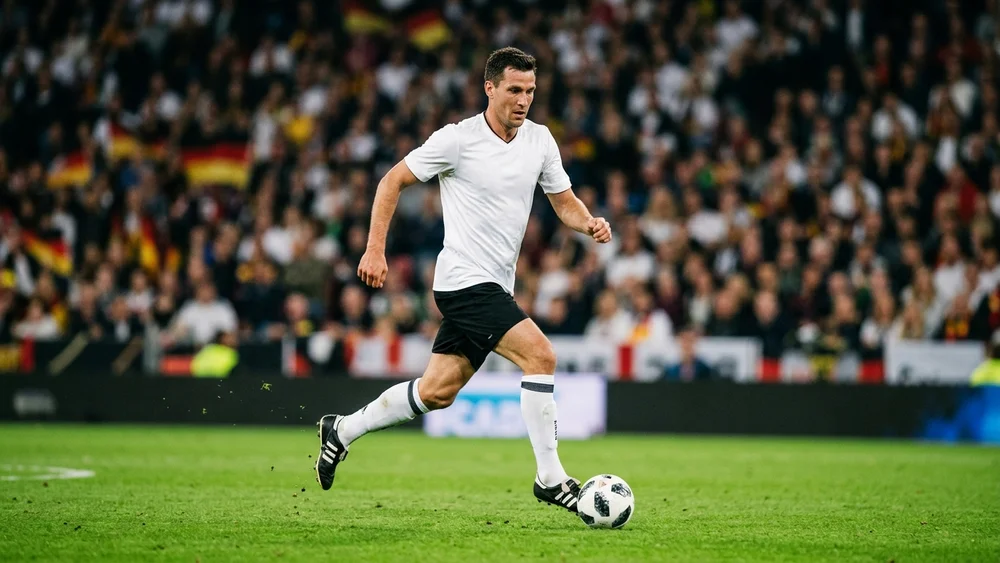
Germany go into the next few years with one of the most gifted squads in world football and a new manager charged with getting more out of it. Jurgen Klopp has agreed to take over the national team after a chastening 2026 World Cup, inheriting a group built around captain Joshua Kimmich, the veteran goalkeeper Manuel Neuer and an attacking generation of Florian Wirtz, Jamal Musiala and Kai Havertz. This is the full Germany squad from that tournament, the players Klopp starts with, and the ones who will decide whether the rebuild works.
Germany’s full squad
Julian Nagelsmann named his 26 on 21 May 2026, three goalkeepers, seven defenders and a deep pool of midfielders and attackers, with a Bayern Munich core running through the spine of it. Here is how the squad broke down by position.
Goalkeepers: Manuel Neuer (Bayern Munich), Oliver Baumann (Hoffenheim), Alexander Nübel (VfB Stuttgart).
Defenders: Antonio Rüdiger (Real Madrid), Jonathan Tah (Bayern Munich), Nico Schlotterbeck (Borussia Dortmund), Waldemar Anton (Borussia Dortmund), David Raum (RB Leipzig), Malick Thiaw (Newcastle United), Nathaniel Brown (Eintracht Frankfurt).
Midfielders: Joshua Kimmich (Bayern Munich), Aleksandar Pavlović (Bayern Munich), Leon Goretzka (Bayern Munich), Angelo Stiller (VfB Stuttgart), Pascal Groß (Brighton), Felix Nmecha (Borussia Dortmund), Nadiem Amiri (Mainz), Assan Ouédraogo (RB Leipzig).
Forwards and attackers: Florian Wirtz (Liverpool), Jamal Musiala (Bayern Munich), Kai Havertz (Arsenal), Leroy Sané (Galatasaray), Nick Woltemade (Newcastle United), Deniz Undav (VfB Stuttgart), Maximilian Beier (Borussia Dortmund), Jamie Leweling (VfB Stuttgart).
The one late change came in midfield. Lennart Karl, the 18-year-old Bayern forward who had been the youngest name on the list, withdrew injured on 6 June, and Ouédraogo came in to fill the gap. Beyond that the group was the one Nagelsmann had planned around for months.
The key players Klopp inherits
Everything Germany do in attack runs through Wirtz and Musiala. The two have grown up describing the same instinct, the ability to find each other in tight spaces, and Musiala has spoken openly about how naturally the partnership clicks. Wirtz made his World Cup debut in 2026 after his move to Liverpool, while Musiala came back into the squad having recovered from the serious injury he picked up at the 2025 Club World Cup. Both are either in their prime or walking into it, and they are the reason Germany still frighten better-organised sides.
Havertz gives Klopp a different kind of forward. He made the plane only after an injury-hit 18 months at Arsenal, but at his best he links play, drops deep and finishes the moves Wirtz and Musiala start. Kimmich is the metronome and the captain, a job he has held since September 2024, comfortable in central midfield or at right-back and rarely off the pitch when it matters. Rüdiger, one of Kimmich’s vice-captains, remains the leader at the back, still a first-choice centre-half at Real Madrid.
Then there is Neuer. At 40 he reversed his 2024 international retirement to go to what he expects to be his fifth and final World Cup, and Nagelsmann named him first choice ahead of Baumann and Nübel. Behind the headline names, Nick Woltemade offers Germany a genuine centre-forward after a bruising first season on Tyneside, and Nathaniel Brown emerged as the first-choice left-back at the tournament, form that earned him a move to Bayern Munich soon after. Leroy Sané, now at Galatasaray, is still there when Klopp wants raw pace off either flank.
The young core Klopp can build around
For all the pain of the summer, the raw material is the envy of most nations. Aleksandar Pavlović, 22, has made the holding role in front of the defence his own, a Bayern-schooled passer who lets Kimmich push higher up the pitch. Assan Ouédraogo, 20, is the two-footed box-to-box midfielder Leipzig fast-tracked out of Schalke and already trusted at senior level. Musiala and Wirtz are both 23, the sort of dovetailing creators a country builds a decade around. Put Brown at left-back and Woltemade through the middle, and Klopp has the outline of a team that could still be together at the 2030 World Cup. The talent was never Germany’s problem in 2026. Making it function when the pressure came was.
Why Germany turned to Klopp
The reason the job was open at all traces back to one night in late June. Ranked tenth in the world going in, Germany were knocked out of the 2026 World Cup at the round of 32 by Paraguay, a side sitting 41st in the FIFA rankings, in Boston on 29 June. Julio Enciso headed Paraguay in front before half-time, Havertz levelled after the break from a Wirtz cross, and the game went to penalties. Havertz, Woltemade and Tah all missed, and Paraguay won the shootout 4-3. It was the first time in their history that Germany had lost a World Cup match on penalties.
Nagelsmann did not wait to be pushed. Days after the defeat he stepped down, saying the team deserved a fresh start. The German federation moved for the name the country had wanted all along. Klopp, who left Liverpool at the end of the 2023-24 season and had since been running football operations across the Red Bull group, agreed to end his break from the dugout and take charge. The formal announcement was still being finalised, but the agreement was in place.
What comes next
Klopp does not inherit a broken team. The group that went out in the last 32 flattered to deceive rather than lacked talent, and the core is young enough to give him a real cycle to work with. Wirtz and Musiala should be at their peak for the next major tournament, Kimmich and Rüdiger give him a spine that has seen everything, and the depth in attacking areas is the envy of most nations. The questions are the ones Klopp built his reputation on answering: turning a collection of talented individuals into a team that holds its nerve on the nights it did not this summer.
The next cycle gives him room to work. The UEFA Nations League and qualifying for Euro 2028, co-hosted by the United Kingdom and Ireland, come first, before the 2030 World Cup edges into view. One call cannot wait, though. At 40 this was Neuer’s last World Cup, so Klopp has to decide fairly quickly whether Nübel or Baumann becomes the long-term number one, or whether he looks elsewhere entirely.
For Indian fans who grew up watching Germany win the 2014 World Cup, this feels like a reset with real promise rather than a rebuild from the ground up. If Klopp can find the intensity and structure that defined his club sides, the players are already here.
For more national-team squad breakdowns, see our guide to the Spain national football team squad.