





Update, 23 October 2026: the European Super League never kicked a ball. Announced by 12 clubs on 18 April 2021, it fell apart within three days, and the last two clubs still involved, Barcelona and Real Madrid, left in February 2026. This explainer sets out what was proposed and why it was so controversial; our European Super League timeline covers how it collapsed and what happened next.
What was the European Super League?
The European Super League was a breakaway competition announced late on Sunday 18 April 2021 by 12 of Europe’s biggest clubs, outside the control of UEFA and FIFA. It was meant to replace the Champions League, which has been European club football’s top competition since 1992, when it succeeded the European Cup.
The idea was not new. A breakaway European league backed by the Italian company Media Partners was still being promoted in 1998, but it got no further than planning after UEFA expanded the Champions League. In 2009 Real Madrid president Florentino Pérez began planning a “super-league competition”, calling the Champions League “obsolete and problematic”.
Which clubs signed up?
The 12 founding clubs were:
- England: Arsenal, Chelsea, Liverpool, Manchester City, Manchester United and Tottenham Hotspur
- Spain: Atlético Madrid, Barcelona and Real Madrid
- Italy: AC Milan, Inter Milan and Juventus (from Serie A)
Three more founding clubs were meant to follow. Bayern Munich, Borussia Dortmund and Paris Saint-Germain were approached, but all three turned it down. Pérez was named chairman, with Andrea Agnelli (Juventus), Joel Glazer (Manchester United), John W Henry (Liverpool) and Stan Kroenke (Arsenal) as vice-chairmen.
How would it have worked?
The format followed basketball’s EuroLeague:
- 20 clubs: 15 permanent “founding clubs” plus five places each season through a qualifying mechanism based on the previous domestic season.
- Two groups of 10, playing home and away for 18 group games each, all in midweek so the clubs could stay in their domestic leagues.
- The top three in each group would go to the quarter-finals; the teams finishing fourth and fifth would meet in two-legged play-offs for the last two places.
- Two-legged quarter-finals and semi-finals over four weeks at the end of the season, then a single final at a neutral venue: 197 matches a season in all.
The founders also said a women’s competition would follow, though it was only a one-line mention and drew criticism as an afterthought.
Why did the clubs want it?
Money and security. The league promised “solidarity payments” of more than €10 billion over the clubs’ initial commitment period, and the founding clubs would collectively receive €3.5 billion for infrastructure and to offset the impact of the Covid-19 pandemic. Above all, the 15 founders could never be relegated or miss out, whatever their results.
Why was it so unpopular?
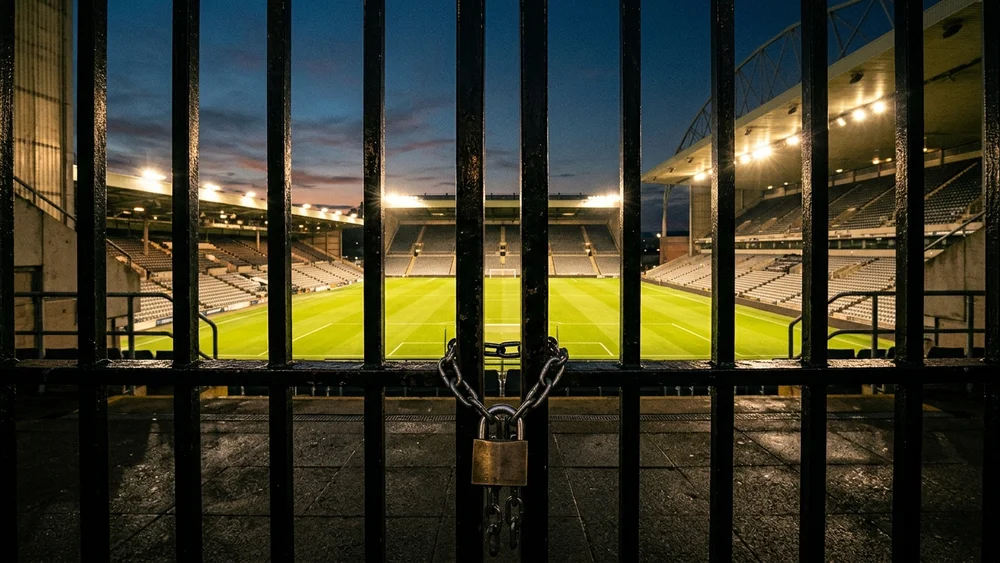
Permanent places were the main objection: a closed competition breaks the link between results and reward that European football is built on. On 18 April 2021 UEFA, the English FA, the Premier League, the Spanish federation and LaLiga, and the Italian federation and Lega Serie A issued a joint statement promising to stop “this cynical project”. “Football is based on open competitions and sporting merit; it cannot be any other way,” it said, warning that the clubs could be banned from playing in any other competition at domestic, European or world level and that their players could be denied the chance to represent their national teams.
Former Manchester United manager Sir Alex Ferguson told Reuters that “talk of a Super League is a move away from 70 years of European club football”. Smaller clubs worried about losing the shared revenue and big fixtures that the giants bring to their leagues, and fans protested outside grounds across England.
What happened to it?
All six English clubs pulled out on 20 and 21 April 2021, followed by Atlético Madrid, Inter Milan and AC Milan. Juventus announced in June 2023 that they were leaving. In December 2023 the Court of Justice of the European Union ruled that UEFA and FIFA’s rules requiring prior approval for new competitions were contrary to EU law, but no club returned. Barcelona withdrew on 7 February 2026 and Real Madrid on 11 February 2026, after reaching an agreement in principle with UEFA, which ended the project.