








There is no Premier League until 10 October, and the October break has been swallowed by this one
Club football stops for 19 days because FIFA has merged two international windows into a single 16-day block. England play four matches inside it, one of them behind closed doors in Rijeka.
Sep 22, 2026
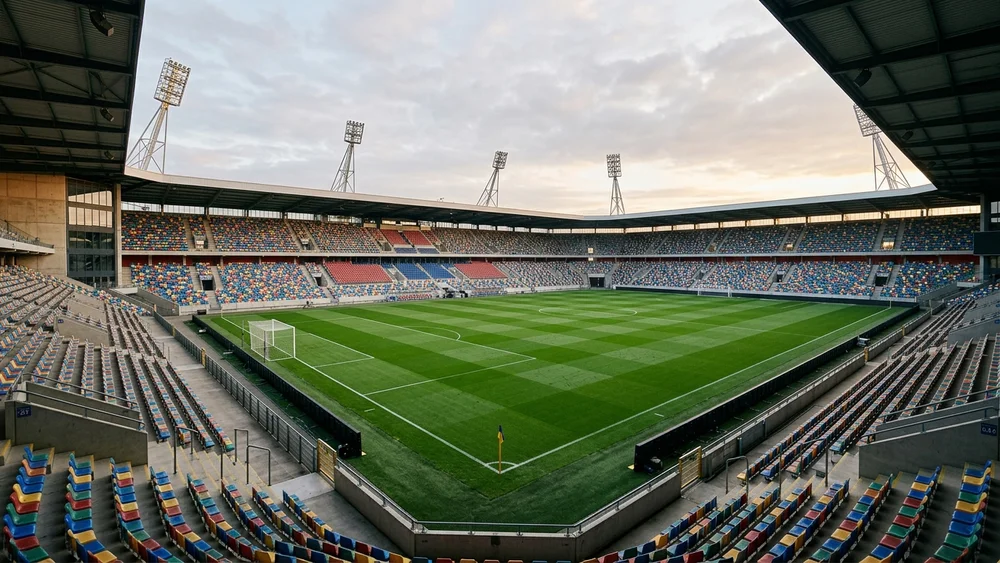
The Premier League finished matchweek five on 20 September and does not come back until 10 October, when Arsenal host Leeds. That is 19 days without a league game, and if it feels longer than any break you can remember, it is.
Two international windows have been welded into one. The September and October breaks that used to sit a month apart are now a single 16-day block running from 21 September to 6 October, and there is no October break waiting on the other side of it, because this is the October break.
Four games instead of two
The trade for the extra length is volume. European and African sides can play up to four matches in this window rather than the usual two, with the games running from 24 September to 6 October. National coaches who normally get a Friday and a Monday now get a fortnight and a fixture list.
England are the clean illustration. Thomas Tuchel’s side host Spain at Wembley on Saturday 26 September, travel to Czechia on 29 September, go to Croatia on 3 October, and finish at home to Czechia on 6 October. That trip to Rijeka is being played behind closed doors under a UEFA sanction on the Croatian federation, with a small allocation for England Supporters Travel Club members after UEFA revisited the decision. Four games and one long stay together, where the old calendar gave you two separate call-ups with a month of club football in between.
Where the idea came from
This is not an emergency measure. It sits in FIFA’s men’s international match calendar for 2025 to 2030, which the FIFA Council approved in March 2023 before the congress in Kigali. That document already specified what we are living through now, a 16-day four-match window in late September and early October from 2026, with March, June and November left as nine-day, two-match windows. The reasoning given was player welfare. Fewer interruptions, and fewer weeks in which a footballer crosses a continent for one match and comes straight back.
The 2026 World Cup gave it a push. The final was played on 19 July, deep into the summer, which left an unusually short runway before the European leagues started. Compressing the autumn was easier than compressing a pre-season that had already vanished.
What it changes for a club fan
The Premier League used to stop four times a season, in September, October, November and March, each break about nine days long. Merging two of them takes an interruption out of the schedule and makes the survivor much heavier. You lose three weekends in a row instead of one now and one a month later.
Clubs feel it differently depending on their squads. A side full of internationals loses them for a fortnight in one go, which is worse this month and better in November, because those players are not doing it again in three weeks. For everyone else it is a long, quiet stretch of other people’s football and transfer speculation.
Whether it reads as welfare or as the same load dumped in one pile depends on who you ask. We will know more around 10 October, when the players who have just played four internationals report back to their clubs and somebody starts counting how many of them are still standing.