






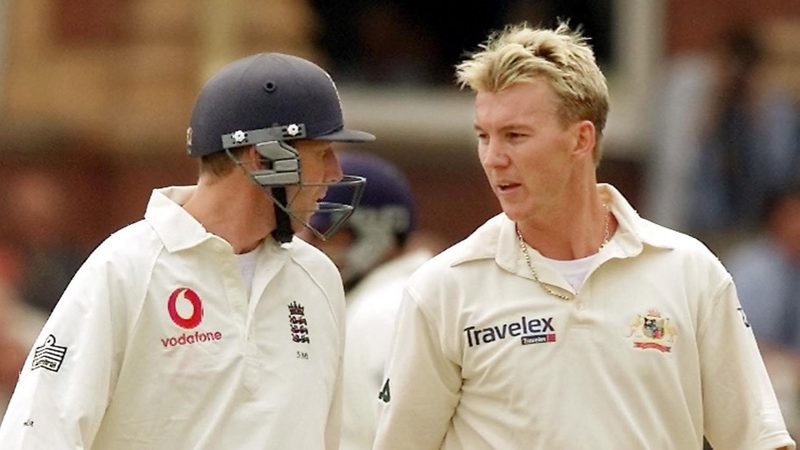
Sledging in cricket means deliberately insulting, mocking or verbally needling an opponent to break their concentration. The target is usually the batter, who stands within earshot of the wicketkeeper, the slips and the close fielders for every ball, but bowlers and fielders get it back too.
At its mildest it is banter and a running commentary from behind the stumps. At its worst it becomes personal abuse, and that is where the Laws and the ICC’s disciplinary code step in.
Where does the word “sledging” come from?
The term is Australian. According to former Australia captain Ian Chappell, it was born at the Adelaide Oval in the 1963-64 or 1964-65 Sheffield Shield season, when a player who swore in front of a woman was said to have reacted “like a sledgehammer”. Insults aimed at opponents became “sledging”. Australian newspapers were using the word by the mid-1970s, when Chappell’s own side earned the label “the Ugly Australians” for their hostile fast bowling and verbal aggression.
The habit is far older than the word. Cricket folklore is full of stories about WG Grace, the most famous player of the 19th century, refusing to walk and talking his way out of dismissals, though most of those tales were written down long after the fact and are best treated as legend.
Is sledging legal in cricket?
The word “sledging” does not appear in the Laws, and a bit of chat is part of the game at every level. What the Laws do punish is conduct that crosses a line. Law 42 (Players’ conduct) sets out four levels of offence:
| Level | Examples relevant to sledging | What the umpires can do |
|---|---|---|
| Level 1 | Language that is obscene, offensive or insulting; an obscene gesture | A first and final warning to the team; 5 penalty runs for any repeat |
| Level 2 | Obscene or seriously insulting language or gestures towards a player, umpire or spectator; deliberate physical contact | 5 penalty runs to the opposition |
| Level 3 | Threatening to assault a player; intimidating an umpire | The player is sent off for a set period, plus 5 penalty runs |
| Level 4 | Assaulting a player, threatening or touching an umpire, any act of violence | The player is sent off for the rest of the match, plus 5 penalty runs |
In international cricket, players are disciplined under the ICC Code of Conduct, which works on the same graded idea: Level 1 to Level 4 breaches, fines as a share of the match fee and demerit points that add up to suspensions. Racial or religious abuse is dealt with separately and far more severely under the ICC’s anti-racism rules.
Famous sledging moments involving India
Ravi Shastri and Mike Whitney, Melbourne, 1991-92: in one of the most retold stories in the India-Australia rivalry, Whitney, fielding as a substitute, threatened Shastri as he backed up for a single. Shastri reportedly told him that if he could bowl as well as he talked, he would not be the twelfth man.
Steve Waugh and Rahul Dravid, Kolkata, March 2001: when Sourav Ganguly dropped Waugh, the Australian captain told him he had “just dropped the Test”. When Harbhajan Singh dismissed Waugh later, Dravid asked him who had dropped the Test now.
Yuvraj Singh and Andrew Flintoff, Durban, 2007 T20 World Cup: after an exchange with Flintoff, Yuvraj hit Stuart Broad for six sixes in an over in the very next over.
Harbhajan Singh and Andrew Symonds, Sydney, January 2008: the “Monkeygate” row. Match referee Mike Procter found Harbhajan guilty of racially abusing Symonds and banned him for three Tests. On appeal, Justice John Hansen ruled on 28 January 2008 that the racism charge was not proven. Harbhajan pleaded guilty to a lesser charge of abuse not amounting to racism, the ban was lifted, and he was fined 50 per cent of his match fee. The full story is in our piece on racism in cricket.
Rishabh Pant and Tim Paine, Melbourne, December 2018: Australia’s captain asked Pant from behind the stumps whether he did babysitting, offering to take his wife to the movies while Pant looked after the kids. Pant answered when Paine came out to bat, calling him a “temporary captain”. The two later made it up, and Pant was photographed babysitting Paine’s children.
Virat Kohli and Sam Konstas, Melbourne, December 2024: on the first morning of the Boxing Day Test, Kohli walked into the 19-year-old debutant’s shoulder between overs and the pair exchanged words. Kohli was fined 20 per cent of his match fee and given one demerit point for a Level 1 breach of the ICC Code of Conduct, for inappropriate physical contact.
Sledging in cricket: FAQs
What is sledging in cricket?
Verbal attempts to put an opponent off his or her game, from light banter to insults. It is mostly aimed at batters by bowlers and close fielders.
Is sledging banned?
Not as such. Obscene, offensive or insulting language is a Level 1 offence under Law 42, and in international cricket the ICC Code of Conduct punishes abuse with fines, demerit points and bans.
Which team is best known for sledging?
Australia. The word itself comes from Australian cricket in the 1960s, and their sides of the 1970s and later were famous for it.
Author: William Paul
Featured photo: AFP / William West