






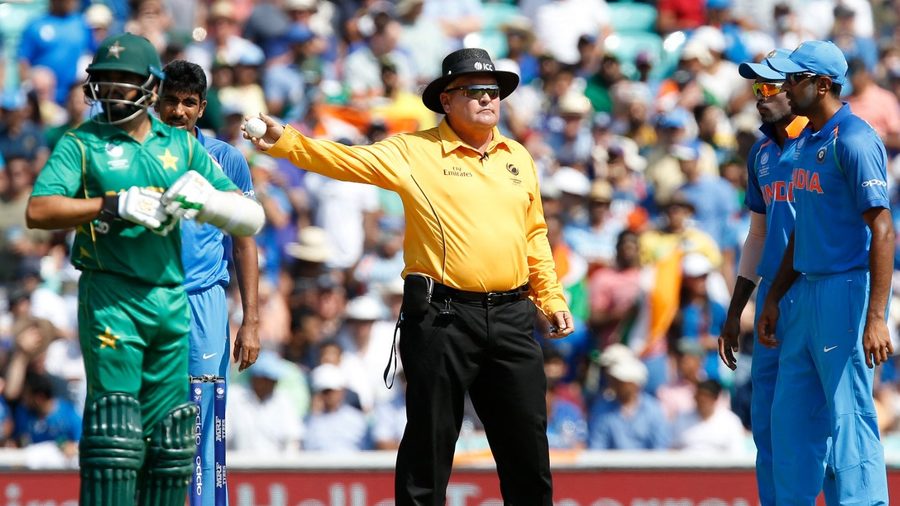
Extras in cricket are runs added to the batting side’s total that were not scored off the bat by a batter. They are recorded separately on the scorecard and never added to any batter’s individual score. Under the Laws of Cricket there are five kinds: no balls, wides, byes, leg byes and penalty runs.
The difference that matters most is who gets charged for them. No balls and wides go against the bowler’s figures. Byes, leg byes and penalty runs do not: they count for the batting side but belong to no bowler and no batter.
Types of extras in cricket
| Extra | Runs | Charged to the bowler? | Counts as a ball of the over? |
|---|---|---|---|
| No ball | 1-run penalty, plus any runs scored | Yes, the penalty | No, it is bowled again |
| Wide | 1-run penalty, plus any runs run or a boundary | Yes, all of it | No, it is bowled again |
| Bye | Runs run, or a boundary | No | Yes |
| Leg bye | Runs run, or a boundary | No | Yes |
| Penalty runs | 5 runs | No | Not a delivery |
No ball
A no ball is an illegal delivery. The most common reason is the front foot: under Law 21.5 some part of the bowler’s front foot must land behind the popping crease, and the back foot must land inside the return crease without touching it. The umpire also calls no ball for a thrown delivery, where the bowler’s elbow straightens once the arm has passed shoulder height (Law 21.2), for a full toss that passes above the batter’s waist (Law 41.7), and for a ball that bounces more than once, or rolls along the ground, before it reaches the popping crease (Law 21.7).
A no ball costs one penalty run, which is charged to the bowler, and it does not count as one of the six balls of the over. Any runs the batter hits off it are credited to the batter as normal. Off a no ball the batter can be out in only three ways: run out, hit the ball twice or obstructing the field (Law 21.17).
In ODIs, T20Is and most domestic white-ball cricket, the playing conditions add a free hit: the delivery after any no ball is a free hit, and the batter can be dismissed off it only in the same three ways. There is no free hit in Test cricket.
Wide
Under Law 22 a delivery is a wide if it passes out of the batter’s reach for a normal cricket shot, judged from where the batter is standing and from a normal batting position. A ball that bounces over the batter’s head is also a wide. In limited-overs internationals the playing conditions are stricter, and a ball that passes down the leg side of the batter is usually called wide.
A wide costs one penalty run, and every run that follows from it, whether the batters run or the ball reaches the boundary, is scored as wides and charged to the bowler (Law 22.7). Like a no ball, it is bowled again.

Bye
Byes are runs taken when the ball passes the batter without touching the bat or the body, usually because it has beaten the wicketkeeper too (Law 23.1). The batters can run, or the ball can go to the boundary for four byes. Byes are not charged to the bowler, which is why a wicketkeeper’s bad day shows up in the extras column rather than in anyone’s figures.
Leg bye
Leg byes are runs taken after the ball hits the batter’s body instead of the bat. They are allowed only if the umpire is satisfied the batter was trying to play the ball with the bat or trying to get out of its way (Law 23.2). If the batter did neither, for example by deliberately padding the ball away, no runs can be scored. Like byes, leg byes are not charged to the bowler.
Penalty runs
Penalty runs are five-run awards for breaches of the Laws. Two you may see in professional cricket: the ball hitting a fielding side’s helmet left on the ground behind the wicketkeeper (Law 28.3), and a fielder wilfully trying to distract, deceive or obstruct a batter, which covers fake fielding (Law 41.5). Penalty runs are recorded as extras and are not charged to the bowler.
Most extras in an innings: the records
| Format | Extras | Conceded by | In the innings of | Venue | Date |
|---|---|---|---|---|---|
| Test | 76 | India | Pakistan (537) | Bengaluru | 8 Dec 2007 |
| ODI | 59 | West Indies | Pakistan (258/7) | Brisbane | 7 Jan 1989 |
| ODI | 59 | Scotland | Pakistan (261/6) | Chester-le-Street | 20 May 1999 |
| T20I | 45 | Philippines | Indonesia (156/8) | Bali | 22 Dec 2023 |
The Test record came in the third Test of Pakistan’s 2007 tour of India. India gave away 76 extras in Pakistan’s first innings at Bengaluru: 35 byes, 26 leg byes and 15 no balls, with not a single wide.
The ODI record is shared, and Pakistan were the batting side both times. West Indies conceded 59 at Brisbane in January 1989, 37 of them wides, and Scotland matched it at Chester-le-Street in the 1999 World Cup with 33 wides and 15 no balls among their 59.
In T20Is the record is 45, conceded by Philippines in Indonesia’s 156 for 8 at Bali in December 2023, 28 of them wides. No side has conceded more than 37 in an innings in any year since.
Extras in cricket: quick answers
Are extras added to the bowler’s figures?
Wides and no balls are. Byes, leg byes and penalty runs are not.
How many runs is a wide worth?
One penalty run, plus any runs the batters complete or a boundary. All of them are scored as wides.
Can a batter be out off a no ball?
Only run out, hit the ball twice or obstructing the field. The same applies on a free hit.
Records from ESPNcricinfo’s Statsguru, current to 13 October 2026. Laws quoted from the MCC Laws of Cricket, 2017 Code, 4th edition (2026).
Featured photo: AFP / Ian Kington