







The IPL is worth 20.6 billion dollars, and this year’s growth came from two boardrooms
Houlihan Lokey’s annual study puts the league up 11.4 per cent, RCB’s brand past 300 million dollars and Lucknow Super Giants flat at zero. The number worth staring at is buried lower: linear television ratings down 18.8 per cent in a year.
Jul 29, 2026
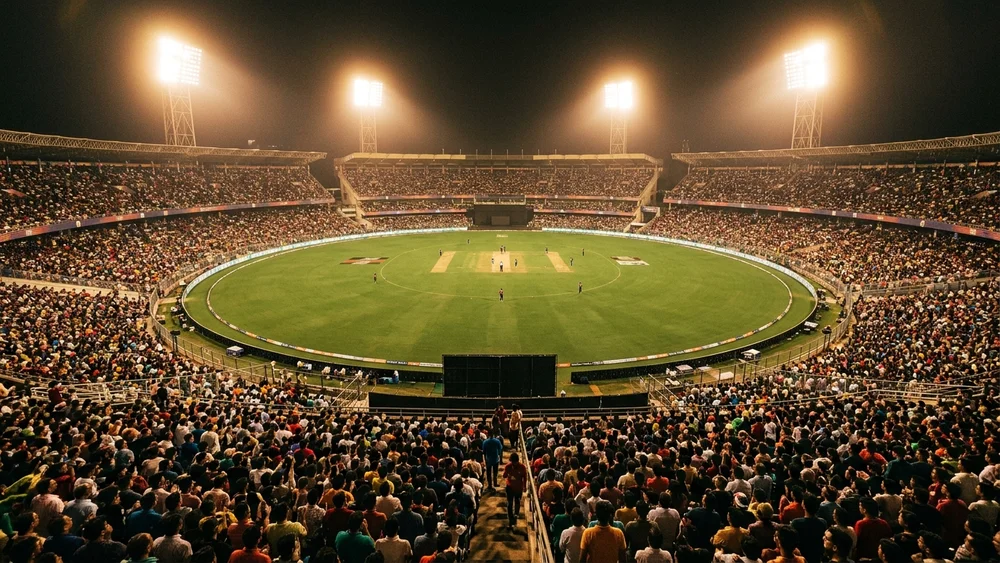
Houlihan Lokey published its annual IPL valuation study on Wednesday, and the top line is the one everybody will quote: the league is now a 20.6 billion dollar business, up 11.4 per cent on last year. The more interesting numbers are further down the page, where the thing that made the IPL what it is has started going backwards.
Two sales reset the whole market
The jump in the league’s value is not really about cricket. It is about two ownership changes. Royal Challengers Bengaluru sold for 1.78 billion dollars, the most expensive transaction in IPL history, to a group taking in Blackstone, Bolt Ventures, the Aditya Birla Group and the Times of India Group. Rajasthan Royals went for 1.65 billion to the Mittal family and Adar Poonawalla.
When two of ten franchises change hands inside a year at those prices, every other franchise is repriced whether it wants to be or not. That is most of the 11.4 per cent right there. Nobody had to sell a single extra ticket.
The league’s stand-alone brand value, which is measured separately from the franchises, rose 10.3 per cent to 4.3 billion dollars. It has added more than 1.1 billion since 2023. Total revenues for the 2026 season came in above 1.8 billion dollars.
RCB break 300 million, Lucknow do not move
The franchise brand table is where the gaps show. RCB sit top at 312 million dollars after 16 per cent growth, and they are the first cricket team anywhere to be valued above 300 million on this measure. Mumbai Indians follow at 264 million, up 9.1 per cent. Then Kolkata Knight Riders on 245 million and Chennai Super Kings on 244 million, separated by a rounding error, though CSK grew at 3.8 per cent against KKR’s 7.9.
Below them the spread is wide. Punjab Kings grew fastest of anyone at 12.1 per cent, with Gujarat Titans at 10.6 and Rajasthan Royals at 10.3. Sunrisers Hyderabad managed a shade over 9. Delhi Capitals added 2.6 per cent. Lucknow Super Giants added nothing at all, flat at zero, which for a franchise that entered in 2022 with the RPSG Group’s money behind it is a poor year in anyone’s reading.
At the top the table does follow the cricket. RCB won back-to-back titles in 2025 and 2026, beating Gujarat Titans in this year’s final in Ahmedabad, and they posted the biggest brand growth of the ten. Further down it stops being about results. Punjab Kings did not win the thing and still grew faster than everyone bar RCB, while Lucknow did not move at all. What the table really measures is attention, and attention is distributed a good deal less evenly than points are.
The television number nobody wants to say out loud
Cumulative reach across JioStar hit 1.06 billion screens, up 7 per cent. The opening weekend alone drew 515 million viewers and 32.6 billion minutes of watch time. Those are the numbers that go in the press release, and they are real.
Underneath them, linear television ratings fell 18.8 per cent. Connected TV viewership grew 26 per cent over the same period. The audience has not left. It has moved, off the television set that a rating point is designed to measure and onto screens where it is counted differently.
That matters more than it sounds, because the media rights deal is the single largest input into every valuation on this list. Rights are sold on the promise of reach, and reach is now being delivered by digital and connected TV while the traditional broadcast measure shrinks by nearly a fifth in a year. The next rights cycle is where that gets tested. If digital growth keeps covering the linear decline, the 20.6 billion holds up. If the two curves stop cancelling out, a lot of these numbers get revisited at once.
For now the study reads well for the IPL. A league growing at 11 per cent a year, with a franchise that just changed hands for 1.78 billion dollars, is not a business in any trouble. It is a business whose growth this year came out of two boardrooms rather than out of more people watching.