





Puducherry, then five Tests across India: Australia’s road to BGT 2027
Australia A’s two four-dayers and three one-dayers in Puducherry were billed as a development tour, but they were also the closest read Australia will get on Indian surfaces before the five-Test Border-Gavaskar Trophy from 21 January 2027. India A took the four-day series 1-0.
May 7, 2026 · Updated Oct 7, 2026
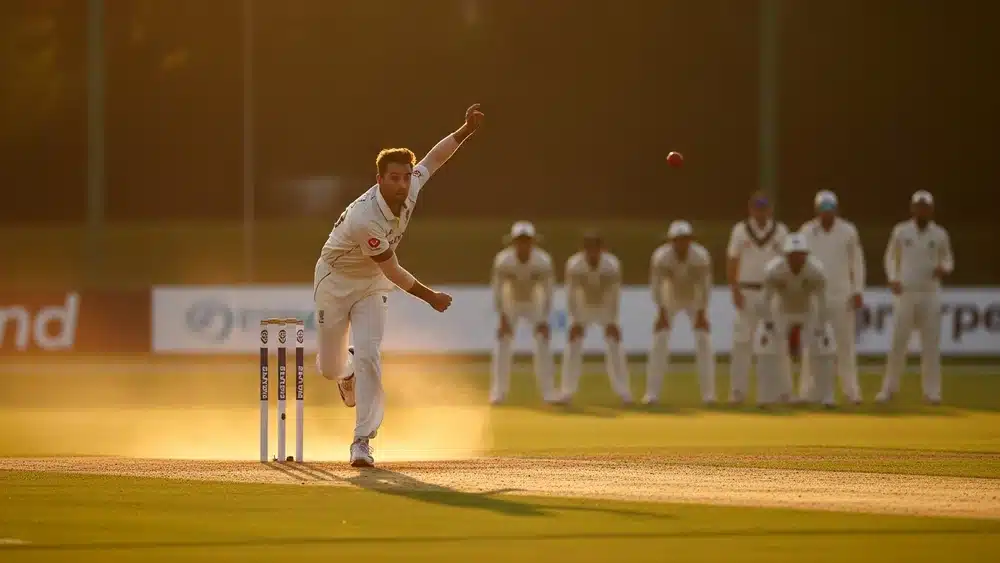
Australia A’s tour of India in September and October 2026 was framed as a development series, and that is half true. Two four-day matches and three one-dayers, all in Puducherry, were squarely about giving the next layer of Australian Test prospects time on Indian surfaces. The other half of the truth is that the same surfaces are a proxy run-up for the senior side’s last meaningful shot at the Border-Gavaskar Trophy in India.
That tour starts in late January 2027. By the time it ends in early March, Pat Cummins, Steve Smith, Mitchell Starc, Josh Hazlewood and Nathan Lyon will all be playing what is, by any reasonable career timeline, their final tour of India together.
How Puducherry went (updated 7 October 2026)
This piece was first published on 7 May 2026, when the tour was announced. The results so far:
| Match | Dates | Scores | Result |
|---|---|---|---|
| 1st four-day | 22–25 Sep | India A 334 & 199; Australia A 171 & 200 | India A won by 162 runs |
| 2nd four-day | 29 Sep–2 Oct | Australia A 358 & 173/4d; India A 167 & 310/9 | Drawn |
| 1st one-dayer | 6 Oct | Australia A 274; India A 149 | Australia A won by 125 runs |
| 2nd one-dayer | 9 Oct | To be played | |
| 3rd one-dayer | 11 Oct | To be played | |
India A took the red-ball series 1-0. In the first match Kumar Kushagra’s 113 set up a total of 334, and left-arm spinner Shams Mulani took seven wickets in the match as Australia A were bowled out for 171 and 200. Australia A’s off-spinners had their moments too: Corey Rocchiccioli took 4/95 in India A’s first innings and Todd Murphy 4/48 in their second.
The second match was closer. Australia A, led by Peter Handscomb, made 358 behind a first-day hundred from Sam Harper, then declared at 173/4 to set a target of 365. India A batted out 103 overs to finish on 310/9. Yash Rathod made 80, and when Liam Scott (5-37) trapped Rathod and Mulani lbw late on, India A’s last pair had to survive the final three overs, which they did. Harper’s hundred earned him a call-up to Australia’s Test squad in South Africa as injury cover for Josh Inglis.
The one-day leg started the other way round. Nathan McSweeney’s 123 carried Australia A to 274, and Mahli Beardman took four wickets as India A were bowled out for 149.
A 160-kilometre walk to the test
The Australia A schedule landed in one venue, the CAP Siechem Ground in Puducherry. The first four-dayer ran from September 22 to 25, the second from September 29 to October 2, and the three one-dayers follow on October 6, 9 and 11. The choice of venue is not accidental. Puducherry is about 160 kilometres south of Chennai, which is the second Test city on the senior tour in late January. Aussie selectors and analysts get a calibration window on what behaves like a southern Indian wicket against players who are about to find out exactly what one feels like in midwinter.
The format is also doing two jobs. The four-day matches give batters a real workload against red-ball spin, and the three one-day games let the white-ball group work out their middle-overs game with the same opposition. Nobody on the senior tour list will be in Puducherry, but the data the camp generates will end up sitting in their preparation notes by November.
The senior group’s outstanding bill
Cummins, Smith, Starc, Hazlewood and Lyon have been the spine of Australia’s red-ball side for the better part of a decade. None of them has won a Test series in India in his career. That is the longer story sitting under this trip.
Australia’s last series win in India came in 2004-05, with Adam Gilchrist captaining the bulk of the four-match tour while Ricky Ponting recovered from a thumb injury picked up at the Champions Trophy. Smith and his peers were still in school. Since then, Australia have toured in 2008, 2010, 2013, 2017 and 2023 and come home short every time. The 2017 trip got them their famous Pune win and a 1-2 series loss. The 2023 tour was 1-2 again. The current group’s record on Indian soil is mixed memories and one persistent gap.
That gap closes one way or the other in early 2027. For every series between the two sides, see our Border-Gavaskar Trophy history.
Five Tests, five venues
The series itself is a long one. The first Test is at the VCA Stadium in Nagpur from January 21 to 25, the second at the MA Chidambaram Stadium in Chennai from January 29 to February 2, the third at the ACA Stadium in Guwahati from February 11 to 15, and the fourth at the JSCA International Stadium in Ranchi from February 19 to 23. The fifth wraps up at the Narendra Modi Stadium in Ahmedabad and ends on March 3.
That is a six-week stretch in five different parts of India, each with a different brand of pitch and crowd. The 2017 schedule went four Tests across four venues. The 2023 schedule was four across four. The 2027 series adds a Test, swaps in two grounds the senior squad has barely played at in red-ball cricket, and puts the entire run on Indian terms by going long.
Why Puducherry matters even though no senior player will be there
The Puducherry block is the closest the Australia setup will get to live India red-ball minutes before BGT 2027. None of the seniors played there. They were in South Africa instead, for three ODIs in late September and three Tests from 9 to 31 October. What they will get is the inside loop on what worked in Puducherry: which spinners came on top, which batters held up against deep cover and slip cordon set for spin, and what the support staff learned about ball management on the kind of surface they are about to face for real.
The other thing the Australia A tour does is give the next layer of names a credible Test pitch to push their case. India A will not be a token opposition. Most of the names on either side of the four-dayers will be inside the discussion for senior squads by the end of 2027.
The senior story is the senior story
Whatever happens in Puducherry, the framing of the 2027 series will be Cummins and Smith and Starc and Lyon trying to fill the one line on their resumes that has stayed empty. There is no obvious next chance after this one. The next BGT in India after 2027 is years away, and on the most generous reading of where this group will be by then, only one or two of them will still be playing red-ball cricket at that level.
That is what makes the Australia A trip in September read like more than development cricket. Puducherry is the first sentence of a story that ends in Ahmedabad in early March 2027.