








No three-match ODI series has produced more than 2,109 runs, and India paid over 55 a wicket for theirs
Ten hundreds and two 400-plus totals made India vs West Indies the highest-scoring three-match bilateral ODI series ever. India’s bowling is the part to worry about.
Oct 4, 2026
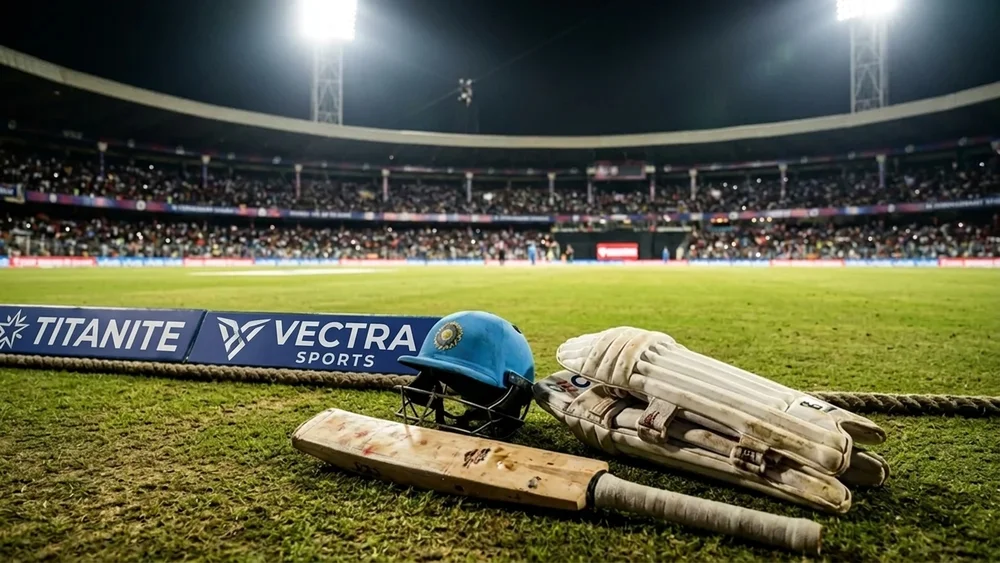
Three ODIs, 2,109 runs. That is what India and West Indies left behind in Thiruvananthapuram, Guwahati and Mullanpur, and no three-match bilateral series has ever produced more. The old mark was 2,090, set by India and England in January 2017.
India took the series 2-1. They chased down 296 and 406, then lost on Saturday when Shai Hope’s unbeaten 162 took West Indies past 352. It was fun to watch. I am less sure it was good news for India.
The numbers from a run-fest
India made 1,057 runs across the three games, the most by any side in a three-match bilateral men’s ODI series. England’s 1,054 in that 2017 series was the previous best. West Indies made 1,052 of their own, and they lost twice.
Ten hundreds were scored in three matches. Virat Kohli (139 not out), Shubman Gill (110) and Justin Greaves (101) got the first three in Thiruvananthapuram. Guwahati then became the first ODI with five different centurions: Gill’s 223 not out, Rohit Sharma’s 101, and 101 from John Campbell, 104 from Hope and 114 from Amir Jangoo for West Indies. Hope’s 162 not out and KL Rahul’s 129 not out in Mullanpur made it ten.
The runs also came quickly. The scoring rate across the series was 7.43 an over, the highest for any ODI series or tournament of three or more matches.
Gill, Hope and Rahul
Gill finished with 334 runs, and 223 of them came in one innings. His double hundred took 117 balls, the fastest in ODI history, and it is now the highest score by anyone in an ODI chase. India reached 406 for 2 with 39 balls left, their highest successful chase and the second-highest by any team.
Hope made 278 runs, and the last 162 were the best of the lot. He played the final ODI with a groin problem that began about 30 overs into the chase, and still finished it with ten balls to spare. That is the highest score by a wicketkeeper-captain in ODIs, beating AB de Villiers’ 149 against West Indies in Johannesburg in 2015. It also gave West Indies their highest successful chase. The previous one was 331 for 5 against Ireland in 2019.
Rahul’s 129 not out off 87 balls was his highest ODI score and his fourth hundred at No. 5, which makes him joint-second among Indian batters in that position, behind only Yuvraj Singh with seven. He also passed 10,000 international runs on the same afternoon.
The part India should worry about
Here is the number that stays with me. India took 19 West Indies wickets in three games and conceded 1,052 runs. That is more than 55 runs a wicket.
Kuldeep Yadav was the exception. He took 4 for 40 in the opener, including four of the first five wickets as West Indies slid from 176 for 2, and finished with seven for the series. Beyond him, India had little control. West Indies made 405 for 7 in Guwahati, their first 400-plus total in ODIs, and they chased 352 in Mullanpur. Anshul Kamboj, on debut after Prasidh Krishna was ruled out with a hamstring injury, went for 82 in nine overs.
You can argue that flat Indian pitches did most of this, and some of it is true. But India’s batters have been piling up runs for years. The question before the 2027 World Cup is who stops the other side doing the same, and this series did not give a convincing answer.
The two teams play five T20Is next, starting in Lucknow on 6 October. The ODI questions will have to wait until the next 50-over series.