








Everyone agrees bilateral ODIs need meaning, and nobody has worked out who pays for it
Todd Greenberg says bilateral one-day cricket makes up a significant portion of Cricket Australia’s broadcast deals. That single sentence explains why the format keeps producing fixtures that stop mattering before they are played.
Aug 16, 2026
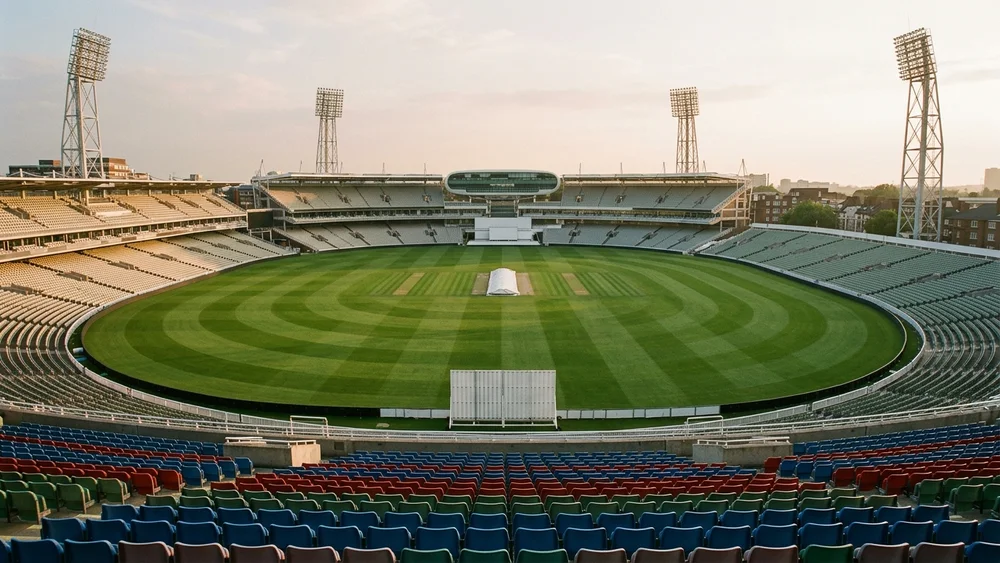
India play West Indies in a one-day international at Thiruvananthapuram on 27 September. Until 10 August that match carried a real consequence: West Indies were chasing a top-eight place in the ODI rankings on 30 September, the cut-off for direct entry to the 2027 World Cup, and India were the last opponents standing between them and it. Then Rashid Khan won the third ODI in Belfast for Afghanistan, the eighth spot went with it, and the arithmetic closed. West Indies are going to the Qualifier. The India series will be played anyway.
That is the problem Todd Greenberg was describing on 13 August, and the reason his answer came out so much less confident than the question.
What the Cricket Australia chief actually said
Greenberg was speaking in Darwin during Australia’s first Test against Bangladesh, a few days after ICC chief executive Sanjog Gupta declared that the era of “randomly scheduled” bilateral series “has to come to an end”, on the grounds that countries cannot sustain cricket without context and competitiveness. Gupta’s view is that the ODI survives if its place stays, in his word, “inextricably” tied to the World Cup.
Greenberg agreed with the principle and then explained why nobody has done anything about it.
“We fundamentally believe that,” he said. “But we’re also realists to know that bilateral ODIs make up a significant portion of our broadcast agreements, so we’ve got to find a way if we’re going to create more jeopardy and meaning, and we’re going to move them, what are we replacing them with, and how do you replace the revenues that go with those?”
And then the line that tells you where this actually sits: “But it’s not an easy solve.”
Everyone agrees on the diagnosis and nobody has costed the cure
This is the honest version of a conversation cricket has been having in coded language for years. Boards sell broadcast rights as bundles of scheduled content. A rights deal is not paid out per meaningful contest, it is paid out per inventory slot, and bilateral ODIs are a large block of that inventory. Strip them out to make the survivors matter more and you have also deleted a revenue line that a lot of boards are running their domestic game on.
Greenberg sits on the ICC working group finalising the Future Tours Programme for 2028-31, with a rough sketch of 2032-35 alongside it. That is the document where this gets decided, and the fair reading of his answer is that the group knows what good looks like and has not yet found anyone willing to pay for it.
Why this lands hardest on India
India is the awkward centre of the whole discussion. Indian ODIs are the inventory that carries the global rights market, which cuts both ways. If bilateral ODIs shrink to a handful of contextualised series, India will still be in most of them, because a schedule built for revenue is a schedule built around India. The boards that lose are the ones whose ODI income depends on hosting India rather than on their own market.
It also means the format’s problems are visible from India first. Look again at that West Indies tour: three ODIs on 27 September, 30 September and 3 October, of which the last is played after the qualification window has shut and the first two now decide nothing beyond ranking points. There is nothing wrong with any of those matches on their own terms. They are simply an example of what Gupta means when he says games have to matter, and of how quickly the meaning can drain out of a series arranged years in advance.
The World Cup is already being rebuilt
The 2027 tournament in South Africa, Zimbabwe and Namibia keeps 14 teams but reshapes what they play. It opens with a Super Series between the three lowest-ranked sides in the field, from which only one advances. Round two is two groups of six and 30 matches, and the top three in each group plus the best remaining side go into a Super Seven stage. Two teams will be out after two matches each.
The World Cricketers’ Association and the captains of Namibia, the Netherlands and Scotland have all said publicly that this guts the opportunity the Associates were promised. Greenberg was candid about Australia’s role there, saying he assumed the change was “just about trying to extract commercial value” and that he understood why Associates were unhappy, while backing the broader trade of a tighter ODI World Cup against a wider T20 one. He has pushed harder on a different front, backing coach Andrew McDonald’s call for bigger squads at the 2027 event.
My own view is that the jeopardy problem is solvable and the revenue problem is the one that will decide it. Cricket already knows how to give a bilateral series meaning, because the World Test Championship did exactly that for Tests that would otherwise have been dead rubbers. Nothing stops the same logic being applied to a multi-year ODI league feeding the World Cup. What stops it is that the WTC did not have to replace anything, and this would. Until a board is willing to take less money in one cycle to make the next one worth more, the FTP will keep producing what it has produced here: fixtures that were meant to matter, arranged so far in advance that somebody else’s result made them irrelevant first.