






Cape Verde’s first World Cup: how an island of 525,000 reached the biggest stage
Fewer than 525,000 people live across Cape Verde’s 10 islands. On 15 June, the Blue Sharks walk out against Spain in Atlanta for the first World Cup match in the country’s history.
Jun 12, 2026
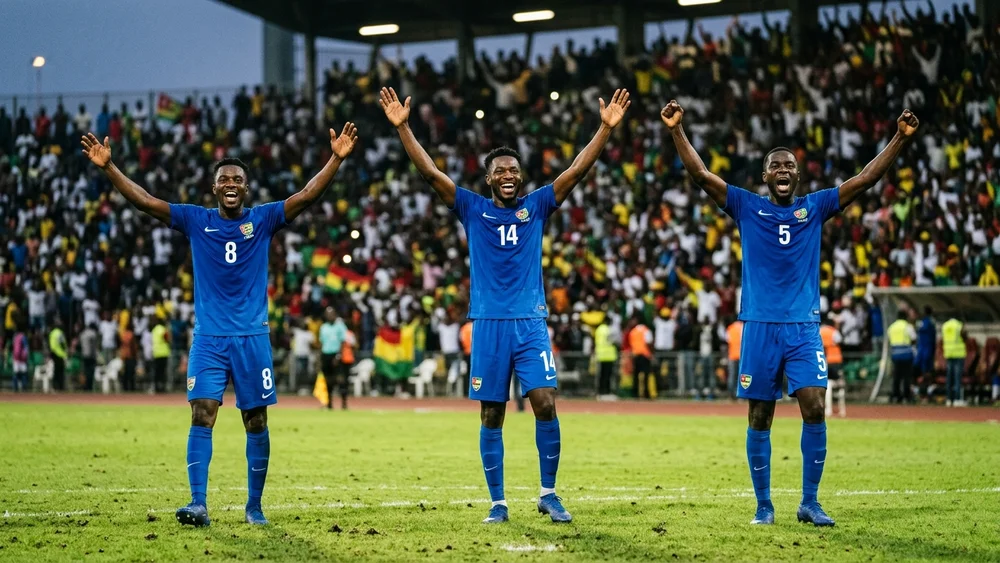
There are neighbourhoods in this World Cup’s host cities with more people in them than the entire country that just qualified for it. Cape Verde, an archipelago of 10 islands in the Atlantic with a population just under 525,000, has reached the World Cup for the first time. The Blue Sharks open Group H against Spain in Atlanta on 15 June, ranked 67th in the world and the lowest-ranked of the 10 African nations at the finals.
A qualifying campaign nobody saw coming
The route there was the hard kind. Cape Verde were drawn in CAF Group D alongside Cameroon, a side with eight World Cup appearances behind it, more than any other African nation, and a roster stocked from Europe’s biggest clubs, and they beat them to the only automatic place. Cape Verde finished top with 23 points from 10 matches, seven wins, two draws and one defeat, a clear four points above Cameroon. That single loss came early, a 4-1 hammering by Cameroon in their third game, and what happened next said more about the group than the scoreline did. They did not lose again. Qualification was confirmed on 13 October 2025 with a 3-0 win over Eswatini, and a nation that had never come close to a World Cup was suddenly on its way to one.
A team the diaspora built
Like most small countries punching above their weight, Cape Verde have leaned on heritage. Decades of emigration to Portugal, the Netherlands and beyond have scattered Cape Verdean families across Europe, and the national team is the product of that map. Of the 26 players coach Pedro Leitao Brito, known to everyone as Bubista, named on 18 May, only Logan Costa of Villarreal earns his living in one of Europe’s top five leagues. The rest come from the Portuguese and Dutch sides and the divisions just below the elite where most of the squad plays week to week. Bubista, a former Cape Verde international who has had the job since 2020, has made something solid out of those pieces, with forward Ryan Mendes wearing the armband.
It is worth sitting with the scale of it for a second. This is a country smaller than a mid-sized city, with no real footballing infrastructure to speak of a generation ago, that has navigated a qualifying group containing a traditional African heavyweight and come out in front. Plenty of far bigger nations watched this World Cup from home.
Now for Spain, Uruguay and Saudi Arabia
Whatever romance qualification carried, the draw offered no soft landing. Group H pairs Cape Verde with Spain, among the favourites for the whole tournament, a Uruguay side with two world titles in its past and a habit of making life miserable for more fancied opponents, and a Saudi Arabia team that has bloodied bigger names before. Be honest about it and a single point would feel like a result, a win like something close to a miracle. But that framing misses the point of the exercise. For a country of half a million, the achievement was arriving at all, walking out at a World Cup with the flag and the anthem and everything that comes with the occasion. Whatever the Blue Sharks collect after the first whistle against Spain is a bonus the islands will gladly take.