






Mooney and Litchfield seal Australia’s record seventh Women’s T20 World Cup
Beth Mooney and Phoebe Litchfield tore down England’s total at Lord’s as Australia won a seventh Women’s T20 World Cup, beating the hosts by seven wickets.
Jul 6, 2026
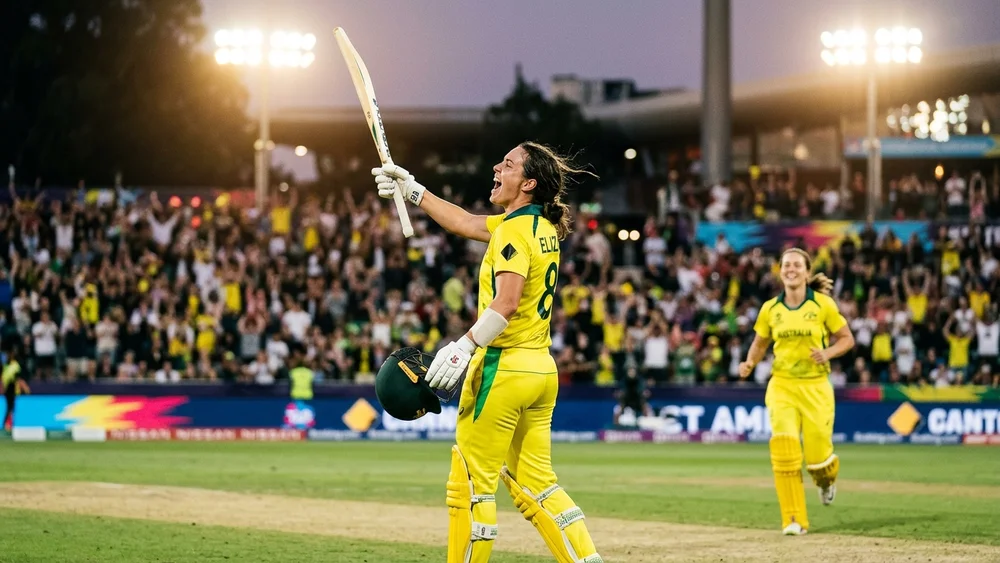
Australia are the champions of the world again. Chasing England’s 150 for 4 at a sold-out Lord’s on Sunday, they got there with 17 balls and seven wickets to spare, and for long stretches of the run chase there was barely a flicker of doubt about it. This is a seventh Women’s T20 World Cup title, a number that keeps stretching further out of everyone else’s reach.
England had done little wrong with the bat. Nat Sciver-Brunt anchored the innings with an unbeaten 58 from 53 balls, and Freya Kemp gave the total late thrust with 44 not out off 28, the pair adding a stand that briefly made 150 look like it might be enough. Alice Capsey’s 23 kept the middle overs ticking. On most nights against most sides, 150 at Lord’s is a total worth defending.
Mooney and Litchfield take the game away
Australia are not most sides. Beth Mooney and Phoebe Litchfield put on 100 for the second wicket in a little over 11 overs, and the chase was effectively settled inside that partnership. Litchfield was the more destructive of the two, racing to 48 off 35 with a run of clean strikes down the ground, while Mooney did what Mooney tends to do in finals, holding an end and picking the gaps until the required rate stopped mattering.
Mooney finished on 64 from 49 balls, her third half-century in a row in a Women’s T20 World Cup final. Ellyse Perry saw it home with 13 not out, fittingly on the ground where Australia have made a habit of ending tournaments with the trophy in hand. The winning total of 153 for 3 was the highest successful chase in a final in the competition’s history, past the 149 West Indies made against Australia back in 2016.
England’s bowling never got a grip
For England, the wickets simply would not come. Sophie Ecclestone, Charlie Dean and Lauren Bell each picked up one, but none of them managed to break the Mooney-Litchfield stand before it had done the damage. By the time Litchfield fell the equation had shrunk to a formality, and the home crowd that had roared England’s total along went quiet in the closing overs.
India, whose campaign ended when Australia beat them at Lord’s to shut the door on a semi-final spot, were long gone by the time the showpiece came around. Watching a familiar team lift a familiar trophy will sting, but it also frames the task ahead: the gap to Australia is still the one measurement that matters in the women’s game.
Mooney was named player of the match and, for the second time in her career, player of the tournament — the first player to win that award twice. Her 238 runs left her second on the tournament’s run charts behind England’s Danni Wyatt-Hodge, who finished on 302. That she was the difference in the final too felt about right. Australia arrived at this World Cup as favourites, barely lost a beat along the way, and leave it exactly where everyone expected them to be.