






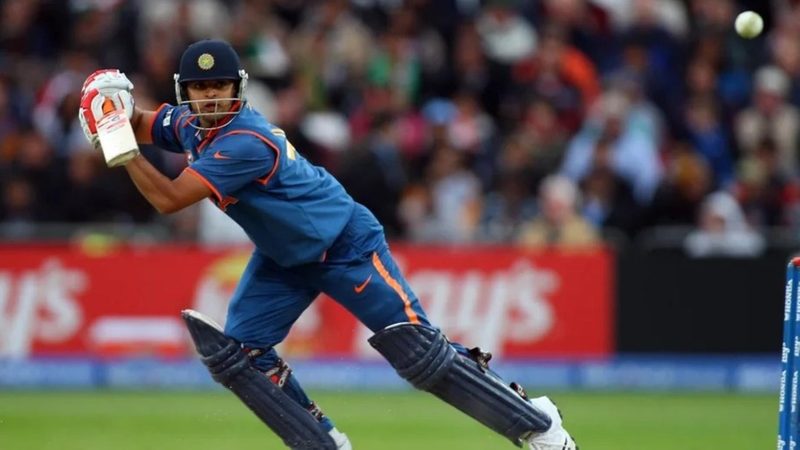
High-scoring games bring more action and more viewers, and T20 cricket has spread around the world on the back of them. The powerplay is a big reason why: it is the stretch at the start of each innings when the fielding side must keep most of its fielders close to the pitch.
What is powerplay in T20 cricket?
The powerplay is a set of overs with extra fielding restrictions. In a full 20-over T20 international, the powerplay is the first six overs of each innings, and during it only two fielders may be outside the 30-yard circle when the ball is bowled. The other nine players, including the bowler and the wicketkeeper, are inside it.
The restriction favours the batting side, which can hit over or through a field with big gaps in the deep. If the fielding side has more than two fielders outside the circle during the powerplay, the square-leg umpire calls a no-ball, and in T20 internationals the next delivery is a free hit.
The powerplay can also backfire. A batting side that loses early wickets has to rebuild while nine fielders are crowding the inner ring.
What happens after the powerplay?
From the seventh over, the fielding side may have up to five fielders outside the circle, which lets captains spread the field and makes boundaries harder to come by.
There is one exception. If a side is behind the required over rate, the ICC’s in-match penalty applies: from the next over after the cut-off time, and for the rest of the innings, only four fielders are allowed outside the circle.
Powerplay overs in a shortened T20 match
If an innings is shortened, by rain for example, the powerplay is shortened in proportion. Since July 2025, the ICC’s men’s T20I playing conditions set the powerplay to the nearest ball rather than the nearest over, so it stays close to 30% of the innings. An 8-over innings, for example, has a powerplay of 2.2 overs: it ends after the second ball of the third over.
| Overs in the innings | Powerplay (overs) | Powerplay (balls) |
|---|---|---|
| 5 | 1.3 | 9 |
| 6 | 1.5 | 11 |
| 7 | 2.1 | 13 |
| 8 | 2.2 | 14 |
| 9 | 2.4 | 16 |
| 10 | 3.0 | 18 |
| 11 | 3.2 | 20 |
| 12 | 3.4 | 22 |
| 13 | 3.5 | 23 |
| 14 | 4.1 | 25 |
| 15 | 4.3 | 27 |
| 16 | 4.5 | 29 |
| 17 | 5.1 | 31 |
| 18 | 5.2 | 32 |
| 19 | 5.4 | 34 |
Powerplay in ODIs, the IPL and other leagues
ODIs split the innings into three phases: a maximum of two fielders outside the circle in overs 1-10, four in overs 11-40 and five in overs 41-50.
The IPL and most T20 leagues follow the six-over T20I powerplay. The Hundred, which is played in balls rather than overs, has a powerplay of the first 25 balls. Australia’s Big Bash League has experimented: from 2020-21 it added the “Power Surge”, a two-over second powerplay taken later in the innings.
History of the powerplay
Fielding restrictions were first introduced in the 1980-81 Australian season and have been part of ODI cricket since 1992. The ICC renamed them the powerplay in 2005, the same year the first men’s T20 international was played. There are no fielding restrictions of this kind in Test cricket.
Photo Credit: Alamy