






The 48-team World Cup’s best story is its smallest nations
The 48-team World Cup was billed as a recipe for mismatches. Two weeks in, Cape Verde, Curacao and Egypt have made the expanded tournament a stage for football’s outsiders instead.
Jun 22, 2026
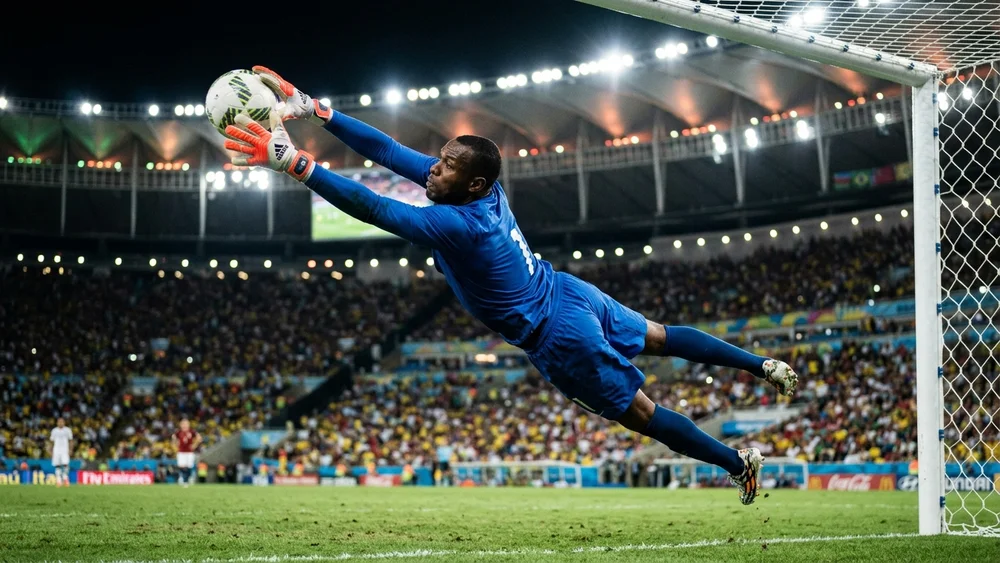
When FIFA pushed the World Cup out to 48 teams, the warning was loud and familiar. More places meant weaker sides, the critics said, and a group stage padded out with one-sided thrashings nobody asked for. Two weeks into the 2026 tournament, the teams who were supposed to make up the numbers have done the opposite. They have produced its best moments.
Start with Cape Verde. An Atlantic archipelago of fewer than 525,000 people, one of the smallest nations ever to reach a World Cup, drawn alongside Spain and Uruguay and written off before a ball was kicked. They opened with a goalless draw against Spain, goalkeeper Vozinha keeping them level almost on his own, then dug in again to hold Uruguay 2-2. Two games, two points, and a country that had never been near a World Cup suddenly within range of the knockout rounds.
Room’s wall in Kansas City
Then there is Curaçao, smaller still. The Caribbean island of around 160,000 people is the least populated nation ever to reach a World Cup, and its tournament began brutally with a 7-1 hammering by Germany in Houston. What came next is why people fall for this sport. Against Ecuador, 37-year-old goalkeeper Eloy Room made 16 saves, equalling Tim Howard’s World Cup record of 16 against Belgium in 2014, and carried his side to a goalless draw and a first point in their history. Ecuador had 28 shots and nothing to show for them. Room said afterwards he felt unbeatable, and for 90 minutes in Kansas City he was.
These are not flukes dressed up as fairytales. A debutant holding two former World Cup winners, or a goalkeeper turning in one of the great tournament performances, is the competition doing exactly what it should. The wider field has handed teams from outside the usual circle a real stage, and several of them have refused to be embarrassed on it.
Egypt end a long wait
Not every milestone has come from a debutant. Egypt were the first African and Arab side ever to play at a World Cup, back in 1934, yet across four tournaments since they had never won a match. That ended on Sunday in Vancouver, where Mohamed Salah dragged them past New Zealand. Finn Surman headed the All Whites in front, Mostafa Zico levelled, Salah put Egypt ahead, and Trézéguet’s late header sealed a 3-1 win that sent the Pharaohs top of Group G.
It would be dishonest to pretend the expansion has been all romance. Germany put seven past Curaçao, Spain beat Saudi Arabia 4-0, and a few groups have had the lopsided look the doubters predicted. A bigger field was always going to stretch the gap between the best and the rest in places.
A safety net that rewards bravery
What the new format also does is give the brave a reason to keep believing. With 12 groups feeding the top two plus the eight best third-placed teams into a round of 32, a side like Cape Verde loses nothing by going for it, knowing a couple of draws might be enough to stay alive. The round of 32 begins on June 28, and the idea that a Cape Verde or a Curaçao could still be playing in July would have sounded absurd a month ago.
India are not at this World Cup, and neither are most of the nations whose fans will follow it from afar. That is part of why these stories land. The tournament got bigger so that more of football’s outsiders could have a night like Room’s or Vozinha’s, and so far the gamble is paying off in the way its defenders always promised it would.