






Six games, no defeats: Asia’s strong start to the World Cup
From holding Uruguay and Switzerland to beating Turkey and Czechia, Asia’s footballers have come through the World Cup’s opening round without a single defeat.
Jun 16, 2026
One round of group games is almost done at the World Cup, and the most quietly satisfying story for anyone who follows football in this part of the world has nothing to do with the favourites. Asia’s sides have played six matches between them and lost none of them. Two wins, four draws, and a clutch of European and South American names left frustrated. For a continent that has spent most World Cups defending its right to be there, that is a start worth talking about.
Two wins to set the tone
South Korea got the ball rolling on the opening day. A goal down to Czechia through Ladislav Krejci’s header, they turned the game around in the second half, Oh Hyeon-gyu and Hwang In-beom scoring to win it 2-1. It was the kind of comeback that used to elude Korean sides at this level.
Australia, who compete in Asian qualifying and the Asian Cup, followed with a tidier piece of work. Nestory Irankunda and Connor Metcalfe scored a goal in each half as the Socceroos beat Turkey 2-0 in Vancouver, spoiling the Turkish return to a World Cup after 24 years away. Two Asian sides, two beaten European opponents, and the round had barely begun.
The draws that felt like more
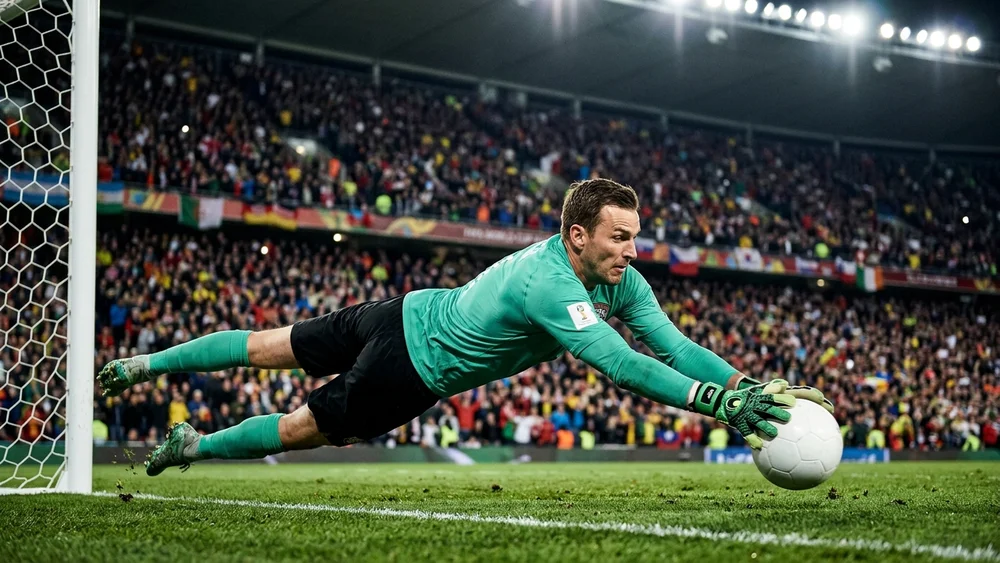
The four draws are where the real interest lies, because of who they came against. Saudi Arabia held Uruguay to 1-1, and they owed it to their goalkeeper. Mohammed Al-Owais made nine saves to keep a wasteful Uruguay out, the sort of individual performance that turns a likely defeat into a point. Qatar, who had lost all three games as hosts in 2022, claimed their first World Cup point when Boualem Khoukhi rose at the far post to head home four minutes into stoppage time, cancelling out Breel Embolo’s early penalty for a 1-1 draw with Switzerland.
Japan went toe to toe with the Netherlands and came away with a 2-2 draw, Daichi Kamada striking late to deny the Dutch. Iran, twice behind against New Zealand, twice came back to draw 2-2, Ramin Rezaeian scoring and setting up Mohammed Mohebi as they finished the stronger side. None of those results will frighten the eventual winners, but they share a theme. The Asian teams did not turn up to make up the numbers. They defended for their lives when they had to and they kept finding a way back into games.
Why the start matters
Part of this is the format. With 48 teams split into 12 groups, the eight best third-placed sides go through to the knockout rounds, so a draw against a heavyweight is no longer a moral victory that ends in an early flight home. It can be a genuine step towards qualifying. That changes how a side like Qatar or Saudi Arabia approaches a game it might once have written off, and it rewards the kind of disciplined, low-risk football several of the Asian teams played.
The rest of the picture is simpler. The gap has narrowed. Players from this region now turn out in the Premier League, the Bundesliga and across Europe every week, and it shows in how comfortable these teams look against opponents who would once have brushed them aside. Iraq, Jordan and Uzbekistan are still to play their opening games, so the unbeaten run will be tested again before the round is out. For now, though, Asian football can look at the table and feel something it does not always get to feel at a World Cup, which is that it belongs.